The USA Leaders
March 19, 2026
The U.S. economy faces rising pressure as inflation accelerates, energy prices surge, and the Federal Reserve holds interest rates steady.
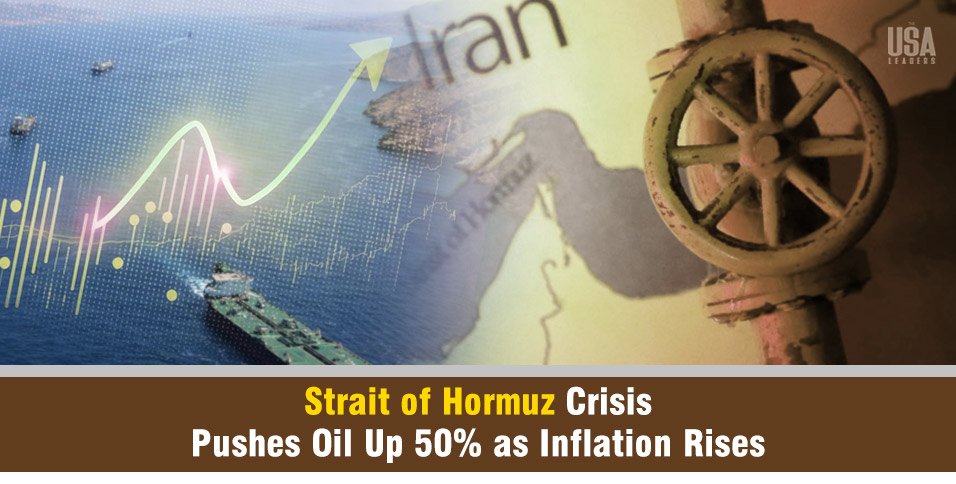
The situation worsened after tensions in the Middle East disrupted energy flows through the Strait of Hormuz, one of the world’s most critical oil shipping routes.
Together, these forces have pushed financial markets toward key support levels and raised concerns about stagflation.
Wholesale Inflation Surprises Markets
First, inflation data surprised economists.
The U.S. Labor Department reported that producer prices rose 0.7% in February. On a yearly basis, prices increased 3.4%, both higher than forecasts.
Producer prices measure inflation that businesses pay before those costs reach consumers.
Food prices drove the increase. Vegetable prices jumped 49%, while fruit prices rose 10% compared with January.
Economist Carl B. Weinberg said the data show sharp cost pressure. He wrote, “These are some mighty big increases, adding fuel to the political conversation about affordability.”
Meanwhile, economist Stephen Stanley called the February surge“a sign of trouble.” He warned that “pipeline pressures continue to build,” suggesting more inflation may reach consumers.
Middle East Conflict and the Strait of Hormuz Drive Energy Prices Higher
Next, geopolitical tensions intensified market pressure.
After a U.S. and Israeli strike on Iran on February 28, Iran responded by blocking the Strait of Hormuz and targeting regional energy infrastructure. The escalation began to disrupt global commodity markets.
Iranian forces attacked the Ras Laffan Industrial City energy hub in Qatar, causing fires and damage to critical facilities.
Energy markets reacted quickly.
Oil prices first climbed around 13% in early March, but the escalation in the conflict has pushed the rally further, with crude now up nearly 50% since the crisis began.
Gasoline prices in the United States climbed from below $3 per gallon to $3.84. Diesel prices also rose sharply.
Higher diesel prices affect trucking costs. Companies pass those expenses to businesses and consumers, which spreads inflation across the economy.
Federal Reserve Holds Interest Rates
Meanwhile, the Federal Reserve has limited room to act. The central bank kept its benchmark interest rate at 3.50% to 3.75%.
Fed Chair Jerome Powell said higher energy prices will push overall inflation higher. However, he said policymakers cannot yet measure the full impact of the energy shock.
The Fed now expects core inflation to reach 2.7% by the end of 2026, higher than earlier projections.
Because inflation remains above the 2% target, the central bank cannot cut rates quickly without risking more price pressure.
Stock Markets Test Critical Support
Financial markets have already reacted.
The S&P 500 closed at 6,624.70, only slightly above its 200-day moving average of 6,615.70.
Meanwhile, the Nasdaq Composite and the Dow Jones Industrial Average closed below their 200-day averages.
Market technician Jonathan Krinsky said the S&P 500 has tested the 6,600 support level three times since October.
If the index falls below that level, analysts estimate a possible drop to 6,000, which would represent about a 10% decline.
Technology stocks remain particularly vulnerable because they rely on lower interest rates to support valuations.
Stagflation Concerns Grow
These developments increase the risk of stagflation.
Energy prices push inflation higher while they reduce consumer spending power. At the same time, the Federal Reserve cannot cut interest rates because inflation remains elevated.
Recent data already shows price pressure.
Consumer inflation rose 2.4% year over year in February, while the Fed’s preferred PCE inflation measure reached 2.8%, the highest level in nearly two years.
What Investors Should Watch
Investors now focus on three key factors. First, they watch whether the S&P 500 holds above 6,600. Second, they track the direction of energy prices.
Finally, they monitor geopolitical developments around the Strait of Hormuz, since any prolonged disruption in that region could keep oil prices elevated and inflation under pressure.
Until those uncertainties are cleared, financial markets will likely remain volatile.
Neha Shekhawat