The USA Leaders | May 28, 2026
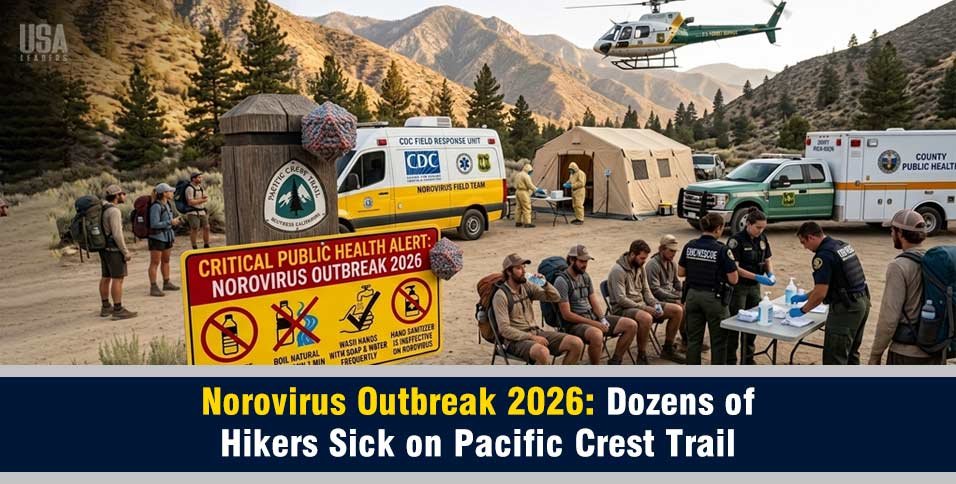
If you were planning a thru-hike on the Pacific Crest Trail, you likely expected bears, blisters, and extreme heat. Now there’s another risk to consider: norovirus. A fast-spreading stomach illness has affected a section of the PCT in Southern California, making dozens of hikers sick and raising concerns about shared trail facilities.
This isn’t a drill, and it isn’t a rumor on a hiking forum. Public health officials from San Bernardino County are actively investigating alongside the Pacific Crest Trail Association (PCTA) and U.S. Forest Service as they race to identify ground zero of an outbreak that began around May 8, 2026.
QUICK FACTS: NOROVIRUS OUTBREAK 2026 AT A GLANCE
| What | Details |
| Outbreak Location | Pacific Crest Trail near Wrightwood, California |
| Total Cases | 24+ hikers sick, 7+ confirmed norovirus |
| Severity | 1 person airlifted to hospital |
| Suspected Source | Shared water cache in valley north of Los Angeles |
| Date Reported | May 20–27, 2026 (breaking news) |
| Trail Status | No official closure, but warnings issued |
| Primary Symptoms | Gastrointestinal illness (vomiting, diarrhea, cramps) |
BREAKING NEWS: NOROVIRUS OUTBREAK 2026 HITS ICONIC HIKING TRAIL
Dozens of hikers have suddenly become sick on one of America’s most popular long-distance trails, as health officials work to control a major norovirus outbreak in 2026.
At least 24 hikers reported stomach illness along a section of California’s Pacific Crest Trail. One hiker had to be airlifted to a hospital. Seven cases have been confirmed as norovirus, but officials believe many more people may be affected.
The outbreak is especially worrying because it happened in May, during peak hiking season, when thousands of people use the trail.
“What began as a dream hike quickly became a nightmare,” said hiker Danielle Burr. The outbreak shows that norovirus can affect anyone, no matter how fit or prepared they are.
WHERE IS NOROVIRUS SPREADING THE MOST? CALIFORNIA’S PCT BECOMES EPICENTER
While the Pacific Crest Trail is the focus of current headlines, keeping an eye on the national current norovirus outbreak map reveals a broader story of geographic stabilization.
According to surveillance data compiled by the Centers for Disease Control and Prevention (CDC), the United States has recorded 1,194 norovirus outbreaks over the current tracking season.
This represents a significant decrease from the previous seasonal cycle, which saw an aggressive, early peak of 2,534 outbreaks driven by the highly contagious GII.17 variant. The current numbers indicate that while regional spikes are severe, the national trend sits securely within normal historical baselines.
Why this matters:
- When one person contaminates water, everyone who uses it gets exposed
- You can’t close 50 miles of wilderness easily
- The trail brings hikers from all over the world
The Pacific Crest Trail Association is working with local health officials to investigate and warn other hikers.
Has Norovirus Peaked in 2026?
Many people search to see if norovirus peaked in 2026. The answer is unclear, but this outbreak shows the virus is still active.
Norovirus usually hits harder in winter. This May outbreak is unusual:
| Factor | Normal Pattern | Now (May 2026) |
| Season | Winter | Late Spring |
| Place | Indoor (cruise ships, homes) | Outdoor trail |
| Spread | Person to person | Dirty water |
| Speed | Slow | Fast, many at once |
This doesn’t mean norovirus has peaked overall. Outdoor areas are becoming new hotspots, and health officials are watching closely.
Symptoms and How It Spreads
Norovirus causes stomach and gut problems. It’s the same virus that makes cruise ship passengers sick.
Common Symptoms:
- Vomiting (sudden and bad)
- Diarrhea (watery, frequent)
- Stomach cramps (painful)
- Nausea
- Low fever (sometimes)
- Body aches
Symptoms start 12–48 hours after exposure. Most people get better in 1–3 days. But dehydration is dangerous, especially while hiking in heat.
How It Spreads on the Trail:
- Sick person uses bathroom outdoors
- They don’t wash hands well
- They touch water cache or gear
- The next hiker uses that water or touches that spot
- Infection happens
Norovirus is super contagious. You only need 10–100 virus particles to get sick. That’s less than one grain of sand.
While bad, norovirus usually isn’t deadly for healthy people. This differs from worse viruses like Ebola, which need stricter control measures. Understanding the difference helps you stay calm and smart.
How This Compares to Cruise Ship Outbreaks
You may have heard about the cruise ship norovirus outbreak 2026 cases. Hundreds get sick on ships because spaces are tight. But the trail outbreak is harder to control:
| Factor | Cruise Ship | Hiking Trail |
| Control | The ship can stop | The trail stays open |
| Cleaning | The crew sanitizes | Can’t clean wild water |
| Watch | Doctors on board | People report themselves |
| Warning | Call passengers | Hard-to-reach hikers |
Cruise lines know how to handle norovirus. Trail groups are still learning. That’s why the Pacific Crest Trail Association’s fast action matters.
Different viruses need different responses. Ebola outbreaks need strict isolation and tracking that’s nearly impossible on a trail. Norovirus spreads easier but is less deadly.
Current Norovirus Outbreak Map: How to Track It
Because tracking data lags behind real-time infections by a few days, there is no single, live interactive map showing individual trail cases. For real-time wilderness safety updates and tracking info, bookmark these three specific resources:
- CDC Outbreak Surveillance: Tracks macro-level norovirus events and national trend data across reporting states.
- San Bernardino County Public Health Department: Provides hyper-local updates regarding testing results and medical advisories for the Wrightwood and Los Angeles trail sectors.
- Pacific Crest Trail Association (PCTA) Alerts: Offers real-time trail status updates, closure warnings, and water safety bulletins for thru-hikers.
Critical Prevention: Why Your Hygiene Habits Must Change
The unique variables of this outbreak have forced public health officials to issue immediate corrections regarding standard backcountry sanitation.
1. The Sanitizer Fallacy
Alcohol-based hand sanitizers do not kill norovirus, which is important for hikers to know. The virus does not respond to alcohol, so sanitizer alone won’t protect you. To stay safe, hikers must wash their hands with biodegradable soap and clean water for at least 20 seconds to remove the virus properly.
2. Water Filtration Re-Evaluation
Standard backpacking microfilters (like hollow-fiber filters) can remove bacteria and protozoa, but viruses are too small for them to catch. To stay safe from norovirus in natural water sources or untested water caches, hikers should do the following:
- Boil the water vigorously for at least one full minute (three minutes at high altitudes).
- Use a purifier rather than a filter (such as UV purifiers or chemical chlorine dioxide treatments).
3. Reconsidering Water Caches
Public health teams are warning that shared water caches left by trail angels could spread illness. If a sick person touches the spout or handle, others who use the same jug may be exposed. Officials recommend avoiding these shared water sources for now and carrying extra water instead.
What Health Officials Are Doing Now
- The PCTA, the U.S. Forest Service, and San Bernardino County health officials are working together to limit the spread along the trail.
- They are testing natural water sources near the Wrightwood loop, warning hikers through signs at trailheads and updates on hiking apps, and sharing health data between nearby clinics to track whether cases are decreasing.
- There are no trail closures, but officials stress that staying safe depends on good personal hygiene while hiking.
Bottom Line: Stay Safe Out There
The norovirus outbreak 2026 on the Pacific Crest Trail shows even wild places face modern health risks. Dozens are sick, one is in the hospital, and officials are working to stop the spread.
If you’re hiking this season, don’t panic but do be smart. Treat water, wash hands, and skip questionable water caches.
The trail will be there next year. Your health won’t wait.
Knowing about viral outbreaks like norovirus on trails or worse ones like the Ebola virus helps you make smart choices. Stay informed, wash up, and seek help when needed.
Also Read – MV Hondius Hantavirus Outbreak: 17 Americans Evacuated to Nebraska