The USA Leaders
July 27, 2026
The Medicaid changes under the One Big Beautiful Bill Act (OBBBA / H.R. 1) are now taking effect. Signed into law on July 4, 2025, the law makes major changes to Medicaid, the federal and state health insurance program that covers more than 90 million low-income Americans.
From late 2026 to 2028, the law will add nationwide work requirements, faster eligibility checks, stricter rules for some immigrants, and lower federal funding for states that expanded Medicaid.
According to nonpartisan estimates from the Congressional Budget Office (CBO), spending cuts and tighter administrative reporting could leave approximately 10 million more Americans uninsured by 2034 across Medicaid and ACA Marketplaces combined.
Quick Facts: Medicaid Cuts 2026 at a Glance
| Category | Detail |
| Law signed | One Big Beautiful Bill Act (OBBBA / H.R. 1) – July 4, 2025 |
| Medicaid funding cut | Approximately $625 billion–$1 trillion over 10 years (CBO; estimates vary by bill version) |
| Projected coverage loss | Around 10 million more uninsured Americans by 2034 – Medicaid and ACA marketplace combined |
| Work requirement deadline | January 1, 2027 – all expansion states must enforce 80 hrs/month |
| Verification frequency | Every 6 months from December 31, 2026 (previously once a year) |
| Immigrant restrictions | October 1, 2026 – refugees, asylees, and trafficking survivors lose coverage |
| Federal funding phase-down | Begins October 1, 2026 |
| New cost-sharing | October 1, 2028 – up to $35 per service for some expansion adults |
| Early-enforcing states | Nebraska, Montana (both enforcing ahead of the January 2027 federal deadline) |
| SNAP comparison (Arizona) | Nearly 440,000 people lost food assistance after similar paperwork rules were introduced |
| New ‘medically frail’ rule | Seriously ill patients must prove they cannot work – a diagnosis alone is not enough |
| Source | Centers for Medicare and Medicaid Services (CMS), CBO, MedicaidWorkCheck.com, RAND Corporation |
Medicaid Cuts 2026: What Is Actually Changing Right Now
The Medicaid cuts are already happening; they are not just future plans. President Trump signed the One Big Beautiful Bill Act (OBBBA) on July 4, 2025, and the first changes will begin in October 2026.
The new law changes Medicaid, the federal and state health insurance program that covers more than 90 million low-income Americans. It adds new eligibility rules, work requirements, more paperwork, and reduced federal funding. These changes will roll out gradually through 2028.
The nonpartisan Congressional Budget Office (CBO) estimates that about 10 million more Americans could lose health coverage by 2034 through Medicaid and ACA marketplace changes. Some independent experts say the final law includes larger funding cuts than earlier versions, so the actual number of people losing Medicaid coverage could be even higher.
| The idea is simple: stricter rules mean fewer people qualify. Some people believe this is good policy, while others think it causes unnecessary harm. |
The Full Medicaid Cuts 2026–2028 Timeline
Every major change is listed by date so you know what’s happening and when.
| Date | Change | What It Means |
| July 4, 2025 | OBBBA signed into law | Provider tax freeze takes effect; states can no longer raise hospital taxes |
| October 1, 2026 | Immigrant coverage narrows | Refugees, asylees, and trafficking survivors lose access under federal funds |
| October 1, 2026 | The federal share begins to fall | States receive smaller federal match for expansion adults |
| December 31, 2026 | Verification doubles in frequency | States must confirm coverage qualification every 6 months, not once a year |
| January 1, 2027 | Work requirements go national | 80 hrs/month of work, study, or community service required for most adults ages 19–64 |
| October 1, 2028 | Cost-sharing begins | Up to $35 per service for expansion adults earning 100–138% of the federal poverty level |
| 2032 | Provider tax cap at final level | The tax reduction cycle reaches its lowest permitted point |
The Centers for Medicare & Medicaid Services released an interim final rule in June 2026. Nebraska and Montana started enforcing Medicaid work requirements before the federal deadline of January 2027. Eligible adults must now report their work hours every month.
Who Loses Medicaid Coverage Under the One Big Beautiful Bill Act?
The OBBBA affects specific groups through targeted policies. As a result, coverage losses will not be the same across all states or for all Medicaid recipients.
| Who | What Changes & When |
| Adults 19–64 in expansion states | Must meet 80-hr/month work rule starting January 2027 |
| Lawfully present immigrants (refugees, asylees, trafficking survivors) | Lose Medicaid access October 1, 2026 |
| All expansion adults | Coverage verification moves to every 6 months from December 2026 |
| Adults earning 100–138% of the federal poverty level | Pay up to $35 per service from October 2028 |
| Seriously ill and terminally ill patients | Must document inability to work under the new ‘medically frail’ rule |
| Graduate students on income-driven repayment plans | SAVE, ICR, and PAYE plans removed as of July 2026 |
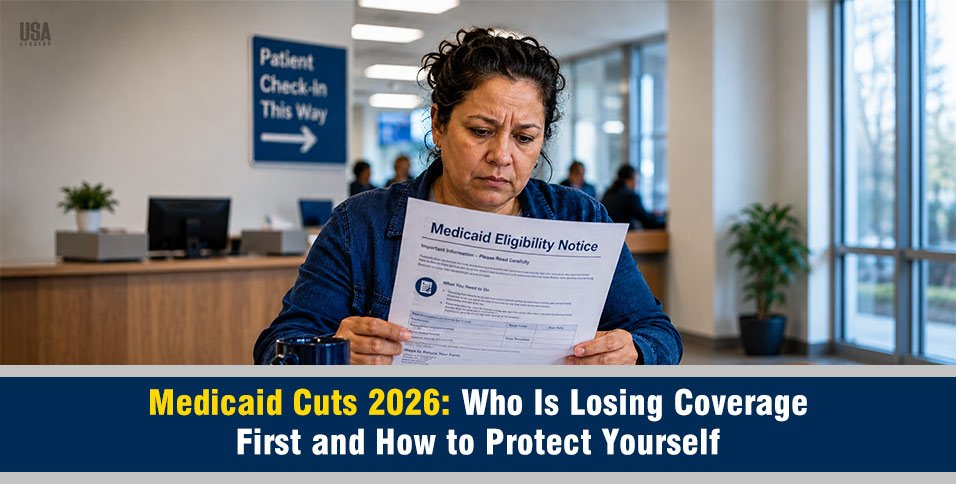
Most people will not lose Medicaid because they no longer qualify. They will lose it because the paperwork is too difficult to complete while dealing with work, health problems, or financial stress. The CBO says these reporting rules could cause many eligible people to lose their coverage.
The ‘Medically Frail’ Rule: A New Standard for Seriously Ill Americans
In July 2026, the Centers for Medicare and Medicaid Services (CMS), which oversees Medicaid, introduced a new rule. It created a new category called “medically frail,” a standard that did not exist before the OBBBA.
Before the OBBBA, Medicaid eligibility was based mainly on income. Under the new rule, income alone is no longer enough. People with serious illnesses like pancreatic cancer, HIV, or Parkinson’s disease must still meet work requirements unless they can prove, under CMS’s definition, that their condition prevents them from working.
Democratic lawmakers criticized the rule. On the House floor, Rep. Joe Courtney said that a cancer diagnosis alone does not qualify someone for an exemption. Patients must submit documents showing they cannot work and wait for the Department of Health and Human Services to approve their request.
| Complete the forms, collect the required records, submit your documents, and wait for the government to decide if your illness meets its eligibility rules. |
Arkansas tried a similar work requirement, but courts stopped it. Many people lost coverage because they could not complete the reporting process, not because they were not working. Experts worry the same issue could happen when the rule starts nationwide in 2027.
The SNAP Parallel: What Food Assistance Cuts Signal for Medicaid
SNAP faced similar changes under the OBBBA as Medicaid. New work rules and extra paperwork requirements were added.
In Arizona, these new SNAP documentation rules caused nearly 440,000 people to lose food assistance. Some people even had to prove income from panhandling to complete the verification process. These complex systems often create the biggest challenges for people who need help the most.
Health policy experts see Arizona’s SNAP changes as a warning sign for Medicaid. More paperwork and complicated rules can reduce enrollment even without officially denying benefits. If Medicaid follows the same path in January 2027, the number of people losing coverage could be much higher.
How the Medicaid Region Map and Rural Areas Face the Biggest Risk
Medicaid is funded jointly by the federal government and states. The federal government pays most of the cost for Medicaid expansion. From October 1, 2026, federal funding will decrease. States will have to cover the extra cost or reduce Medicaid services.
Rural areas may face the biggest impact. Many rural communities depend on Medicaid more than urban areas because it covers a larger share of their working-age population. When federal support drops, rural healthcare facilities may feel the effects first.
Federal programs like the DHHS Rural Health Transformation Initiative and the Rural Transformation Program aim to improve healthcare access in underserved areas. However, lower Medicaid funding could make it harder for these programs to achieve their goals.
Rural hospitals rely heavily on Medicaid payments to cover daily expenses. Healthcare groups warn that some hospitals could close if states cannot replace the lost federal funding. Fewer Medicaid-covered patients could mean lower revenue and greater financial pressure for rural facilities already struggling to stay open.
The OBBBA’s provider tax freeze creates another challenge. Many states use provider taxes on hospitals and healthcare organizations to help fund Medicaid. The new limits on these taxes will reduce this funding option over time. States may lose an important source of Medicaid support when they need it most.
What Medicaid Cuts 2026 Mean for Healthcare Investors and Industry Leaders
Medicaid cuts create a mixed impact for investors and healthcare companies. Insurers that manage Medicaid plans, such as accountable care organizations and managed care companies, may lose members and revenue. Hospitals, health centers, and safety-net providers could face more uninsured patients needing care.
Companies like UnitedHealth, Centene, and Molina Healthcare depend heavily on Medicaid contracts. Large coverage losses could reduce their income, especially in states with many Medicaid expansion members.
Healthcare technology and compliance companies may see new opportunities because states will need more systems to check eligibility and manage Medicaid rules. Demand for compliance workers and community health programs may also increase.
For long-term investors, the main concern is that unpaid healthcare costs do not disappear. Hospitals often recover these costs by charging higher prices to private insurance plans. As a result, Medicaid cuts may lead to higher commercial insurance premiums instead of only reducing government spending.
Action Plan for Medicaid Beneficiaries
If you or your family use Medicaid expansion coverage, take these steps now:
- Update Your Contact Details: Ensure your state’s Department of Health and Human Services has your current address, email, and phone number so you don’t miss redetermination notices.
- Track Your Monthly Hours: If subject to work rules, begin keeping digital pay stubs, volunteer logs, or enrollment records now.
- Obtain Specific Physician Documentation: If you have a chronic illness or severe condition, ask your doctor for formal documentation stating that your condition directly impairs your ability to work 80 hours a month.
- Prepare for 6-Month Check-ins: Expect income verification forms twice a year starting in late 2026.
The January 2027 work requirement deadline is still months away, but people should prepare early. Starting in late 2026, coverage verification notices will be sent twice a year instead of once. Many people lose coverage because they miss the response deadline, not because they no longer qualify.
If you get Medicaid through the expansion program and are unsure about your eligibility, you can use MedicaidWorkCheck.com for a free check. For serious health or immigration-related questions, contact your state’s Department of Health for accurate information.
Conclusion
The One Big Beautiful Bill Act may change Medicaid access for many people, especially adults in expansion states, legal immigrants, and patients with serious health conditions.
Check all updates from your state Medicaid office, see if you qualify for any exemption, and contact your state health department if your healthcare or immigration status may be affected.
Also Read– Ebola Outbreak 2026: WHO Declares Emergency: What Americans Need to Know