The USA Leaders
July 13, 2026
Quick Facts:
| Category | Detail |
| Pathogen | Cyclospora cayetanensis (microscopic parasite) |
| US States Affected: | 34 states as of July 16, 2026 — Centers for Disease Control (CDC) |
| Confirmed Cases | 843 confirmed domestic cases; thousands more under review |
| Hospital Admissions | 86 confirmed nationwide |
| Deaths | None reported |
| Age Range | 5 to 88 years old |
| Cyclosporiasis Incubation Period | 2 days to 2+ weeks (average: 7 days) |
| How Long Does Cyclospora Last? | Days to 30+ days without treatment |
| Common Symptoms | Watery diarrhea, nausea, fatigue, cramps, low-grade fever |
| Spread By | Consuming food or water contaminated with the parasite |
What Is Happening Right Now
A parasite outbreak is spreading across the United States. As of July 13, 2026, the Centers for Disease Control and Prevention (CDC) confirmed 843 cases of cyclosporiasis in 34 states. So far, 86 people have been hospitalized, and no deaths have been reported.
Official case numbers are likely lower than the real total. The CDC says many people recover from Cyclospora without getting tested or visiting a doctor. Because of this, the actual number of infections in the United States is probably much higher.
Michigan reported 1,562 cases as of July 11, the highest in the country. New York, Ohio, and California also saw more cases. Since it usually takes about six weeks for cases to be reported, the outbreak may still be spreading.
What Is Cyclosporiasis?
Cyclosporiasis is an intestinal illness caused by a tiny parasite called Cyclospora cayetanensis. People become infected by eating contaminated food or drinking contaminated water. It does not spread through coughing or close contact with others.
Think of it like food poisoning that lasts much longer. Most stomach bugs go away in about two days, but a Cyclospora infection can last for weeks. You may start to feel better, but the symptoms can come back again.
Fresh produce is the main source of Cyclospora in the United States. The parasite is most common in tropical and subtropical regions and usually spreads through imported herbs and leafy greens.
Signs and Symptoms of Cyclosporiasis
The most common symptom of Cyclospora infection is watery diarrhea, which can be severe and happen often. Here are the main signs and symptoms of cyclosporiasis to watch for:
| Signs and Symptoms of Cyclosporiasis | What to Expect |
| Watery diarrhea | The most common symptom of cyclospora infection frequent and severe |
| Nausea and vomiting | Often appears in the first days of illness |
| Stomach cramps and bloating | Persistent cramping with increased gas |
| Low-grade fever and fatigue | Tiredness that lingers even after rest; a low-grade fever is common |
| Loss of appetite and weight loss | Reduced appetite can lead to rapid weight loss |
| Relapsing symptoms | Symptoms may clear up and then return even without a new exposure |
These symptoms are similar to many other illnesses, so cyclospora can be difficult to diagnose without a test. If your diarrhea lasts more than a few days, especially after eating fresh produce, see a doctor and ask to be tested for Cyclospora.
Cyclosporiasis Incubation Period: How Soon Do Symptoms Start?
Cyclosporiasis symptoms usually appear about 7 days after a person eats or drinks something contaminated. However, symptoms can start as early as 2 days or take more than 2 weeks to appear.
This delay makes it harder for health officials to find the source. By the time someone gets sick, they may not remember everything they ate in the past week.
The CDC also says it can take up to 6 weeks for states to report new cases to federal officials. Because of this reporting delay, the total number of people affected by the current U.S. cyclosporiasis outbreak may not be known for several more weeks.
Where Is Cyclospora Found? The Fresh Produce Connection
Cyclospora spreads when water, soil, or food is contaminated by human or animal waste. Tiny parasite eggs, called oocysts, can stick to fresh fruits and vegetables during growing, harvesting, or handling.
The Food and Drug Administration (FDA) has linked past fruit-related outbreaks in the United States to specific fruits. Previous cases of cyclosporiasis were connected to:
- Raspberries
- Basil and cilantro
- Snow peas
- Lettuce and mixed greens
In 2018, McDonald’s removed salads from about 3,000 restaurants in 14 states after they were linked to a cyclosporiasis outbreak. In 2013, health officials also linked about 400 illnesses in the US to contaminated lettuce from Mexico.
For the 2026 outbreak, investigators at the CDC and FDA have not yet pinpointed the source. Several separate outbreak clusters may exist across different states, and whether they share a common food link remains under active investigation.
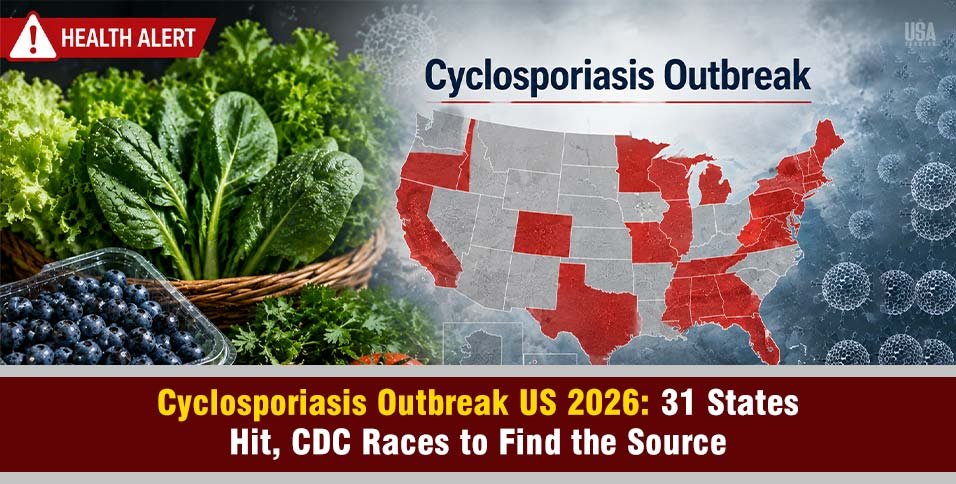
Cyclospora Outbreak 2026 Map: Which States Are Reporting Cases?
Cyclosporiasis cases have been reported across the United States. However, the Midwest and Northeast have the highest number of cases. Here’s the latest outbreak update by state:
Michigan has reported more than 1,562 cases as of July 11, the highest in the U.S. The state is also conducting its own investigation into the outbreak.
Ohio has reported 177 confirmed cases as of July, with most cases recorded in June. Health officials say cyclosporiasis is a serious illness that can cause dehydration and may require emergency medical care.
New York: Cases are increasing, and state officials are working to find the source.
California, Texas, and Florida reported Cyclospora cases starting in May.
As of the CDC’s July update, 34 states have reported cases, meaning more than half of the U.S. The CDC also provides a live Cyclospora outbreak map and case updates on its surveillance page.
How Long Does Cyclospora Last Without Treatment?
Without treatment, a Cyclospora infection can last from a few days to over a month. Symptoms may get better for a while but often come back, sometimes several times.
Bactrim (trimethoprim-sulfamethoxazole), a prescription antibiotic, helps people recover faster. Most patients start feeling better within a few days. The key is getting the right diagnosis as early as possible.
Standard stool tests usually do not detect Cyclospora. Doctors must request a special test, such as a PCR or modified acid-fast stain. If patients do not mention eating fresh produce or the doctor does not suspect Cyclospora, diagnosis and treatment can be delayed for weeks.
Long-Term Effects of Cyclospora Infection
Most healthy adults recover fully after treatment. But if Cyclospora is not treated or lasts for a long time, it can lead to serious health problems.
- Severe dehydration from weeks of diarrhoea that may require hospital treatment.
- Major weight loss caused by poor appetite and difficulty absorbing nutrients.
- Extreme tiredness that affects work and everyday activities for weeks.
- Repeated flare-ups that can delay recovery for several months.
People with weak immune systems, such as cancer patients receiving treatment, older adults, and people living with HIV, are more likely to become seriously ill or stay sick longer after a Cyclospora infection.
According to the CDC, the 2026 outbreak has affected people aged 5 to 88, with the average patient being 42 years old. Anyone who eats contaminated food or drinks contaminated water can get infected, no matter their age.
How to Protect Yourself From a Cyclospora Infection
| Prevention Action | How to Do It | Effectiveness |
| Cook fresh produce | Heat to 158°F (70°C); this kills the Cyclospora parasite | High |
| Wash hands with soap | Before and after handling raw produce or preparing meals | High |
| Rinse all fruits and vegetables | Especially herbs, berries, and leafy greens, though rinsing alone is not enough | Medium |
| Use clean, treated water | Do not drink or cook with untreated tap water when sanitation is uncertain | High |
| See a doctor early | Treatment with Bactrim works quickly; do not wait weeks to seek care | Critical |
Washing fruits and vegetables alone may not remove Cyclospora. The parasite sticks to the surface and can survive normal rinsing. Cooking food is the best way to kill it. If you eat raw produce, wash it well and always wash your hands before eating.
See a doctor if your diarrhoea lasts more than a few days, you have signs of dehydration, or you feel sick after eating fresh produce. Ask for a Cyclospora test, as a regular stool test may not detect the infection.
Conclusion
A cyclosporiasis outbreak is affecting many people across the United States. As of July 12, 2026, 843 cases have been confirmed in 31 states. Michigan, Ohio, and New York have the most cases. The infection can cause diarrhea, nausea, stomach pain, tiredness, and a mild fever. Without treatment, symptoms can last for several weeks. Medicine from a doctor usually works well. To stay safe, wash your hands, clean and cook fresh fruits and vegetables, and get medical help if you keep feeling sick.
Also Read– Ebola Outbreak 2026: WHO Declares Emergency: What Americans Need to Know