
The USA Leaders
October 23, 2026
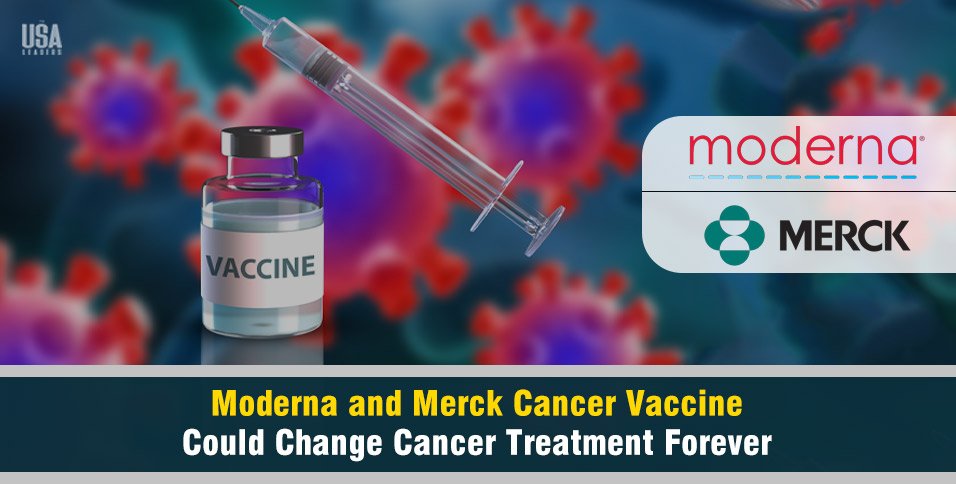
Cambridge, Massachusetts – The Moderna and Merck cancer vaccine is gaining attention after a clinical trial showed that the personalized mRNA vaccine, combined with an immunotherapy drug, reduced the risk of melanoma returning or death by 42%.
Based on the statement by Merck, melanoma cancer vaccine results show how personalized cancer treatments could shape healthcare, attract biotech investment, and drive future medical advances.
The melanoma experimental cancer vaccine developed by Moderna and Merck helps the immune system identify and attack cancer cells based on each patient’s tumor. The approach combines Moderna’s mRNA technology with Merck’s immunotherapy drug, Keytruda.
What the Moderna and Merck Cancer Vaccine Results Show
The melanoma cancer vaccine, known as intismeran autogene or mRNA-4157 (V940), has shown promising results in earlier clinical trials as well.
Merck’s reports published on October 22, 2026, showed that the vaccine and Keytruda combination reduced the risk of melanoma returning or death by 42% compared with Keytruda alone. The results suggest that an mRNA cancer vaccine combined with immunotherapy may help improve treatment outcomes for some patients with melanoma, a serious form of skin cancer.
The cancer treatment is designed for patients whose melanoma has been surgically removed but who remain at risk of the disease returning. Rather than functioning like a traditional preventive vaccine, it aims to train the immune system to recognize specific features of a patient’s cancer.
It should be noted that even though the vaccine findings are encouraging, the treatment remains investigational. However, the treatment may not work for everyone and cannot guarantee that cancer will not return.
How the Melanoma Experimental Cancer Vaccine Works
The melanoma cancer vaccine uses messenger RNA, or mRNA, to help the body identify tumor-specific targets. Researchers study each patient’s tumor to create a personalized treatment that helps immune cells identify cancer cells.
Keytruda, Merck’s immunotherapy drug, works by helping the immune system recognize and attack cancer. The combination aims to boost the immune system and help it recognize specific cancer cells.
This approach differs from conventional vaccines designed to prevent infectious diseases. It is a form of personalized cancer treatment, developed around the characteristics of an existing tumor.
What the Cancer Vaccine Results Mean for the Healthcare Industry
The cancer vaccine findings could have implications for pharmaceutical companies, biotechnology firms, research organizations, and healthcare providers. Personalized treatments require collaboration across drug development, genetic analysis, clinical testing, manufacturing, and patient care.
For Moderna, the results offer another example of how its mRNA platform could be applied beyond infectious diseases. For Merck, the combination reinforces the role of immunotherapy in exploring new approaches to cancer treatment.
Further development could create opportunities for companies working on personalized medicine, diagnostic tools, specialized manufacturing, and clinical research. However, future success of the melanoma cancer vaccine will depend on trial results, regulatory approval, production costs, and treatment availability.
Treatment Timeline: From Clinical Trials to Potential U.S. Approval
The latest results follow several years of research and development.
- August 2026: Moderna and Merck announced that their Phase 3 INTerpath-001 trial had met its main efficacy goals.
- October 22, 2026: New data showed that the treatment reduced the risk of melanoma returning or death by 42% and the risk of cancer spreading or death by 38%, compared with Keytruda alone.
- Next steps: The companies plan to engage with regulators and submit the treatment for approval. A potential U.S. launch could follow in 2027, subject to regulatory review.
The Phase 3 study involved more than 1,100 patients. Two years later, 82.2% of patients who received the melanoma cancer vaccine with Keytruda remained cancer-free, compared with 70% of patients who received Keytruda alone. These findings provide a clearer picture of the treatment’s potential benefit.
What Could the Melanoma Experimental Cancer Vaccine Mean for Patients and Future Cancer Treatments?
The melanoma experimental cancer vaccine could help make cancer treatment more personalized for patients in the United States and worldwide. If approved, the treatment could give melanoma cancer patients another option to help prevent cancer from returning after surgery.
However, access will depend on regulatory approval, treatment costs, insurance coverage, and the ability to produce individualized vaccines. The process involves testing a patient’s tumor and making a vaccine based on its mutations, which requires specialized testing and manufacturing.
The research could also influence future studies involving other cancers. Moderna and Merck are exploring related approaches for conditions including lung, kidney, and bladder cancer.
The Road Ahead for the Moderna and Merck Cancer Vaccine
The Moderna and Merck cancer vaccine results represent an important development in personalized medicine. The 42% lower risk of melanoma returning or death supports combining mRNA technology with existing immunotherapy treatments.
The next milestones are regulatory review, further clinical evidence, and decisions about manufacturing and patient access.
Content Marketer