
The USA Leaders
October 21, 2026
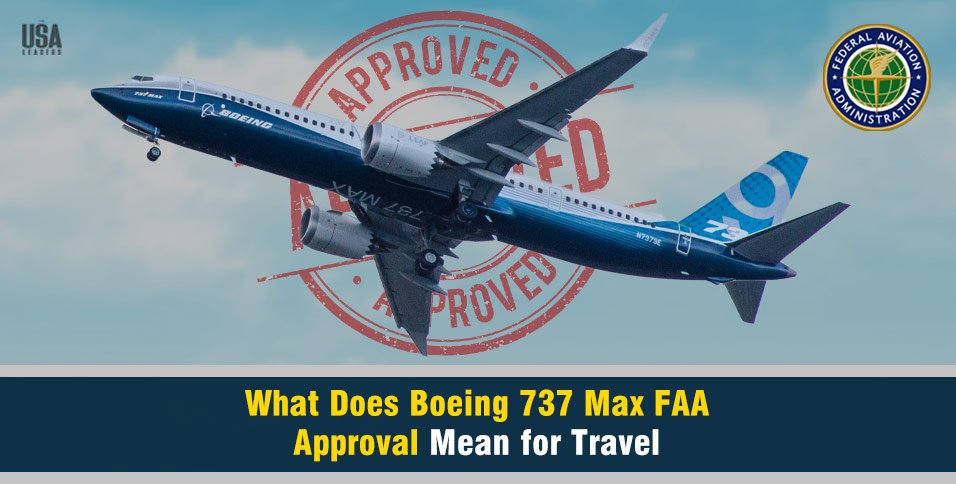
Washington, D.C. – The Boeing 737 MAX FAA approval marks the completion of the certification process for the largest model in the single-aisle aircraft family.
This approval paves the way for commercial deliveries in the coming months, giving airlines more options for high-demand routes.
Industry Impact and the Commercial Aviation Sector
The FAA certification for the single-aisle aircraft follows an extensive evaluation program involving more than 2,000 flight hours and 1,000 ground test hours.
As the first commercial plane certified under the complete requirements of the 2020 Aircraft Certification, Safety, and Accountability Act (ACSAA), the model incorporates mandatory human factors evaluations and enhanced documentation.
Furthermore, an updated Angle-of-Attack system introduced on the 737-10 will serve as a standard feature across the broader 737 MAX fleet.
The Boeing 737 MAX FAA approval ends years of regulatory reviews and removes a major hurdle in aircraft production.
Airlines that placed orders for the model can now integrate these assets into their long-term growth and route expansion strategies.
Fleet Economics for a Single-Aisle Aircraft
The Boeing 737-10 is built to offer distinct operational advantages over smaller single-aisle models. Key performance metrics include:
- Increased Airline Passenger Capacity: Configured to hold up to 230 passengers in a maximum seating setup, or typically 185 to 210 in a standard two-class layout.
- Enhanced Range: Capable of flying up to 3,100 nautical miles, offering 365 nautical miles more range than competing models without extra fuel tanks.
- Efficiency Gains: Designed to lower per-seat costs while achieving a 20 percent reduction in fuel use and carbon emissions compared to older-generation aircraft.
These features contribute to greater overall airline fleet efficiency, enabling operators to optimize yield on heavily traveled domestic and regional cross-border flights.
Market Demand and Future Industry Deals
The 737-10 model accounts for more than 1,555 orders out of the total 7,350 orders placed across the entire 737 MAX family. Representing over 30 percent of the program’s backlog, the airplane has attracted more than 30 commercial buyers globally.
The Boeing 737 FAA approval establishes a clearer forecast for global aircraft supply chains and order fulfillment schedules. With delivery timelines normalized, airlines can finalize future capital investments and fleet modernization commitments with greater certainty.
What This Means for U.S. Travelers and Commercial Flying
For everyday passengers and business travelers across the United States, the rollout of higher-capacity modern passenger jets brings practical benefits.
Higher airline passenger capacity on popular routes helps airlines meet growing travel demand. They can carry more passengers without adding flights at busy airports. This improves airline fleet efficiency.
Additionally, the improved fuel economy and per-seat cost advantages help airlines maintain competitive pricing models across their networks. Passengers can expect to see these larger narrow-body aircraft appearing on medium-haul domestic routes as deliveries progress.
Looking Ahead to the Future of American Aviation
The final regulatory clearance marks a significant milestone for U.S. aerospace manufacturing and commercial flight operations.
The Boeing 737 FAA approval sets new standards for fleet planning, regulatory compliance, and operational efficiency in domestic aviation.
Neelmani Yadav