The USA Leaders
December 26, 2025
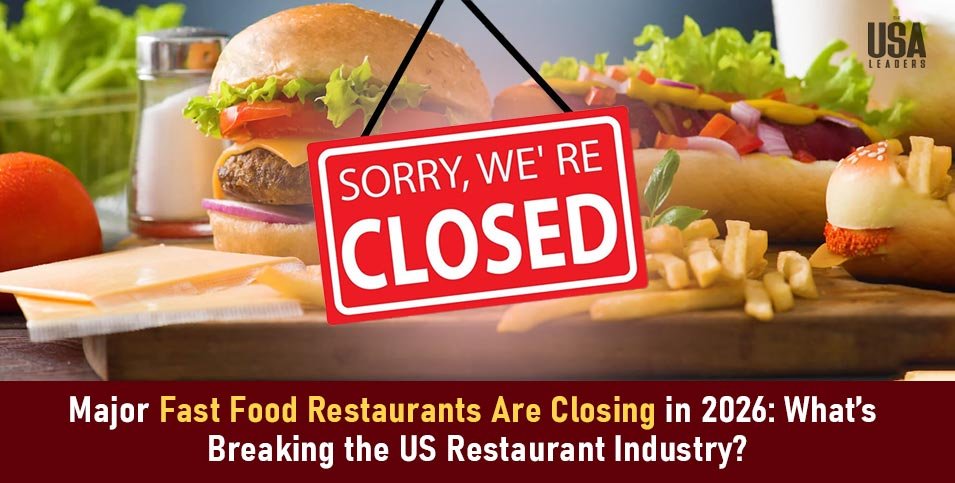
New York – Across the United States, fast food restaurants are closing stores next year.
From national burger chains to coffee giants, several well-known brands have announced plans to shut down hundreds of outlets by 2026.
Earlier in 2025, over 4,100 stores and restaurants announced closures nationwide, spanning sectors from apparel to groceries. While these announcements may sound alarming, they reveal a deeper story about how the US fast food industry is changing under economic pressure.
This wave of closing fast food restaurants is not simply about declining popularity. Instead, the closures from beloved brands reflect deep-seated challenges tied to inflation, economic pressure, and shifting consumer behavior. That is forcing companies to rethink how and where they operate.
Which Big Names Are Cutting Back?
Nationwide, some of the favorite restaurant chains are closing stores. Several major brands have confirmed plans to reduce their physical footprint:
- Wendy’s: Planning to close between 200 and 350 restaurants starting late this year.
- Jack in the Box: Expecting to shut down 150 to 200 underperforming spots by 2026.
- Starbucks: The coffee giant is closing some city locations to focus on where they are needed most.
- Burger King: Continuing to shut down older or less profitable stores to stay competitive.
This isn’t just a few unlucky spots where fast food restaurants are closing; it’s a nationwide restaurant industry slowdown.
What’s Driving Fast Food Restaurants To Close?
Economic Pressure On The US Fast Food Industry
The biggest reason fast food restaurants are closing is economic pressure, especially from inflation. While customers may still be visiting restaurants, the cost of keeping doors open has risen sharply.
Key cost challenges include:
- Labor costs: Higher wages and staffing shortages
- Food inflation: Rising prices for meat, dairy, and packaging
- Rent and utilities: Long-term leases signed before inflation surged
Many restaurant operators report that sales volume alone is no longer enough to offset these costs. This explains why locations of fast food restaurants are closing even when stores appear busy.
Expansion No Longer Guarantees Success
For decades, growth meant opening more locations. But the US fast food industry is now facing the downside of that strategy.
In many cities, multiple outlets from the same brand compete for the same customers. This over-expansion has led to:
- Lower profits per store
- Higher operating costs
- Increased competition within the same brand
As a result, restaurant chains are shutting down stores in a strategic move, not a sign of collapse. Closing weaker locations allows companies to strengthen their best-performing restaurants.
Franchise Fatigue Is Accelerating Store Closures
The pressure on franchise owners is one of the major reasons fast food restaurants shut down. Many fast food brands rely heavily on franchises, where independent operators run stores under corporate rules.
Franchise owners are facing:
- Rising royalty and advertising fees
- Mandatory renovations and technology upgrades
- Higher labor and ingredient costs
In several cases, franchisees have chosen to exit rather than continue operating under shrinking margins. This seems to be a significant cause behind why the fast food restaurants are closing.
Consolidation Is Redefining Convenience
One of the most important shifts in the US fast food industry is consolidation. Instead of operating many small outlets, brands are focusing on fewer, higher-volume locations.
This strategy includes:
- Larger stores designed for drive-thru and mobile pickup
- Increased automation, such as self-order kiosks
- AI-powered demand forecasting to reduce waste
This approach explains why fast food restaurants are closing, and it does not necessarily mean fewer customers. It means that fewer physical locations serve the same demand more efficiently.
As one restaurant analyst quoted by The Street noted, “The future of fast food is about efficiency, not proximity.”
Changing Consumer Habits Are Reshaping Demand
Consumer behavior has also shifted dramatically. Inflation has made diners more price-conscious, even at fast food chains traditionally known for affordability.
Key trends include:
- Fewer impulse dining visits
- More home cooking and grocery meal alternatives
- Reduced brand loyalty
When menu prices rise, fast food loses its value appeal. This change has contributed to the slowdown of the restaurant industry, pushing brands to close underperforming locations.
Why Even Big Names Are Holding Back
Even major players are adjusting to the change. The closures or consolidation efforts involving brands like Starbucks prove that size alone does not guarantee immunity.
According to The Street, several once-dominant chains have already closed hundreds of locations over the past few years, with more closures expected before 2026.
These moves reinforce that fast food restaurants are closing, and they reflect strategic recalibration rather than a sudden loss of demand.
The Future: Fewer Stores, More Tech
The fast food restaurants are closing, and the number is only growing in 2026. But it does not mean Americans are abandoning fast food. Instead, it marks the end of an old business model built on rapid expansion and cheap operating costs.
The US fast food industry is entering a new phase, one defined by consolidation, automation, and tighter financial discipline. Brands that adapt will survive and even thrive. Those who fail to adjust will continue to disappear from street corners across the country.
For consumers and businesses, these closures show the most efficient models that will shape the future of the fast food industry.
Also Read: US Economic Growth 2025: Is Third Quarter 4.3% GDP Surge a Boon or Bubble?