
The USA Leaders
November 19, 2026
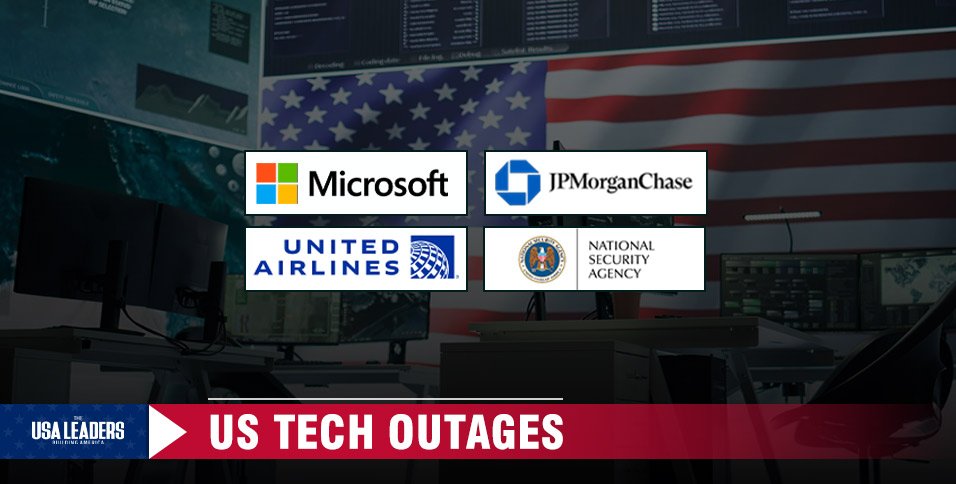
Washington, D.C. – Recent US tech outages affecting airlines, banks, Microsoft, and government networks have highlighted how much American businesses rely on technology to operate.
The US tech disruptions have occurred over several days, affecting services people and companies use for communication, travel, and financial transactions. However, US intelligence officials say the incidents are not linked to a coordinated cyberattack.
At a November 18 hearing, Jay Clayton said the outages were separate incidents caused by maintenance and technical changes. Homeland Security Secretary Markwayne Mullin also said officials had found no indication of coordinated malicious activity.
The tech outages raise questions about how companies can keep their services running as they rely more on technology.
What Caused the Recent US Tech Disruptions?
The recent US tech disruptions have involved different technical issues rather than one confirmed common cause.
One major incident involved a nationwide Federal Aviation Administration (FAA) ground stop after a telecommunications network problem. Officials said maintenance work to replace aging copper communication lines with fiber connections contributed to the disruption.
Microsoft services, including Outlook, also experienced interruptions. A separate outage affected the National Security Agency’s internal network.
According to government officials, maintenance work, software updates, and hardware changes were among the factors involved in these incidents.
The US technology infrastructure behind these services includes networks, cloud platforms, communication systems, and other equipment that allow organizations to operate.
How Do US Tech Outages Affect American Businesses?
US tech outages can interrupt business operations by limiting access to essential digital tools, payment services, and communication networks.
Many American companies use cloud platforms to store information, manage projects, and communicate with employees. When these services become unavailable, workers may temporarily lose access to files, emails, and other important tools.
Payment systems are another important area. Retailers, restaurants, and service providers rely on digital networks to process customer transactions. A temporary disruption can delay payments and affect normal customer service.
Companies also depend on outside technology providers for software, cloud storage, and network management. An interruption at one provider can affect several businesses that use the same service.
This makes reliable technology an important part of daily business planning. Companies need to consider not only their own systems but also the services provided by their technology partners.
How Are Banking System Outages Affecting Financial Services?
Banking system outages can disrupt financial services by preventing customers from accessing accounts, making digital payments, and completing transactions. They can also delay business payments and affect daily banking operations.
A temporary disruption can prevent customers from checking account information, completing digital transactions, or accessing certain banking services. Businesses may also face delays when processing payments or managing their accounts.
Recent US tech disruptions affecting JPMorgan Chase and other banks brought attention from US financial regulators.
Reuters reported that the Office of the Comptroller of the Currency (OCC) contacted banks to learn what happened, how the outages affected them, and how they informed customers. The regulator is also planning a closer review of the issue.
This attention highlights the importance of reliable banking technology as more financial services move to digital platforms.
For financial institutions, maintaining dependable systems involves regular testing, clear customer communication, and coordination with technology providers.
How Are AI Software Vulnerabilities Changing Technology Maintenance?
AI software vulnerabilities are changing technology maintenance by helping companies identify security weaknesses faster and fix them through software updates. These AI tools can scan large amounts of software and find problems that might otherwise take longer to detect.
Companies can then release software patches, which are updates designed to fix those weaknesses. However, installing updates across complex systems requires careful testing. Changes to one part of a network can sometimes affect other connected services.
Microsoft fixed more than 1,200 software flaws in November, nearly 20 times more than in the same month last year, according to cybersecurity firm Qualys.
This highlights how quickly the software maintenance process is changing.
It does not mean AI directly caused every recent outage. Instead, AI-assisted vulnerability discovery and the need for faster software updates are adding new responsibilities for technology teams.
How Can Businesses Prepare for Future Technology Disruptions?
Businesses can improve their readiness by maintaining backup systems and regularly reviewing how their technology services operate.
Some practical steps include:
- Maintain backup systems: Keep alternative tools available for essential business operations.
- Test software updates: Check updates before applying them across important systems.
- Prepare communication alternatives: Give employees and customers another way to receive important information.
- Review technology providers: Understand how outside software and cloud services support daily operations.
- Update continuity plans: Make sure employees know how to continue essential work during a service interruption.
These security measures can help companies maintain operations and communicate with customers when digital services are temporarily unavailable.
What can Businesses Learn From the US Tech Outages?
Businesses can learn the importance of reliable technology, regular software updates, and backup systems from the recent US tech outages. These disruptions show why companies need to prepare for service interruptions and keep essential operations running.
As companies keep using cloud platforms and AI tools, reliable systems will stay vital to daily business operations. Strong backup plans, regular testing, and communication with technology providers can help organizations prepare for future disruptions.
Neelmani Yadav