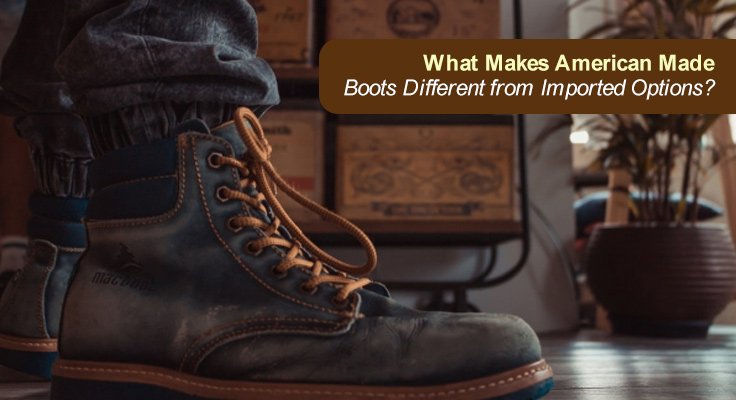
For many buyers, the difference between American made boots and imported options comes down to more than just branding. It comes down to how the boots are built, where the materials come from, and whether the product is designed to last through years of wear. For workers and serious buyers, those factors matter more than surface-level styling or a lower upfront price. American made boots appeal to shoppers who care about durability, repairability, and clearer sourcing. Imported boots can still offer value in the right situation, especially for lighter use or tighter budgets. But when long-term performance matters, the differences become clear.
What “American Made” Actually Means for Boot Buyers
Origin claims help buyers compare boots with more confidence. According to the Federal Trade Commission’s Made in USA guidance, an unqualified “Made in USA” claim generally means that all or virtually all of the product is made in the United States. That is different from “Assembled in USA,” which can still include imported parts. For buyers comparing similar-looking boots, that distinction matters because it affects how much of the product was actually made domestically.
Why Origin Claims Matter When Comparing Similar Boots
Two boots can look almost identical online but differ in sourcing, labor, and manufacturing transparency. One may rely more heavily on domestic production, while another may be mostly imported. Clear origin claims help buyers understand what they are paying for and make it easier to compare value beyond appearance alone.
The Difference Between “Made in USA” and “Assembled in USA”
These terms are not interchangeable. “Made in USA” is the stronger claim, while “Assembled in USA” allows more imported content. For buyers researching boots made in the USA, that difference provides useful context and reduces confusion around broad marketing language.
Materials and Construction: Where the Real Difference Shows Up
The real difference between imported boots and American made boots shows up after repeated wear. Better materials, stronger components, and more consistent construction affect comfort, support, and durability over time. That is why buyers often look beyond the upfront price and focus on how the boot performs after weeks or months of use.
Better Materials Often Lead to Better Long-Term Wear
Higher-grade leather, stronger stitching, and tighter quality control often lead to better long-term wear. That is one reason leather work boots and handcrafted work boots remain appealing to buyers who care about durability. Better materials do not guarantee a better boot every time, but they often improve the odds of longer service life and more dependable performance.
Why Rebuildable Construction Changes the Value Equation
Resoleable and rebuildable boots offer greater long-term value because they are designed to remain in service longer. Instead of replacing the entire boot when the sole wears down, buyers may be able to repair key components and extend the life of the footwear. That makes rebuildable construction especially appealing for people who wear boots every day.
Supply Chain Transparency and Consumer Trust
Transparency matters because buyers want to know where products come from and how they are made. U.S. Customs and Border Protection explains country-of-origin marking requirements, which generally require imported goods to be marked with their country of origin unless an exception applies. FTC guidance separately governs U.S.-origin claims. Together, those standards help buyers better understand the difference between domestic manufacturing and imported footwear.
That clarity also supports trust. When brands explain sourcing and construction clearly, buyers can compare products more accurately and with less guesswork. This is one reason supply chain transparency continues to matter in footwear and other product categories, a point also reflected in Forbes’ discussion of transparency and consumer trust.
Why American Made Boots Usually Cost More
American made boots usually cost more because domestic labor, smaller production runs, premium materials, and hands-on quality control all add cost. Rebuildable construction can also require more labor and better components. At the same time, footwear pricing is affected by trade costs. The American Apparel & Footwear Association’s tariff overview notes that footwear and apparel face relatively high tariff burdens, which also complicate import pricing.
For buyers focused on work boot value, the better question is not which pair costs less today. It is which pair delivers better performance and longevity over time.
Who Should Choose American Made Boots Over Imported Options?
American-made boots are the better fit for buyers who prioritize durability, repairability, transparency of origin, and long-term value. That includes people who wear boots daily and depend on them in demanding work environments. Imported options may still work well for lighter use, occasional wear, or lower upfront budgets.
The right choice depends on how the boots will be used. But for shoppers who value craftsmanship, transparency, and long-term wear, American made boots stand apart in ways that become clearer with time.