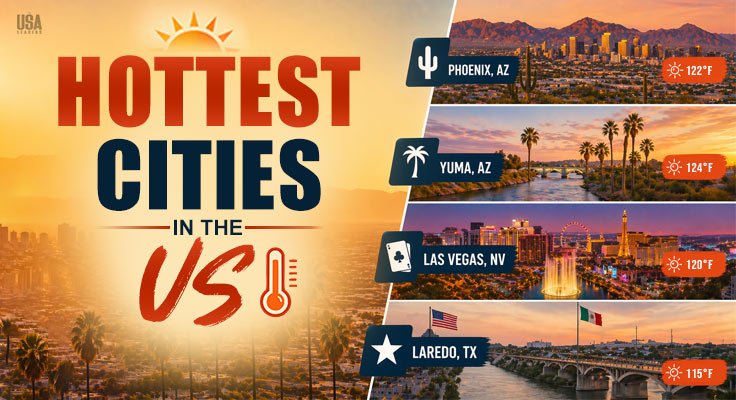
The hottest cities in the US in 2026 include Phoenix, Miami, Las Vegas, and Yuma, based on a “Relentless Heat Factor,” a combination of extreme temperatures, the number of 100°F days, humidity, and the lack of overnight cooling. Phoenix leads in peak heat, while Miami ranks highest in year-round warmth.
The 10 Hottest Cities in the U.S., Ranked [2026]
| Rank | City | Avg. Summer High | Record High (2025/26) | Primary Heat Driver |
| 1 | Phoenix, AZ | 106.1°F | 122°F | Urban Heat Island |
| 2 | Yuma, AZ | 106.8°F | 124°F | Low Desert Elevation |
| 3 | Las Vegas, NV | 102.5°F | 120°F | Mojave Aridity |
| 4 | Laredo, TX | 100.1°F | 115°F | Inland Compression |
| 5 | Tucson, AZ | 99.8°F | 117°F | Sonoran High Desert |
| 6 | McAllen, TX | 98.4°F | 111°F | Tropical Humidity |
| 7 | Dallas, TX | 96.5°F | 113°F | Southern Plains Heat |
| 8 | San Antonio, TX | 96.2°F | 111°F | Subtropical Pressure |
| 9 | Austin, TX | 95.8°F | 110°F | Central Texas Drought |
| 10 | Houston, TX | 94.5°F | 109°F | Gulf Coast Moisture |
Why These Are the Hottest Cities in the US
When people search for the hottest cities in the US, they usually focus only on temperature. However, real heat intensity depends on a mix of temperature, humidity, and how much cooling happens at night.
For instance, a 100°F day in Phoenix feels very different from a 95°F day in McAllen. The key factor is humidity; when moisture levels are high, sweat doesn’t evaporate effectively, making the heat feel much more intense.
This 2026 ranking is based on a “Relentless Heat Factor,” which considers:
- Extreme temperature highs
- Number of days above 100°F
- Heat index (impact of humidity)
- Nighttime cooling patterns
Here are the top 10 Hottest Cities in the US in 2026
1. Phoenix – The Hottest City in the US by Extreme Heat
Why Phoenix Leads the Hottest Cities in the US
Phoenix remains the most extreme example of heat in America. The city averages over 111 days per year above 100°F, making it the leader among hottest US cities by temperature.
In 2024–2025, Phoenix recorded a record-breaking heatwave where temperatures stayed above 110°F for weeks. Residents reported extreme conditions where even touching car surfaces could cause burns.
Urban Heat Island Effect and Real Impact
Phoenix’s biggest danger is its urban heat island effect. Concrete roads and buildings absorb heat all day and release it slowly at night. This keeps nighttime temperatures above 90°F, giving residents little recovery time.
Real example: Emergency rooms in Phoenix often see spikes in heatstroke cases during prolonged heatwaves, especially among outdoor workers and elderly residents.
2. Yuma – One of the Sunniest and Hottest Cities in the US
Yuma’s Unique Climate Advantage
Yuma is officially one of the sunniest cities on Earth, receiving over 4,000 hours of sunshine annually. This constant exposure makes it one of the hottest places in America.
Unlike many cities, cloud cover is rare, meaning there is almost no natural relief from the sun.
Real-Life Living Conditions
Residents in Yuma often plan their day around the heat. Outdoor work typically starts before sunrise and ends by mid-morning. Air conditioning is not a luxury; it is essential for survival.
3. Las Vegas – Rapidly Rising Extreme Heat City
Las Vegas Heat Trends
Las Vegas is one of the fastest-warming cities in the United States. Summers now regularly exceed 110°F, placing it among the extreme heat cities USA.
Tourism Meets Real Reality
Millions of tourists visit Las Vegas every year, many unprepared for the desert heat. Walking the Strip during midday can lead to dehydration within minutes.
Real example: Hotels now provide shaded walkways, misting stations, and hydration points to help tourists cope.
4. Laredo – Persistent Inland Heat Among the Hottest Cities in the US
Why Laredo Is Among the Hottest Cities in the US
Laredo ranks among the hottest cities in the US due to its inland location and semi-arid climate. Without coastal winds, heat gets trapped, causing temperatures to stay consistently high, often near 99°F during peak summer.
The lack of vegetation and natural cooling further increases surface temperatures. This makes Laredo one of the most consistently hot US cities, where heat is not just intense but long-lasting.
Sun Exposure and Heat Duration
Laredo sees over 230 sunny days per year, leading to continuous heat exposure for months. Unlike regions with seasonal cooling, this city experiences prolonged hot periods with little relief.
As a result, residents depend heavily on air conditioning, and electricity usage spikes during summer. Outdoor work is often shifted to early mornings to avoid extreme heat.
5. Tucson – High Desert Heat with Slight Relief
Tucson vs Phoenix in the Hottest Cities in the US
Tucson is slightly cooler than Phoenix, but still ranks among the hottest cities in the US. High desert conditions bring frequent temperatures above 100°F during summer.
The main difference is slightly cooler nights, which offer some relief compared to Phoenix’s extreme overnight heat.
Daily Heat Management
Residents adapt by starting their day early and avoiding outdoor activities during peak heat hours.
Water conservation, lightweight clothing, and indoor cooling are essential parts of daily life in Tucson’s desert environment.
6. McAllen – The Highest Heat Index in the US
Humidity Makes McAllen Dangerous
McAllen stands out not for extreme temperatures but for intense humidity, making it one of the warmest cities in the US year-round.
Even when temperatures stay below 100°F, the heat index can exceed 110°F.
Real Example of Daily Life
Residents often avoid outdoor activities entirely during midday. Schools and workplaces adjust schedules to reduce exposure to extreme heat conditions.
7. Dallas – Urban Heat Expansion and Rising Temperatures
Dallas Heat Trends
Dallas is becoming one of the hottest cities in the US due to rapid urbanization. Summers are getting longer, with more frequent heatwaves.
The city’s growth has replaced natural cooling areas with heat-absorbing infrastructure.
Urban Heat Island Effect
Concrete and asphalt trap heat, increasing both daytime and nighttime temperatures.
This leads to warmer nights, higher electricity costs, and increased reliance on cooling systems across the city.
8. San Antonio – Subtropical Heat Rising Fast
San Antonio Climate Trends
San Antonio experiences long, humid summers, making it one of the fastest-growing cities in the US. Heatwaves are becoming more frequent and lasting longer.
The combination of heat and humidity increases discomfort and health risks during summer months.
Drought and Heat Impact
Drought conditions reduce natural cooling from soil moisture, leading to higher surface temperatures.
This results in increased energy usage, water demand, and long-term climate challenges for the city.
9. College Station – A Hidden Heat Hub in Texas
Why College Station Is Among the Hottest Cities in the US
College Station experiences humid subtropical heat, where temperatures feel higher than they actually are. This places it among the hottest US cities by heat index.
Even mid-90°F temperatures can feel like 105°F due to high humidity levels.
Real-Life Example
Students and residents often avoid outdoor activity during midday heat. Campus life shifts indoors during peak summer.
Air conditioning becomes essential, and energy usage rises significantly during hot months.
10. Brownsville – Coastal Heat with High Humidity
Brownsville’s Climate Pattern
Brownsville combines coastal heat with high humidity, making it one of the most uncomfortable climates in the US. While temperatures may stay below 100°F, the humidity pushes the heat index much higher.
This makes Brownsville one of the hottest cities in the US by “feels-like” temperature, rather than actual temperature.
Real-Life Impact
Humidity prevents sweat from evaporating, making even normal heat feel extreme. Residents often feel exhausted quickly during outdoor activities.
Daily life depends heavily on air conditioning, fans, and hydration. Visitors unfamiliar with humid heat often struggle more than locals.
Conclusion:
The hottest cities in the US are no longer defined by temperature alone; they are shaped by a combination of extreme heat, humidity, and how long that heat persists. Cities like Phoenix dominate due to record-breaking temperatures and long heatwaves, while places like Brownsville and McAllen highlight how humidity can make even moderate temperatures feel dangerously high.
What’s clear in 2026 is that heat intensity is increasing across multiple regions, especially in rapidly growing urban areas like Dallas and San Antonio. Factors such as climate change, urban heat island effects, and reduced natural cooling are making summers longer, nights warmer, and heatwaves more frequent.
For residents, travelers, and businesses, understanding these patterns is essential. Whether it’s adapting daily routines, investing in energy-efficient cooling, or planning travel wisely, managing extreme heat is becoming a critical part of life in these regions. As these cities continue to evolve, one thing is certain the battle against heat in the United States is only getting more intense.
FAQs
1. What are the top 5 hottest cities in the US?
Phoenix, Honolulu, Las Vegas, Tucson, and Miami rank among the top 5 hottest cities.
2. Which US cities have the most 100 degree days?
Phoenix leads with over 100 days annually above 100°F.
3. Are the hottest cities getting hotter in 2026?
Yes, rising temperatures and heatwaves indicate a growing trend of extreme heat.
4. Which state has the most hottest cities?
States like Arizona and Texas dominate the list due to desert and subtropical climates.
5. Why are US cities getting hotter?
Rising temperatures are driven by climate change, urbanization, and increased heat retention in cities.