
The USA Leaders
November 5, 2026
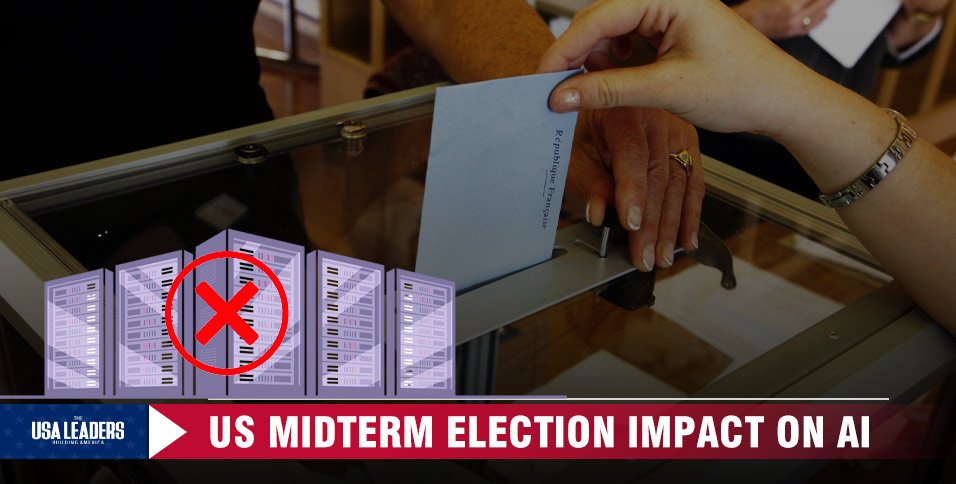
United States – The US midterm election impact on AI is becoming clearer as voters in several states decide where new data centers can be built. The November 4 results show that communities want more control over data center construction and the use of local resources.
Data centers are large buildings that house powerful computers and chips used to run AI tools, cloud services, and other online applications. As technology companies expand their operations, AI data center expansion has become an important part of America’s digital infrastructure.
Voters opposed nearly all 41 data center-related ballot measures during the elections. The results could influence future technology projects, AI infrastructure investment, and the development rules companies must follow.
How Could the US Midterm Election Impact on AI Shape Data Center Development?
The US midterm election impact on AI could shape where data centers are built by giving local communities more say in project approvals, construction plans, and resource use.
According to Reuters’ November 4 report, nearly all 41 data center-related ballot measures went against new development.
Several important developments emerged:
- Texas: Governor-elect Gina Hinojosa has proposed keeping new data center development on hold until lawmakers establish additional protections for communities and utility customers.
- Georgia: Newly elected Governor Keisha Lance Bottoms has supported pausing new data center construction and reviewing existing tax incentives.
- Ohio: The gubernatorial election also brought a candidate who supported tighter oversight of data center development.
The election results put local data center construction restrictions at the center of discussions about technology infrastructure. They could also influence how states approach US data center regulations in the coming years.
Why Could AI Infrastructure Investment Change in Texas, Georgia, and Ohio?
AI infrastructure investment could shift toward locations with clearer approval processes, available electricity, and suitable development conditions.
Texas is particularly important. Investment bank Jefferies estimates that the state represents approximately 26% of the planned US data center pipeline.
This makes the election particularly relevant to AI data center expansion. Changes to local approval processes could influence project schedules, financing arrangements, equipment orders, and construction costs.
For technology companies, AI infrastructure investment involves more than purchasing land and installing servers. Developers must also consider electricity connections, water availability, and local planning requirements.
AI companies with projects across multiple states may have more flexibility when choosing locations. However, smaller developers working on individual projects may have fewer options if approval timelines change.
How Could US Data Center Regulations Affect Businesses?
US data center regulations could affect where companies build facilities, how much they spend, and how quickly new data centers can begin operating.
Three areas deserve attention:
- Construction approvals: Data center zoning regulations may introduce additional reviews before developers can begin construction.
- Energy planning: Rising AI data center electricity demand makes access to reliable power an important factor in choosing locations.
- Project financing: Changes in local requirements could affect budgets, construction schedules, and expected returns.
These requirements could affect businesses beyond technology companies. Construction firms, utility providers, electrical equipment manufacturers, and infrastructure suppliers are also connected to AI data center expansion.
As a result, US data center regulations could become an important consideration in long-term business planning.
How Will AI Data Center Electricity Demand Affect Everyday Americans?
AI data center electricity demand makes energy availability an important part of future technology development and local infrastructure planning.
Data centers power everyday digital services such as AI assistants, online storage, video streaming, digital payments, and cloud apps.
However, operating these facilities requires substantial electricity and supporting infrastructure. As more projects are proposed, communities are paying closer attention to how new facilities fit into existing utility systems.
The November 2026 election does not mean existing AI services will suddenly become unavailable. Current facilities will continue supporting online applications and business operations.
Instead, the discussion is about balancing US AI infrastructure development with electricity availability, land use, water resources, and community planning.
Clearer data center zoning regulations could also help residents understand how proposed projects fit into their local development plans.
What Lies Ahead for US AI Infrastructure Development?
The next steps for US AI Infrastructure Development will depend on how newly elected officials turn their promises into state policies and local rules.
Technology companies will need to consider local data center construction restrictions, utility requirements, and community planning when selecting locations for future facilities.
The November 2026 election results show that US AI infrastructure development depends on more than software, advanced computer chips, and investment. It also requires physical infrastructure, reliable energy, and cooperation between private companies and public authorities.
Ultimately, the US midterm election impact on AI could shape the pace and location of future data center projects. The direction of AI data center expansion will depend not only on technology demand but also on how companies work with communities and governments.