
The USA Leaders
November 6, 2026
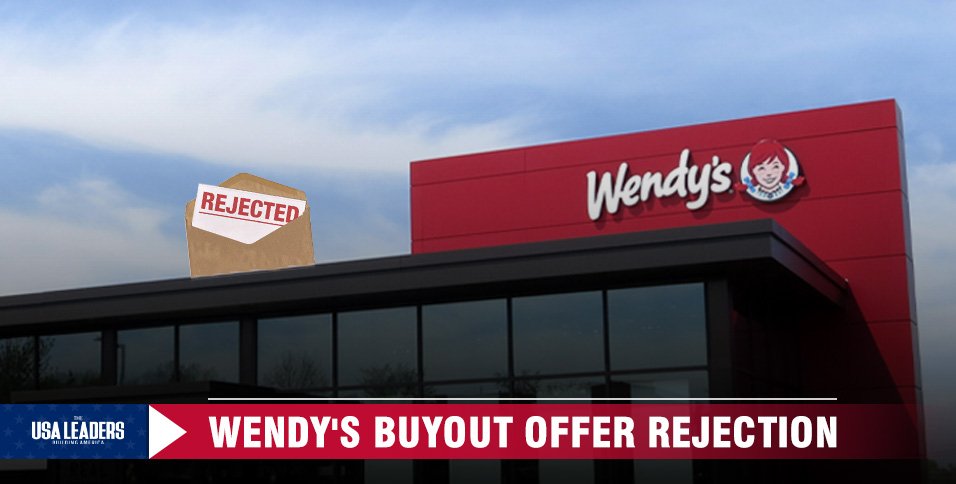
Dublin, Ohio – Wendy’s has rejected a $1.4 billion buyout offer from a group led by Nelson Peltz’s Trian Partners. The Wendy’s buyout offer rejection comes as the company works to boost sales, bring in more customers, and improve its restaurants under new CEO Bob Wright.
Trian Partners and an investor group offered $7.35 in cash for each outstanding share it did not already own. However, Wendy’s independent committee concluded that the offer did not reflect the company’s potential long-term value.
Instead of accepting the offer, Wendy’s will focus on its new plan, Dave’s Way, to improve food quality, customer experience, and restaurant profits.
Why Did Wendy’s Buyout Offer Rejection Happen?
Wendy’s rejected the buyout offer because its independent committee believes the franchise is worth more than the proposed price.
The Trian Partners acquisition proposal came from a group made up of Trian Partners, Flynn Group LP, BlueFive Capital, and Sixth Street Partners.
Trian Partners and the groups offered $7.35 per share in cash to purchase the remaining Wendy’s shares it did not already own. The proposed transaction was valued at approximately $1.4 billion.
According to Wendy’s November 5 announcement, an independent committee reviewed the offer with financial and legal advisers before unanimously rejecting it.
The Wendy’s committee said the offer undervalued the company and did not reflect the value its new business strategy could create.
Trian and its related investors already held a 16.3% stake in Wendy’s, according to Reuters. Nelson Peltz’s investment group has been involved with the company for several years.
What Do Wendy’s Third-Quarter Sales Reveal About Its Business?
Wendy’s third-quarter sales fell 5.7% in the U.S. from a year earlier, prompting the company to focus on attracting more customers and improving restaurant performance.
Wendy’s latest financial results show why its leadership wants to strengthen its business operations.
Here are the key figures:
- U.S. same-store sales: Down 5.7% year over year.
- Adjusted earnings per share: 13 cents, above analyst expectations.
- Restaurant traffic: Management reported that customer visits improved gradually during the third quarter.
Wendy’s is also adjusting its restaurant operations to improve efficiency. For example, it has made breakfast optional across its U.S. locations, allowing franchisees to focus on other meal periods.
The investment group has also signed a letter of intent with Meritage Hospitality Group to acquire up to 163 Wendy’s restaurants.
These developments form part of a broader effort to improve restaurant performance and build a stronger operating model.
How Can the Dave’s Way Turnaround Strategy Improve Wendy’s?
The Dave’s Way turnaround strategy aims to attract more customers, grow market share, and increase restaurant profits through five key priorities.
Under CEO Bob Wright, Wendy’s has introduced a plan focused on the following areas:
- Food quality and value: Improving menu quality while giving customers better value.
- Marketing and branding: Making the brand more recognizable and encouraging customer demand.
- Restaurant operations: Improving service and making daily operations more efficient.
- Digital experience: Strengthening digital ordering to encourage more frequent customer visits.
- Restaurant growth: Using existing restaurants as the foundation for future expansion.
Wendy’s has started improving its menu with thicker bacon, whole-leaf lettuce, and updated Frosty desserts.
Wendy’s is also simplifying its menu by removing selected lower-selling items. These steps are intended to make restaurant operations more efficient while improving the customer experience.
The Dave’s Way turnaround strategy will guide Wendy’s efforts to improve business performance and increase long-term shareholder value.
What Is Wendy’s Shareholder Rights Plan and How Does It Work?
Wendy’s shareholder rights plan gives the board more time to review takeover offers and protect shareholders’ interests.
Wendy’s adopted the plan on November 4, 2026, before announcing its decision to reject the acquisition proposal.
Under the Wendy’s shareholder rights plan, the rules apply if someone buys 15% or more of the company’s shares without board approval. It also applies to certain additional purchases by existing shareholders who already own at least 15%.
If triggered, the plan allows other eligible shareholders to purchase additional shares under specified conditions.
The plan is effective immediately and is scheduled to expire on November 3, 2027. The board can also consider ending it earlier.
Wendy’s said the measure protects shareholders and gives the board more time to review takeover offers.
How Will Wendy’s Move Forward After Rejecting the Buyout Offer?
Wendy’s will continue implementing Dave’s Way, improving its restaurant operations, and working toward stronger sales and profitability.
Wendy’s has made its priorities clear: improve its menu, strengthen marketing, enhance digital services, and make its restaurants more effective.
Its leadership will also monitor the results of these changes as the company works with its franchise network.
The Wendy’s buyout offer rejection therefore marks an important decision in the company’s current business direction. Instead of accepting the $1.4 billion offer, Wendy’s is counting on its leadership team and Dave’s Way to improve performance and create long-term value for shareholders.
The Wendy’s Buyout Offer Rejection puts the focus on how well the company can attract more customers and improve its business in the coming quarters.
Neelmani Yadav