Washington, D.C. — The United States has now done what many allies hoped would never happen.
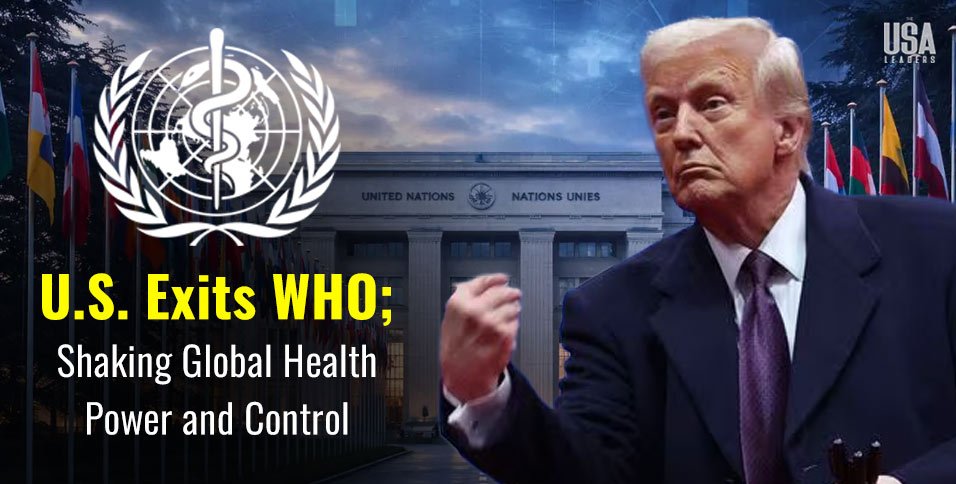
In a historic — and controversial move, the United States completed its formal withdrawal from the World Health Organization (WHO), ending its 78-year role as a founding member and largest funder.
The announcement by the U.S. Department of Health and Human Services and the Department of State marks a decisive break in long-standing global health cooperation. Officials said the exit responds to perceived failures in WHO governance and pandemic response.
But the effects extend far beyond politics. The U.S. departure removes roughly 18 % of the WHO’s budget, jeopardizes access to critical global health data, and signals a shift toward bilateral health partnerships outside multilateral frameworks.
For CEOs in biopharma, risk officers in global supply chains, and policymakers shaping health security strategies, this decision introduces both risks and strategic inflection points — now and in future health crises.
What Happened: The Withdrawal Completed
The U.S. began the formal exit process in January 2025 under an executive order signed by President Donald Trump on his first day in office.
After fulfilling the required one-year notice period, the government officially:
- Terminated all funding to the WHO.
- Recalled American personnel and contractors embedded in WHO operations worldwide.
- Discontinued U.S. participation in WHO governance, committees, and technical groups.
The U.S. also plans to collaborate with the WHO only to effectuate the withdrawal itself, not as a full member.
Why It Matters Now
A Funding Vacuum and Operational Strain
The U.S. historically contributed about 18 % of the WHO’s budget, combining assessed dues and voluntary funding. Without that support, the agency faces deep financial strain that could force cuts in global programs ranging from outbreak responses to vaccine distribution.
Analysts estimate the WHO now confronts an operational deficit approaching $1.9 billion, threatening nearly 2,400 jobs — roughly a quarter of its workforce — by mid-2026.
Data Access and Disease Surveillance
Critically, the U.S. will lose formal access to global disease surveillance systems managed by WHO — including platforms essential for tracking influenza strains and early warnings on emerging pathogens.
This shift could slow vaccine development timelines, complicate planning for pharmaceutical and diagnostic firms, and hamper coordinated responses to future outbreaks.
Who Is Most Affected
- Biotech and Pharma
U.S. biopharma companies — especially those reliant on global strain data for vaccine design — face delays and higher costs if alternative data channels are not secured.
- Public Health Agencies
Federal agencies such as CDC and NIH must now build parallel mechanisms for global disease monitoring and coordination, blurring lines between domestic preparedness and international response.
- Global Partners and Low-Income Nations
Countries relying on WHO for immunization programs, outbreak support, and technical guidance — particularly in Africa and South Asia — face decreased resources and planning uncertainty.
- International Investors and Health Markets
Global health equities, particularly in diagnostics and preventive care sectors, may experience greater volatility as coordination wields less predictability. Market models that price pandemic risk will need adjustment.
Strategic Context: Why the U.S. Acted
The official rationale focuses on perceived governance failures, particularly the WHO’s early handling of COVID-19 and resistance to reform.
Administration statements describe the withdrawal as restoring “accountability and transparency” for U.S. taxpayers, and assert that the U.S. will pursue direct, bilateral health partnerships rather than multilateral engagement through the WHO.
Legal and political questions persist over outstanding financial obligations — roughly $130 million to $260 million in unpaid assessed dues — and whether the withdrawal complies with statutory requirements embedded in the 1948 WHO founding resolution.
What Leaders Should Watch Next
- Alternative Data and Surveillance Networks
Will CDC and private partners form new real-time disease monitoring coalitions to replace WHO platforms?
- Global Funding Shifts
Which countries or blocs — the EU, Japan, or private donors — step up as the WHO’s top funders?
- Regulatory and Trade Routines
How will biopharma firms bridge gaps in international regulatory coordination now that WHO credibility mechanisms have a diminished U.S. voice?
- Policy and Congressional Checks
Watch for legislative responses or funding decisions that could affect future U.S. health security partnerships.
Expert Opinion
The U.S. exit from the WHO marks both a symbolic and structural shift in global health governance.
By ending formal membership and funding, the United States relinquishes direct influence over the frameworks that coordinate pandemic preparedness, vaccine guidance, and disease surveillance — functions historically critical to both global health outcomes and domestic economic stability.
U.S. institutions, from NIH to CDC, now face the task of building alternative channels for data sharing and rapid response.
For business leaders in biotech and global supply, the withdrawal raises immediate operational questions: where will reliable early-warning data come from, how will international regulatory alignment evolve, and which funding conduits will sustain global health programs that underpin workforce stability and market certainty?
The next 12 months will reveal whether bilateral agreements can approximate the cohesion once provided by multilateral engagement.