The USA Leaders
August 24, 2026
Washington, D.C.- North American commerce discussions reached a crucial juncture over the weekend.
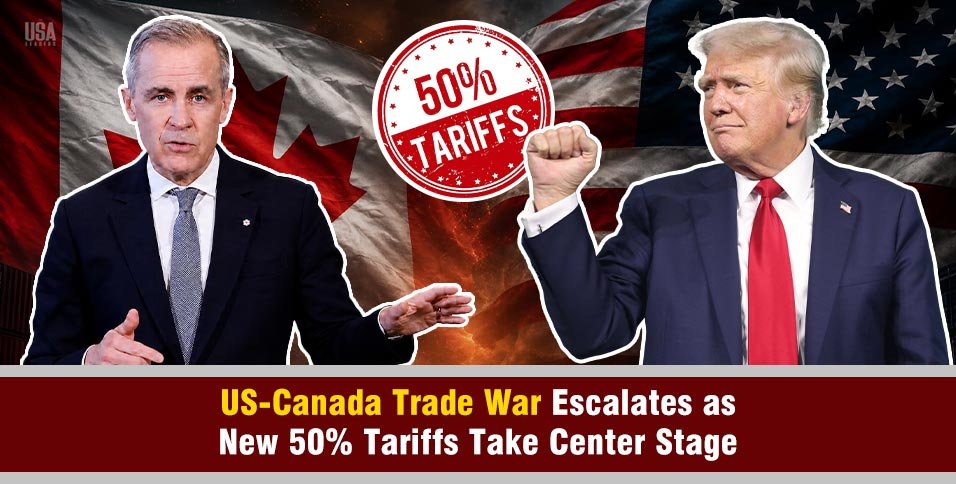
After the recent trade talks between the two neighbouring countries collapsed, the Trump administration announced a decision to implement 50% tariffs on select Canadian imports. This shock comes after the US Treasury declared economic sanctions against Iran, as covered by The USA Leaders last week.
Both countries played a blame game when they accused each other of not reaching a deal. The development signals a notable shift in US-Canada relations, officially marking a new chapter in the US-Canada trade war as both nations assess their economic priorities.
Tariffs and their Impact
In Layman’s terms, tariffs are essentially taxes placed on goods imported into a country from abroad. When the US government applies US tariffs on Canadian goods, these items become more expensive at the border. The primary goal of these taxes is to encourage buying domestic products or to gain a diplomatic upper hand in policy negotiations.
Under the latest measures, the current tariffs on Canadian goods target select export categories. Economists say that while tariffs aim to protect domestic industries, they can also affect supply chains and consumer pricing over time.
| Key Metric | Details and Impact |
| New US Tariff Rate | 50% duty on select Canadian product imports |
| Targeted Sectors | Select manufacturing, agricultural goods, and specialized items |
| Canadian Retaliation Target | “Dollar-for-dollar” duties taking effect Sept. 8 |
| Total Daily Trade Volume | Over $2 billion in cross-border commerce |
Financial Markets React to US-Canada Trade Dynamics
Markets quickly reacted to the news over the weekend. Investors around the world keep a keen eye on cross-border policy changes because the two nations share one of the largest economic partnerships globally.
Following the announcement:
- US stock-index futures experienced mild fluctuations as traders noted the potential impact on major business sectors.
- Key industries, including manufacturing, automotive, and agricultural supply chains, began considering alternative logistical options.
- Global energy and commodities markets remained attentive to how potential trade adjustments might affect broader trade flows.
Financial analysts stress that market shifts during trade negotiations are normal as industries calculate the long-term impact on international commerce.
Canada’s Response to US Tariffs
In response to the newly declared measures, Canadian leadership outlined a structured policy countermeasure. Canadian officials announced that Ottawa intends to mirror the scale of the policy, planning retaliatory duties on select American goods scheduled to take effect on September 8.
Speaking on the economic outlook, Canadian Prime Minister Mark Carney emphasized a balanced approach to trade policy, aiming to support local industries while maintaining dialogue with American partners.
What’s Next for North American Commerce
Navigating the evolving dynamics of US-Canada trade requires continuous dialogue. Both countries maintain deeply interconnected markets, sharing billions of dollars in daily cross-border trading.
While temporary friction points arise during high-stakes policy discussions, historically, shared economic interests often encourage both nations to return to discussing reasonable policies.
Beyond the immediate headline shifts, the real test lies in how quickly supply chains adjust before the September deadlines come. Industry groups across automotive, energy, and manufacturing are already testing their operations under new unpredictable conditions, looking for ways to tackle cost adjustments without introducing inflated prices to everyday consumers.
Historically, cross-border commercial ties have proven resilient through conflicts in the past, largely because both economies rely on shared infrastructure and interconnected logistics.
As the September implementation date approaches, business leaders, market watchers, and consumers alike will be keeping a close eye on how the US-Canada trade war unfolds and shapes North American commerce in the months to come.
Neelmani Yadav