
The USA Leaders
October 29, 2026
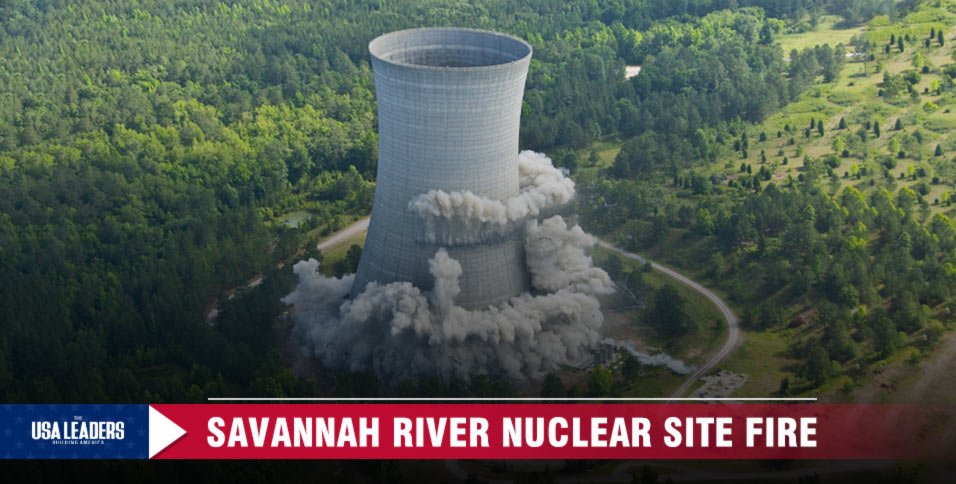
Aiken, South Carolina – A fire at the Savannah River National Laboratory in South Carolina on October 28 led to an emergency response and temporary access restrictions at parts of the site.
Officials extinguished the fire that evening, ended the emergency declaration, and reported no detectable radiological contamination following surveys of the area.
The Savannah River nuclear site fire also led to temporary restrictions on incoming traffic and nearby air, rail, and river activity. By Wednesday night, protective measures had been lifted, and site entrances reopened, according to local reports.
The immediate response has concluded, but the incident highlights an important question: how did the emergency affect the surrounding community, and what does the latest update mean for the site’s operations?
What Caused the Savannah River Nuclear Site Fire?
The cause of the Savannah River nuclear site fire remains unconfirmed, though officials reported that it began in a single laboratory room and found no detectable contamination beyond the site
According to information reported by WRDW, the incident involved an unfiltered release of radiological material at ground level. However, subsequent surveys found no detectable contamination, and officials reported no signs that contamination had spread beyond the site’s boundaries.
One employee was taken to a hospital with minor injuries. As emergency crews responded, employees in the affected laboratory area were temporarily instructed to shelter in place.
The Savannah River National Laboratory emergency was classified as a Site Area Emergency, requiring a significant response. Officials terminated the declaration at 9:45 p.m. on October 28, after the fire was extinguished and monitoring was completed. The precise cause of the fire at the Savannah River nuclear plant remains unknown.
How Did the South Carolina Fire Affect Local Residents?
The South Carolina fire temporarily affected site access and nearby transportation, but officials reported no detectable contamination beyond the facility’s boundaries.
During the Savannah River nuclear plant emergency, officials blocked site entrances and temporarily restricted nearby rail, river, and air traffic. Highway 125 remained open, and employees in the affected area were instructed to shelter in place as a precaution.
Authorities notified state and local agencies and advised residents to follow local news and official instructions. The reported absence of detectable off-site contamination provided reassurance to nearby communities while emergency crews handled the incident.
The Savannah River National Laboratory emergency shows how an incident at a large federal facility can temporarily disrupt travel and work, even when no contamination is detected outside the site.
What Is the Current Status of the Savannah River Nuclear Plant Fire?
The Savannah River nuclear plant fire was extinguished on October 28, and officials ended the emergency declaration at 9:45 p.m. after surveys found no detectable contamination.
According to the Associated Press and WRDW, the latest updates are:
- Fire: Extinguished on Wednesday evening.
- Emergency status: The Site Area Emergency was terminated at 9:45 p.m.
- Radiological monitoring: Surveys found no detectable contamination.
- Site access: Restrictions were lifted, and entrance barricades were reopened.
- Work schedules: Employees were instructed to report for their scheduled shifts on October 29.
- Public impact: Officials reported no indication of contamination beyond the site’s boundaries.
These updates show that the emergency response moved from temporary safety measures to a return to normal site operations within hours.
Why Does the Savannah River Site Matter?
The Savannah River Site matters because it supports nuclear materials management, environmental cleanup, radioactive waste handling, and U.S. national security activities. The 310-square-mile federal complex spans Aiken, Barnwell, and Allendale counties in South Carolina.
Established in the early 1950s, the Savannah River nuclear plant originally produced materials used in nuclear weapons, including tritium and plutonium-239. Today, it conducts research on nuclear materials, environmental cleanup, and related technologies.
The South Carolina fire highlights the importance of emergency planning and environmental monitoring at facilities that handle specialized materials. Temporary restrictions can affect employees, transportation, and nearby communities while officials assess an incident.
The Savannah River nuclear site’s continued operations also matter to the regional economy because its work supports specialized scientific, technical, and operational jobs. However, the available reports do not identify any lasting business disruption or estimate the fire’s economic impact.
What Are the Aftereffects of the Savannah River Nuclear Site Fire?
The next steps after the Savannah River nuclear site fire may include confirming its cause and providing updates on any follow-up investigation. Officials had extinguished the fire, completed radiological monitoring, and restored normal site access by Wednesday night.
The available reports do not confirm the cause of the fire or outline further investigative steps. Additional official updates may clarify whether any further action is needed.
For local residents and employees, the key updates are that monitoring found no detectable contamination, protective measures were lifted, and employees were told to return for their scheduled shifts on October 29.
With the emergency declaration lifted and normal operations resumed, further findings will help clarify the cause of the incident and any follow-up measures at the facility.
Content Marketer