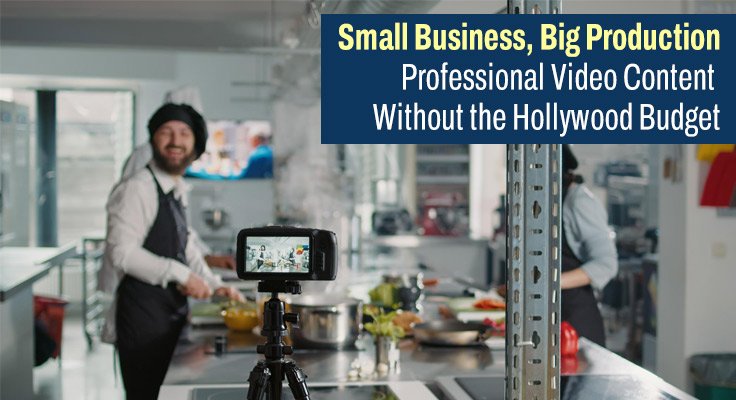
Small businesses face a brutal reality in modern marketing: video content isn’t optional anymore. Your potential customers expect to see your products in action, understand your services through demonstrations, and connect with your brand through visual storytelling. But professional video production costs thousands of dollars per project—budgets that most small businesses simply don’t have.
This creates an unfair competitive landscape. Large corporations with marketing budgets can afford constant video content. They have product demos, brand stories, testimonials, explainer videos, and social media content. Small businesses, lacking those budgets, compete with static images and text descriptions while knowing they’re at a disadvantage.
The traditional compromise has been accepting lower quality—smartphone footage, amateur editing, production values that scream “small budget.” But poor-quality video can hurt more than help, making businesses appear less professional than they actually are.
Seedance 2.0 breaks this constraint. Small businesses can now produce professional-quality video content without professional-size budgets. This isn’t about making low-budget video look slightly better—it’s about achieving genuinely professional production values at a fraction of traditional costs. The playing field levels when budget no longer determines video content quality.
The Small Business Video Challenge
Small businesses face unique pressures that make video production particularly challenging.
Limited Budgets: Marketing budgets for small businesses often measure in hundreds or low thousands of dollars monthly—not enough for even a single professional video using traditional production. Yet they need multiple videos across various purposes and platforms.
Time Constraints: Small business owners and staff are already stretched thin managing operations. They can’t spend days or weeks on video production projects. Time spent on marketing is time away from serving customers and running the business.
Lack of Expertise: Most small businesses don’t employ marketing specialists, video producers, or creative directors. The owner or a small team handles marketing alongside everything else, often without specialized training.
Multiple Content Needs: Small businesses need diverse video content—product demonstrations, service explanations, customer testimonials, behind-the-scenes content, educational material, promotional videos, and social media content. Creating all this traditionally is simply impossible within typical budgets.
Competition with Larger Players: Small businesses compete for customer attention against corporations with massive marketing budgets. When those corporations have professional video content everywhere, small businesses without video are at severe disadvantage.
Professional Quality at Small Business Prices
The breakthrough for small businesses is achieving professional production quality without professional production costs.
Production Value Economics: Traditional professional video might cost $3,000-$10,000 per finished minute. Small businesses needing multiple videos face costs quickly reaching tens of thousands of dollars. AI-assisted production compresses these costs dramatically while maintaining quality standards.
No Equipment Investment: Traditional video production requires cameras, lighting, sound equipment, editing software, and the expertise to use it all. These investments total thousands of dollars before creating a single video. AI generation requires no equipment investment.
No Location Costs: Traditional production often requires location fees, travel costs, or studio rentals. Product shoots need appropriate settings. Brand videos need compelling backdrops. These location costs add significantly to production budgets. Generated video creates appropriate settings without location expenses.
Instant Expertise: Small business owners aren’t expected to become video production experts. The AI handles technical aspects—cinematography, lighting, composition, editing—that traditionally require years of training to master.
Practical Applications for Small Business
Different types of small businesses benefit from AI video generation in specific ways.
Retail and E-Commerce
Product videos drive sales, but creating them for entire catalogs is prohibitively expensive traditionally. Generate professional product showcases for every item you sell.
“Create a product demonstration video for [specific product], professional lighting, clean white background, rotating 360-degree view showing all details, smooth camera movement, highlighting key features, modern aesthetic suitable for e-commerce.”
Every product receives professional video treatment regardless of catalog size. This dramatically improves online sales conversion compared to static product photos alone.
Service Businesses
Services are inherently difficult to show. How do you demonstrate accounting services, consulting expertise, or maintenance quality? Video bridges this gap by showing your team, process, and results.
Generate videos showing your service process, client interactions (with actors representing typical scenarios), before-and-after demonstrations, and expert explanations. These videos build trust and understanding that text descriptions struggle to achieve.
Restaurants and Food Businesses
Food needs to look appealing. Professional food photography is expensive; professional food videography even more so. Generate appetizing video showcasing your menu items, dining atmosphere, preparation process, and chef expertise.
“Create an overhead shot of [signature dish] being plated, dramatic lighting highlighting colors and textures, steam rising to show freshness, garnish being added with precise placement, restaurant-quality food photography aesthetic.”
This level of food videography was previously accessible only to high-end establishments. Now any restaurant can showcase their offerings professionally.
Professional Services
Lawyers, accountants, consultants, and other professionals need to build credibility and explain complex services. Video content humanizes professional services while demonstrating expertise.
Generate explainer videos about your services, educational content demonstrating your expertise, introduction videos helping potential clients meet you before initial consultations, and process walkthroughs showing what clients can expect.
Local Services
Plumbers, electricians, landscapers, contractors—local service providers compete largely on trust and perceived professionalism. Professional video content significantly enhances both.
Create before-and-after showcases, process demonstrations, safety protocol explanations, and team introduction videos. When competing local service providers have amateur smartphone videos or no video at all, professional content provides substantial competitive advantage.
Building a Video Content Strategy
Small businesses benefit most from systematic approaches rather than one-off video creation.
Content Planning: Identify the key videos your business needs—product demos, service explanations, about us content, customer testimonials, FAQ videos, and social media content. Prioritize based on customer questions and marketing needs.
Template Development: Create templates for recurring video types. Product demos, for instance, might follow consistent structure, visual style, and pacing. These templates ensure brand consistency while accelerating production.
Batch Production: Generate multiple videos in focused sessions rather than spreading production across weeks. This efficiency makes better use of your limited time while maintaining creative continuity.
Progressive Library Building: You don’t need all your video content immediately. Build your video library progressively—key content first, then expanding coverage over time as priorities allow.
Marketing Integration
Video content becomes more valuable when integrated strategically across your marketing presence.
Website Integration: Feature videos prominently on your website—homepage hero videos, product page demonstrations, about us storytelling, and service explanations. Videos increase engagement and time-on-site while improving conversion rates.
Social Media Strategy: Different platforms need different content. Generate vertical videos for Instagram Stories and TikTok, square videos for Instagram feed, horizontal videos for YouTube and Facebook. Small businesses using Seedance 2.0 can maintain active presence across multiple platforms without unsustainable workload.
Email Marketing: Include video in email campaigns. Product launches, service announcements, educational content, and promotional campaigns all become more engaging with video components.
Paid Advertising: Video ads typically outperform static ads but cost more to produce traditionally. When production costs drop dramatically, video advertising becomes viable for small business budgets.
Competitive Advantages
Professional video content provides small businesses with several competitive advantages.
Perceived Professionalism: Quality video content makes businesses appear more established and professional than they might actually be. This perception influences customer trust and willingness to engage.
Online Visibility: Video content improves search engine rankings and social media algorithm performance. Platforms favor video content, giving it more visibility than equivalent text or image content.
Conversion Improvement: Product and service videos dramatically improve conversion rates. Customers who watch video are far more likely to purchase than those who don’t. For small businesses with tight margins, conversion improvements directly impact profitability.
Customer Education: Video enables explaining complex products or services clearly. Better-educated customers make better purchasing decisions, have more realistic expectations, and require less post-purchase support.
Resource Allocation Strategy
Smart resource allocation maximizes small business video ROI.
Focus on High-Impact Content: Generate videos for your best-selling products, most-requested services, and most-frequent customer questions first. This focuses limited resources where they deliver maximum value.
Iterate Based on Performance: Create initial video content, measure performance, then generate more content emphasizing what works. This data-driven approach ensures resources go toward effective content.
Repurpose and Adapt: Create master content, then generate variations for different platforms, audiences, or purposes. This maximizes value from each piece of content created.
Maintain Consistency: Professional appearance requires consistency. Establish visual style, stick with it, and ensure all generated content maintains that consistency. Inconsistent video content undermines professional appearance you’re building.
Long-Term Value
The investment in AI-assisted video content creation delivers ongoing value over time.
Content Asset Library: Each video becomes a permanent asset. Unlike paid advertising that stops working when you stop paying, owned video content continues delivering value indefinitely.
Scalable Marketing: As your business grows, your video marketing scales with it. Generate content for new products, new locations, new services without proportionally increasing marketing costs.
Brand Building: Consistent professional video content builds brand recognition and authority. Over time, this accumulated content creates substantial brand value.
Competitive Moat: Once you’ve built comprehensive video content library while competitors haven’t, you’ve created competitive advantage that takes them significant time and resources to match.
Conclusion: Leveling the Playing Field
The gap between small business marketing capabilities and large corporate marketing has traditionally been enormous. Large budgets bought professional content; small budgets meant making do with amateur alternatives.
AI video generation doesn’t just narrow this gap—it largely eliminates it. Professional-quality video content is no longer the exclusive domain of businesses with marketing budgets in hundreds of thousands of dollars. Small businesses can now compete on content quality, differentiating based on their actual products, services, and value rather than being disadvantaged by production budget limitations.
This democratization of professional video content changes what’s possible for small businesses. The local retailer can showcase products like national chains. The solo consultant can present expertise like established firms. The neighborhood restaurant can make food look as appetizing as the marketing from corporate competitors.
When budget no longer determines video content quality, small businesses compete on what truly matters—the actual value they deliver to customers. That’s not just a marketing improvement; it’s a fundamental shift in small business competitive dynamics.
Also Read – How Short-Form Video Is Building the Creator Economy