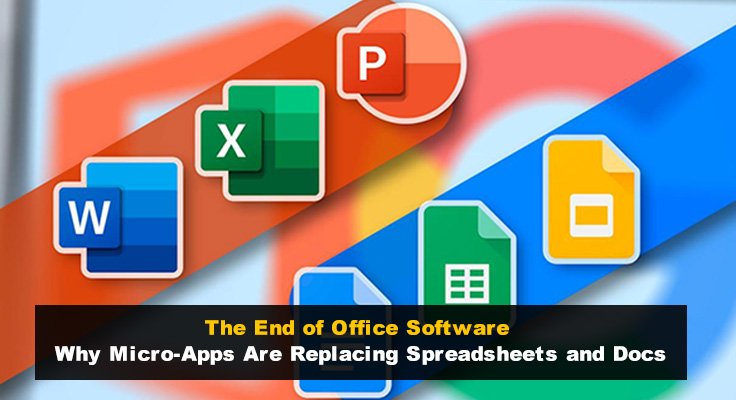
For decades, spreadsheets and word processors ruled the office. They were the foundation of how businesses tracked finances, planned projects, and documented knowledge. But today, a quiet revolution is underway. Instead of relying on massive files filled with formulas or long documents, companies are turning to micro-apps—lightweight, purpose-built tools designed to solve specific problems quickly.
Micro-apps are more than just the latest tech trend. They represent a fundamental change in how people work. By focusing on single tasks, these apps cut complexity and give teams faster, clearer outcomes. Employees no longer waste hours managing clunky spreadsheets or formatting reports. Instead, they use apps that automate workflows, gather real-time data, and connect seamlessly with other systems. This shift is making traditional office software feel outdated in a world that values speed and simplicity.
Why Businesses Are Moving Beyond Spreadsheets
Spreadsheets once seemed like magic. They gave workers a way to calculate, organize, and visualize data on their own. But as businesses have grown more complex, spreadsheets have revealed their limits. Errors can slip through formulas, files become too large to manage, and collaboration often leads to confusion. In fast-moving industries, these challenges cost time and money.
Brandon Brown, Founder of Search Party, has experienced this transition firsthand.
“At GRIN, I watched a team of hundreds scale using systems that felt stretched by spreadsheets and docs. We had to build custom solutions to handle the volume of data and complexity we faced. That experience showed me how fragile traditional tools can be when a business grows. With Search Party, I see micro-apps as the future because they’re built to adapt, not break, as you scale.”
The appeal of micro-apps lies in their design. Each tool is specialized, intuitive, and often powered by automation. Instead of asking employees to master endless formulas or formatting rules, micro-apps deliver ready-to-use solutions tailored to specific tasks.
From Flexibility to Focus
One reason micro-apps are gaining ground is their focus. Unlike office software, which tries to be everything to everyone, micro-apps do one thing really well. That could be tracking franchise performance, managing customer orders, or scheduling employee shifts. By narrowing the scope, they remove clutter and create cleaner workflows.
Bennett Maxwell, Founder of Franchise KI, has built businesses that scaled beyond what traditional tools could support.
“When I opened 100 Dirty Dough cookie shops, managing growth with spreadsheets was impossible. We needed tools that could handle fast expansion without breaking. With Franchise KI, we now use micro-apps that help brands go from 100 to 700 stores in just a few years. It’s proof that focus beats flexibility when speed and clarity are on the line.”
For entrepreneurs like Maxwell, micro-apps are not just convenient—they’re essential for scaling. They allow leaders to spend more time on strategy and less time fixing broken formulas or digging through massive files.
AI and the Rise of Smarter Tools
The rise of AI is another reason spreadsheets and docs are losing ground. Micro-apps powered by AI don’t just organize data—they analyze it, predict outcomes, and even create content. They’re interactive, responsive, and constantly improving based on how people use them. This makes them feel less like software and more like teammates.
Runbo Li, Cofounder of Magic Hour, has seen how AI reshapes workflows.
“When we built Magic Hour, we wanted to make video creation simple for everyone. Our AI tools turn raw clips into engaging edits, and we’ve seen NBA teams like the Dallas Mavericks use them to connect with fans. What excites me is how AI micro-apps cut out the hardest steps, letting people focus on creativity. The same thing is happening in offices—AI tools are freeing people from routine work so they can focus on impact.”
This shift is transforming not only how companies work but also what employees expect from their tools. Instead of static documents, workers want apps that feel alive, collaborative, and intelligent.
The Future of Work Without Office Software
The rise of micro-apps doesn’t mean spreadsheets and documents will disappear overnight. They’ll still have a place for basic tasks. But the center of gravity is shifting. As businesses embrace speed, automation, and AI, micro-apps will become the go-to choice for critical operations.
For teams, this means less time wrestling with files and more time making decisions. For leaders, it means scaling faster with fewer risks of error. And for the next generation of workers, it means entering jobs where tools are intuitive, automated, and aligned with how people actually work today.
Conclusion
The end of office software as we know it has already begun. Spreadsheets and word processors were once revolutionary, but in today’s business world, they feel slow and fragile. Micro-apps, powered by focus and AI, are replacing them with tools that are smarter, faster, and easier to use.
Voices like Brandon Brown, Bennett Maxwell, and Runbo Li remind us that this shift isn’t about technology alone—it’s about how people want to work. They want tools that adapt, simplify, and empower them to focus on growth. In the new world of work, the companies that embrace micro-apps will find themselves not only more efficient but also more prepared for the challenges ahead.