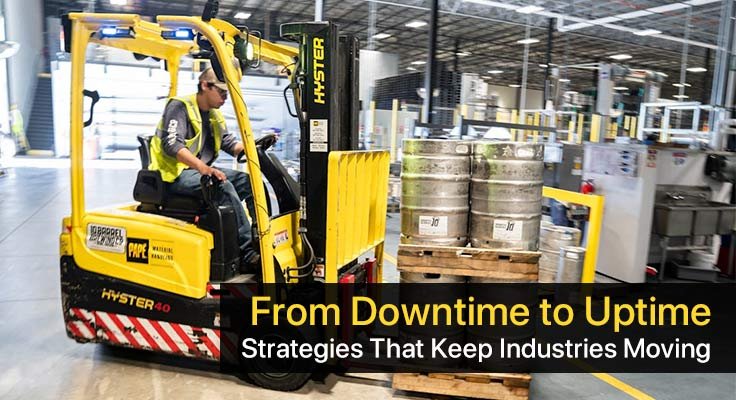
Downtime is the enemy of productivity. Every minute an industrial operation stalls, profits are lost, deadlines are missed, and safety risks increase. Industries that rely on heavy machinery, logistics fleets, or automated systems know the stakes. The challenge is not just fixing breakdowns but preventing them in the first place. Smart businesses invest in strategies that ensure equipment runs smoothly, supply chains stay strong, and teams stay focused.
This article explores eight strategies companies can adopt to move from downtime to uptime. These steps will help businesses create systems that keep machines running and productivity at its peak.
1. Invest in Quality Parts for Critical Equipment
Critical equipment, such as forklifts, cranes, or loaders, cannot be compromised by using low-quality or unreliable parts. A forklift that fails during operation is not simply a setback; it’s a potential safety hazard. Many businesses try to save money by purchasing cheaper parts, but this often leads to higher costs over time due to frequent breakdowns and replacements. The smarter choice is to source parts from trusted providers who understand both quality and value. Reliable suppliers ensure that the parts meet industry standards and offer durability under tough conditions.
One such provider is Intella Parts, which supplies forklift parts, including those for Taylor forklifts. By offering quality components at competitive rates, they help businesses keep their equipment performing at its best without overspending. You can go to this website and browse their products online.
Choosing providers like Intella Parts reduces downtime, increases the lifespan of machinery, and helps operations run smoothly. When companies make quality sourcing a standard practice, they protect both their equipment and their bottom line.
2. Prioritize Preventive Maintenance
Preventive maintenance is one of the most effective ways to minimize downtime. Machines don’t usually break down without warning, but problems build up if inspections and servicing are delayed. Regular checks on lubrication, filter replacements, and safety systems keep equipment reliable. By sticking to a maintenance schedule, companies avoid sudden failures that can stop operations at the worst possible time.
The cost of preventive work is always lower than emergency repairs, and it allows businesses to plan ahead rather than scramble for solutions. Preventive maintenance also gives technicians a chance to identify small issues before they escalate into major problems.
3. Train Employees to Spot Early Warning Signs
Employees who work closely with equipment are often the first to notice changes that signal trouble. A forklift operator may hear an unusual sound, or a machine operator may feel a vibration that wasn’t there before. Training employees to recognize these early warning signs and report them quickly is a vital part of reducing downtime.
When workers understand the importance of speaking up, small problems can be addressed before they cause full breakdowns. Encouraging this kind of proactive attitude turns employees into partners in maintenance rather than passive users of equipment.
4. Embrace Technology for Predictive Maintenance
Advances in technology now allow businesses to move beyond basic preventive measures. Predictive maintenance uses tools such as sensors, Internet of Things devices, and real-time monitoring systems to detect issues before they become serious. These technologies can measure vibrations, temperature changes, and performance data to provide insights into machine health.
Instead of waiting for scheduled checks, predictive maintenance alerts companies when a machine shows early signs of wear or failure. This allows managers to plan repairs at convenient times and avoid sudden disruptions. The investment in technology pays off by extending machine lifespans, improving safety, and reducing the uncertainty that comes with unexpected breakdowns.
5. Build Strong Supplier Relationships
Suppliers play a critical role in keeping operations stable. When a business has a reliable supplier for spare parts, fuel, or specialized services, it reduces the chances of delays during emergencies. Strong supplier relationships mean more than just getting good prices. They also bring consistency, trust, and the assurance that resources will arrive on time.
In many cases, suppliers who know your business can anticipate your needs. They may stock the parts you use most often or prioritize your orders during high-demand periods. This level of support is invaluable when downtime is at stake. Companies that treat suppliers as partners rather than just vendors often see better service, faster responses, and long-term benefits that go beyond the transaction.
6. Streamline Inventory Management
Keeping the right parts and materials in stock is a balancing act. Too little inventory can mean costly downtime while waiting for deliveries. Too much stock can tie up resources and create storage issues. Smart inventory management ensures that businesses have what they need without overspending.
Digital inventory systems make this process easier by tracking usage patterns, setting reorder alerts, and forecasting demand. With better visibility, companies can avoid both shortages and excess.
7. Create a Rapid Response Plan for Breakdowns
Even with strong prevention measures, breakdowns can still occur. What separates successful operations from struggling ones is how quickly they respond. A clear response plan reduces confusion and wasted time when equipment fails. This plan should outline who to contact, what steps to take first, and how to communicate the situation across the team.
Having service contracts in place with repair providers can make the process smoother. If a company already has trusted partners ready to step in, downtime can be resolved much faster. A well-prepared plan ensures that everyone knows their role, resources are available, and decisions can be made quickly.
8. Improve Communication Across Teams
Downtime often becomes worse when teams are not aligned. If operators, supervisors, and maintenance crews fail to communicate clearly, issues can escalate before the right people are even aware of them. Strong communication systems keep everyone connected and informed.
Digital tools, such as instant messaging platforms and shared reporting systems, can streamline communication. These tools allow teams to quickly escalate problems, share updates, and track progress in real time. When workers feel comfortable reporting issues and managers respond promptly, downtime is reduced. Communication is not only about speed but also about creating a culture where problems are solved together. This teamwork approach strengthens uptime strategies across the organization.
The shift from downtime to uptime is not a single action but a collection of strategies working together. Downtime will always carry risks, but with preparation and smart practices, those risks can be minimized. Companies that prioritize uptime avoid costly interruptions and simultaneously gain the trust of clients, suppliers, and employees.
In industries where every minute counts, staying in motion is the key to long-term success.
Also read; Why Custom Workflow Tools Are Revolutionizing Niche Manufacturing Industries