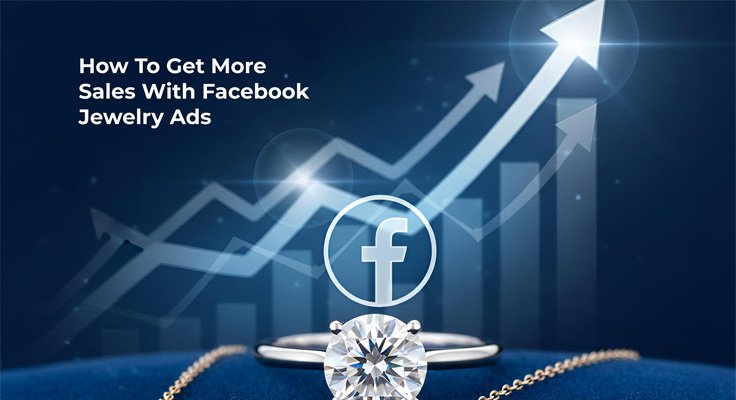
Facebook advertising can transform your jewelry business from struggling to thriving. With 2.96 billion monthly active users and advanced targeting capabilities, the platform offers unmatched opportunities to reach customers actively looking for jewelry.
The challenge isn’t whether Facebook ads work for jewelry; it’s knowing how to execute them properly. Most jewelry brands waste thousands on poorly targeted campaigns with generic creative. This guide shows you the exact strategies successful jewelry sellers use to turn ad spend into consistent revenue.
You’ll learn audience targeting frameworks, creative best practices, budget allocation by jewelry type, and optimization tactics that increase conversions. Whether you sell affordable fashion pieces or luxury engagement rings, these strategies will help you maximize return on ad spend.
Why Facebook Ads Drive Jewelry Sales Better Than Other Channels
Facebook’s visual format perfectly showcases jewelry’s intricate details and emotional appeal. Unlike text-heavy platforms, Facebook lets you display sparkle, craftsmanship, and lifestyle context in a single scroll-stopping image.
The platform’s precision targeting separates Facebook from traditional jewelry advertising. You can reach women aged 25-45 interested in luxury fashion, couples recently engaged, or gift buyers approaching anniversaries. This granularity ensures your ads reach people most likely to purchase.
Facebook’s 34.1% ad exposure rate among users aged 13 and older means your jewelry reaches massive audiences without expensive TV spots or print campaigns. For jewelry brands with limited marketing budgets, this cost-effectiveness is crucial.
The platform also excels at retargeting essential for high-consideration purchases like jewelry. When someone views a $500 necklace but doesn’t buy immediately, Facebook lets you follow up with targeted reminders, reviews, and offers until they convert.
Strategic Audience Targeting for Maximum Sales
Poor targeting destroys otherwise excellent jewelry campaigns. You could have stunning, creative, and compelling offers, but showing them to the wrong people guarantees failure.
Start with demographic fundamentals. For fashion jewelry, women aged 25-45 represent your core audience. For engagement rings, couples aged 25-35 actively shopping for proposals convert best. If you’re just starting with Facebook advertising, working with an experienced agency ad account provider can help you navigate initial setup and targeting complexities while avoiding common beginner mistakes.
Income level matters significantly for jewelry pricing tiers. Target household incomes above $50,000 for mid-range jewelry, and $100,000+ for luxury pieces. Facebook’s financial targeting isn’t perfectly accurate, but it improves results over broad audiences.
Geographic targeting depends on your business model. Local jewelry stores should target within 25-50 miles of their location. Online-only brands can target nationally, but should exclude states with slow shipping times during peak seasons like Valentine’s Day.
Understanding Your Jewelry Customer Journey on Facebook
Jewelry purchases rarely happen instantly. Customers move through distinct stages before buying, especially for higher-priced items. Understanding this journey helps you create appropriate ads for each stage.
The awareness stage introduces your brand to potential customers who don’t know you exist. These people scroll Facebook casually and need eye-catching content that stops their scroll. Lifestyle images showing jewelry being worn work better than product-only shots here.
During the interest stage, potential customers engage with your content by liking posts, watching videos, or visiting your profile. They’re evaluating whether your style matches their preferences. Educational content about gemstones, metals, or jewelry care builds credibility.
The desire stage creates emotional connection. Customers imagine owning your jewelry and how it fits their life. Social proof, customer photos, reviews, and testimonials become critical. They need reassurance that others love your products before committing.
Converting High-Intent Shoppers
The action stage requires clear conversion drivers. Limited-time discounts, free shipping, gift-with-purchase offers, or easy payment plans push hesitant buyers over the line.
Post-purchase, the loyalty stage keeps customers returning. Retargeting ads showcasing complementary pieces, care tips, or VIP customer perks turn one-time buyers into repeat customers. This stage often gets neglected, but costs far less than acquiring new customers.
Each stage needs different ad creative, messaging, and targeting. Showing a 20% discount code to someone who just discovered your brand wastes money. They need to build trust first. Conversely, showing awareness content to cart abandoners misses the opportunity to close the sale.
Strategic Audience Targeting for Maximum Sales
Poor targeting destroys otherwise excellent jewelry campaigns. You could have stunning, creative, and compelling offers, but showing them to the wrong people guarantees failure.
Start with demographic fundamentals. For fashion jewelry, women aged 25-45 represent your core audience. For engagement rings, couples aged 25-35 actively shopping for proposals convert best.
Income level matters significantly for jewelry pricing tiers. Target household incomes above $50,000 for mid-range jewelry, and $100,000+ for luxury pieces. Facebook’s financial targeting isn’t perfectly accurate, but it improves results over broad audiences.
Geographic targeting depends on your business model. Local jewelry stores should target within 25-50 miles of their location. Online-only brands can target nationally, but should exclude states with slow shipping times during peak seasons like Valentine’s Day.
Interest-Based Targeting That Works
Interest targeting separates mediocre campaigns from exceptional ones. Target people interested in luxury fashion brands (Tiffany & Co., Cartier, Chanel), wedding planning, anniversaries, and gift-giving occasions.
Hidden interests provide competitive advantages. Instead of targeting “jewelry” (obvious and saturated), target specific designers, gemstone types (sapphire, emerald, moissanite), or jewelry-adjacent interests like luxury watches or designer handbags.
Behavior targeting captures people actively shopping. Target online shoppers, engaged shoppers, anniversary dates within 30 days, or people who recently moved (they often upgrade belongings). These behaviors signal purchase intent.
Custom Audiences and Retargeting
Custom Audiences from your website visitors are the highest-converting audience segment. Someone who viewed your diamond tennis bracelet page but didn’t buy needs different messaging than cold traffic.
Create separate Custom Audiences for:
- Homepage visitors (lowest intent)
- Collection page browsers (moderate intent)
- Product page viewers (high intent)
- Add-to-cart non-purchasers (highest intent)
Each segment needs tailored messaging. Cart abandoners might need a discount code or shipping reminder. Product page viewers might need social proof showing others’ purchases.
Lookalike Audiences expand your reach to new customers similar to your best buyers. Upload your customer email list (purchasers only, not newsletter subscribers) and create a 1% Lookalike. Facebook finds people demographically and behaviorally similar to your buyers.
Choosing the Right Ad Formats for Jewelry
Ad format selection impacts performance as much as targeting. Each format serves specific purposes and audience stages.
Image ads remain the foundation of jewelry advertising. They load quickly, showcase products clearly, and convert consistently when executed properly.
High-quality photography is non-negotiable. Blurry, poorly lit images destroy credibility instantly. Invest in professional product photography showing jewelry from multiple angles with proper lighting that captures sparkle.
Clean white backgrounds work well for product-focused ads highlighting craftsmanship and details. Lifestyle backgrounds showing jewelry being worn create an emotional connection and help customers visualize themselves owning the piece.
Video Ads That Showcase Sparkle
Video outperforms static images for jewelry because motion captures light refraction and sparkle. A 15-second video showing a ring rotating under different lighting conditions communicates quality better than any static shot.
Keep videos short, 15 to 30 seconds maximum. Facebook users scroll quickly, and longer videos rarely get watched completely. Focus the first three seconds on the most visually stunning aspect to stop the scroll.
Text overlays compensate for sound-off viewing (85% of Facebook video views happen without sound). Add captions highlighting key features: “14K Gold,” “VS1 Diamonds,” “Free Shipping.”
Lifestyle videos showing jewelry being worn during meaningful moments (proposals, anniversaries, nights out) create emotional resonance. Customers don’t just buy jewelry; they buy how it makes them feel. For repurposing engaging video content across platforms, Instagram video downloader tools help save and adapt high-performing jewelry showcase videos for multi-channel campaigns.
Carousel Ads for Collections
Carousel ads let users swipe through multiple products in one ad unit. This format works perfectly for showing jewelry variations of the same ring in white gold, yellow gold, and rose gold, for example.
Each carousel card should feature a different product with its own headline, description, and link. Don’t repeat the same product from different angles unless you’re telling a story across cards.
Mix product shots with lifestyle images. Card 1 shows the necklace on a white background, highlighting details. Card 2 shows it being worn at an elegant dinner. Card 3 shows customer reviews. This variety maintains engagement across swipes.
Collection Ads for Immersive Shopping
Collection ads combine images and videos in a full-screen instant experience. When clicked, they open an in-app catalog where customers browse multiple pieces without leaving Facebook.
This format suits new collection launches and seasonal campaigns. Users can explore your entire Valentine’s Day collection, for instance, without visiting your website initially. The seamless experience reduces friction and increases browsing time.
Collection ads require more setup than standard formats. You need a product catalog connected to Facebook. However, the immersive experience drives higher engagement and conversion rates, especially for mobile users who dislike leaving apps.
Crafting High-Converting Ad Creative
Great targeting and format selection mean nothing without compelling creative that stops scrolls and drives action.
Visual Excellence Standards
Professional photography separates successful jewelry ads from failures. Customers can’t touch or try on jewelry online, so images must compensate by showing exceptional detail.
Lighting must capture sparkle and brilliance. Natural daylight or professional jewelry lighting showcases gemstones properly. Harsh overhead lighting creates unflattering shadows and dulls sparkle.
Resolution matters significantly. Blurry or pixelated images suggest low-quality products. Use high-resolution images that remain sharp when users zoom in to examine details.
Show multiple angles: top view, side profile, and worn on a model. Customers want to understand the piece’s dimensions, thickness, and how it actually looks when worn versus sitting flat.
Mobile optimization is critical since 80% of Facebook users access via mobile devices. Test how your images appear on small screens. Details visible on the desktop may disappear on mobile.
Compelling Copy That Converts
Emotional triggers outperform feature lists for jewelry. “A timeless piece for your most cherished moments” creates a feeling. “14K white gold with 0.5ct diamond” states facts.
However, combine emotion with specifics. After the emotional hook, include key details: metal type, gemstone quality, price, and unique features like a lifetime warranty or ethical sourcing.
Create urgency without seeming desperate. “Limited collection only 50 pieces crafted” works better than “URGENT! BUY NOW!!!” Jewelry customers respond to exclusivity and quality, not aggressive sales tactics.
Strong calls-to-action tell customers exactly what to do next. “Shop Now” and “Discover Your Perfect Piece” outperform generic “Learn More.” Make the desired action crystal clear.
Social Proof Integration
Customer testimonials in ad creative build trust rapidly. A quote from a satisfied customer with their name and photo adds credibility that brand claims can’t match.
User-generated content showing real customers wearing your jewelry outperforms professional modeling in many cases. It looks authentic and helps potential buyers visualize themselves with the product.
Influencer partnerships extend reach and borrow credibility. Micro-influencers (10,000-100,000 followers) often drive better ROI than celebrities because their audiences trust their recommendations more.
Display review ratings and counts prominently. “4.8 stars from 2,847 reviews” provides social proof at a glance. Customers trust the collective judgment of thousands of previous buyers. For broader social media content strategy and profile optimization, Socialmelo provides comprehensive guides that help create engaging content complementing paid advertising efforts.
Budget Planning and ROI Optimization
Budget allocation makes or breaks jewelry ad campaigns. Too little spending prevents meaningful data collection. Too much on unproven campaigns wastes money.
Budget by Jewelry Price Tier
Affordable everyday jewelry ($50-$100) requires smaller daily budgets since lower prices generate more transactions faster. Start with $10-$30 daily to test audiences and creative. At this tier, aim for at least 3-5 conversions weekly for meaningful optimization data.
Elegant special occasion jewelry ($100-$500) needs moderate budgets of $30-$70 daily. These pieces have longer consideration periods, so campaigns need more time to demonstrate results. Target a minimum ROAS of 3:1; every dollar spent should generate three dollars in revenue.
Luxury jewelry above $500 requires a substantial budget of $100-$300 daily. These campaigns often run for weeks before generating conversions due to extended consideration periods and higher price resistance.
Starting Small and Scaling Winners
Begin every campaign with a small test budgets even $10-20 daily, which provides useful data. Run multiple ad variations simultaneously to identify winners quickly.
Test one variable at a time: audience OR creative OR placement, never all three simultaneously. Let campaigns run a minimum of 4-5 days before making decisions. Daily fluctuations are normal.
When an ad set performs well (achieving your target ROAS), scale gradually. Increase budgets 20% every 3-4 days. Doubling budgets overnight resets the learning phase and often tanks performance.
Bidding Strategies That Work
Automated bidding works well for beginners and most jewelry campaigns. Facebook’s algorithm optimizes delivery to people most likely to convert at the lowest cost.
Cost cap bidding sets a maximum cost per conversion you’re willing to pay. If your profit margin on a $200 necklace is $120, set a cost cap of around $40-50 per purchase to maintain profitability.
ROAS bidding tells Facebook your target return. This works best after collecting conversion data. Manual bidding gives precise control but requires experience. Most jewelry advertisers should stick with automated bidding until spending $5,000+ monthly.
Performance Tracking and Optimization
Running ads without tracking performance is like driving blindfolded. You’ll crash eventually, wasting money on ineffective campaigns.
Essential Metrics to Monitor
Click-through rate (CTR) measures how compelling your ad is. For jewelry, aim for 1-3% CTR. Lower means your creative or targeting needs work. Higher suggests a strong ad-audience fit.
Conversion rate shows what percentage of clicks become purchases. A 2-4% conversion rate is solid for jewelry; below 1% indicates website or offer problems.
Return on ad spend (ROAS) is your ultimate profitability metric. Calculate total revenue generated divided by total ad spend. Minimum target: 3:1 ROAS.
Cost per acquisition (CPA) tells you how much you pay for each customer. Calculate your break-even CPA based on profit margins.
Facebook Analytics Dashboard
Set up proper conversion tracking using Facebook Pixel before running campaigns. Without it, you’re blind to which ads actually drive sales versus clicks that go nowhere.
Configure standard events: ViewContent (product pages), AddToCart, InitiateCheckout, and Purchase. This tracking shows exactly where potential customers drop off in your funnel.
For jewelry stores looking to balance paid advertising with organic growth, partnering with a specialized SEO agency can optimize product pages, improve site structure, and drive qualified traffic that complements Facebook ad campaigns.
Optimization Tactics That Improve Results
Scale winning campaigns gradually. When an ad set hits target ROAS consistently, increase the budget 20% every few days.
Refresh ad creative every 2-3 weeks to combat ad fatigue. Even excellent ads lose effectiveness as your audience sees them repeatedly.
Expand audiences from performing segments. If women aged 30-40 interested in luxury handbags convert well, create a Lookalike Audience from that segment’s converters.
Pause underperforming ads decisively. If an ad spends $100 without conversions while other ads profitably convert, kill it.
Advanced Strategies for Scaling Sales
After mastering fundamentals, these advanced tactics significantly increase revenue.
Dynamic Product Ads
Dynamic ads automatically show customers products they viewed on your website. Someone who browses your sapphire ring collection sees those exact rings in their Facebook feed later.
This automation saves time and personalizes advertising at scale. Instead of manually creating ads for each product, dynamic ads pull from your product catalog and display relevant items to each user.
Set up cross-selling sequences showing complementary products. After someone purchases a necklace, show matching earrings or bracelets. This increases customer lifetime value through strategic upsells.
Dynamic ads require Facebook catalog setup, a technical hurdle that stops many advertisers. However, the performance improvement justifies the implementation effort. Retargeting with dynamic ads typically achieves 5-10x higher ROAS than cold traffic.
Multi-Platform Integration
Facebook and Instagram combined campaigns maximize reach across Meta’s platforms. The same ad appears in both feeds, Stories, Reels, and Explore sections, capturing customers wherever they spend time.
Messenger ads open direct conversations with potential customers. For high-ticket jewelry requiring consultation, Messenger creates personal connections that standard ads can’t. Answer questions about sizing, customization, or shipping before customers commit.
WhatsApp integration works internationally. Many countries prefer WhatsApp over Messenger for business communication. Jewelry brands shipping globally should enable WhatsApp chat for customer support.
Influencer and User-Generated Content Campaigns
Micro-influencer partnerships (10,000-100,000 followers) generate better ROI than celebrity endorsements for most jewelry brands. Their audiences trust them more and engage at higher rates.
Send product to relevant influencers whose aesthetic matches your brand. A bohemian fashion influencer suits artisan jewelry; a luxury lifestyle influencer fits high-end pieces. Mismatched partnerships waste money and damage credibility.
Customer photo campaigns with branded hashtags create authentic content libraries. Encourage buyers to post photos wearing their jewelry with #YourBrandName. Feature the best submissions in ads with permission, and user-generated content often outperforms professional modeling.
Partnership ads boost influencer content with ad spend. When an influencer posts about your jewelry, turn that post into a paid ad reaching their followers and beyond. This amplifies organic influencer value.
Building Long-Term Brand Authority
Educational content positions your jewelry brand as an expert. Create guides about jewelry care, gemstone characteristics, or choosing engagement rings. This content builds trust while attracting customers researching purchases.
Behind-the-scenes content showing craftsmanship differentiates your brand from competitors. Videos of jewelers setting stones, polishing pieces, or designing custom orders demonstrate quality and care.
Ethical and sustainable messaging resonates with conscious consumers. If you source conflict-free diamonds or use recycled metals, promote them heavily. Younger buyers especially value brands aligned with their values.
While Facebook ads drive immediate sales, building long-term organic visibility requires strategic backlink acquisition. Jewelry brands can use Linkscope’s backlink marketplace to secure placements on fashion, lifestyle, and luxury publications, improving domain authority and reducing paid ad dependency over time.
Common Mistakes That Kill Jewelry Ad ROI
Avoiding these errors saves thousands in wasted ad spend.
Relying only on organic reach fails spectacularly. Facebook’s average organic reach is just 4.32%. If you have 10,000 followers, only 432 see your posts organically. Paid advertising is mandatory for meaningful reach.
Ignoring mobile optimization loses sales from 80% of Facebook users. If your website loads slowly on mobile or checkout requires excessive form fields, customers abandon. Test your entire purchase funnel on mobile devices before advertising.
Broad targeting without interest refinement wastes money showing ads to uninterested audiences. Targeting “everyone aged 18-65” guarantees low conversion rates. Narrow targeting increases costs per click but dramatically improves conversion rates.
Insufficient testing duration produces false conclusions. Stopping campaigns after 2-3 days doesn’t allow Facebook’s algorithm to optimize. Run tests minimum of 4-5 days, preferably 7, before judging performance.
Not monitoring comments and engagement damages brand reputation. Unhappy customers complain publicly in ad comments. Unanswered complaints visible to thousands of potential customers destroy trust. Respond promptly and professionally to every comment.
A generic ad creative that doesn’t showcase jewelry quality fails to differentiate your brand. Jewelry customers can buy anywhere; you must show why your pieces are special through photography, storytelling, and social proof.
Neglecting retargeting abandons your hottest prospects. Someone who added a $300 ring to the cart but didn’t purchase is infinitely more valuable than cold traffic. Retargeting these high-intent visitors drives the highest ROAS.
Missing seasonal opportunity windows means losing sales to prepared competitors. If you start Valentine’s Day campaigns in January, competitors captured customers in December. Plan seasonally months ahead. For creating memorable brand identities across all platforms, the Unique Nicknames Generator helps develop distinctive naming strategies that enhance brand recognition.
Start Driving Jewelry Sales Today
Facebook advertising transforms jewelry businesses when executed properly. The platform’s visual format, precision targeting, and conversion tracking provide everything needed to profitably grow sales.
Start with one ad format and one audience segment. Test systematically, track results religiously, and scale what works. Most jewelry brands fail because they quit too early or don’t test enough variations.
Focus on return on ad spend above all else. Beautiful, creative means nothing if campaigns lose money. Track every dollar spent and dollar earned to ensure profitability. Premium lifestyle brands like men’s grooming products demonstrate how consistent quality presentation builds customer trust.