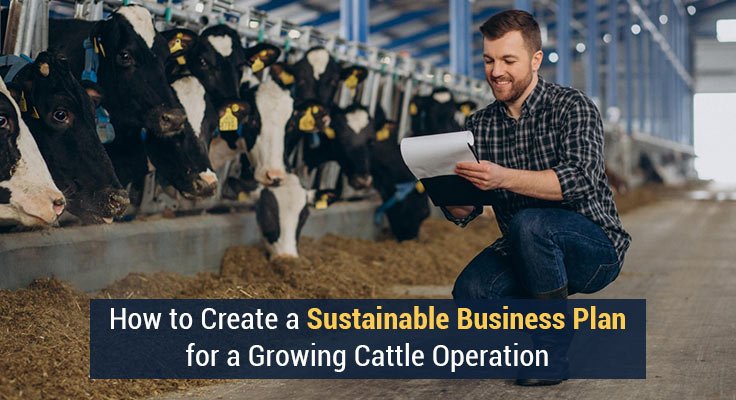
Every producer striving to grow a cattle business and at the same time strike a balance between profitability and environmental safety in the long term will need a sustainable business plan. With the increase of herds and market changes, the producers require a vivid plan, which will help to achieve the economic objectives and maintain land stewardship. An intelligent strategy can assist in making major decisions, minimizing the risk, and readying the operation to the new weather patterns, market, and availability of resources. The sustainable approach, which is based on efficiency, animal welfare, and environmental care, enhances the future of this operation and its worth.
Operational Assessment
The first step of a sustainable business plan is to have a clear picture of the given operation. It is in the best interest of the producers to look at their herd size, grazing, feeds, equipment and infrastructure so as to identify what parts of their operation lead to long term success and what needs to be corrected. This inspection will be conducted on facilities like fences, water systems, cattle troughs, and handling areas in order to determine maintenance requirements and possible upgrading. Such an in-depth analysis will give a basis on which to establish attainable objectives that will suit the specifics of the land and livestock.
This stage is also characterized by evaluation of financial performance. Knowledge of sources of revenue, cost trends, and cash flow patterns assists producers to plan on strategies to make the company profitable yet without depleting the natural resources. Monitoring costs of feed, health care, land management and equipment will have the plan covering both the short term pressure as well as long term investments. Good financial analysis will avoid any surprises along the way as the operation continues to grow.
Resource Management
Cow farming should be sustainable which means that there should be responsible land, water and forage utilization. An effective plan identifies grazing systems which ensure the health of the soil, erosion is kept at minimum and pasture is productive. Good rotational or adaptive grazing methods will increase the quality of forage and allow the pasture to recuperate, eventually supporting bigger herds using less. The practices minimize over grazing and promote biodiversity which ultimately enhances the overall long term health of the land.
The availability of water also features in the growth and stability of the operation. Manufacturers should have reliable water supplies that would cater to the needs of herds without spoiling the natural ecosystems. It is important to keep watering systems clean and efficient (tanks and wells) to mitigate wastage, as well as to promote the well-being of animals. It is to make the operation resilient under the conditions of drought, to store water and to provide better distribution systems, so that when the environmental pressures increase, the operation will continue to work.
Animal Welfare
A sustainable business plan is concerned with the well being of the herd by ensuring that all health checks are done regularly and that safe handling is observed. Herd health checks, parasite control and regular vaccination programs allow prevention of disease outbreaks that may interfere with growth and profitability. Properly installed infrastructure including handling alleys, shelters, and other facilities like a secure cattle gate aid smooth and safe traffic of livestock, which minimizes stress and tissue trauma. These enhancements lead to increased productivity and long term improvement in the performance of the animals.
Sustainable growth is also brought by nutrition planning. The availability of forage, seasonal trends and needs of the herd can be used to create feeding plans by the producer that contribute to weight gain and reproductive success. Dietary supplementation balances pasture feed and makes cattle healthy even in adverse conditions. All the operations are more efficient and flexible when the nutrition practices are in tandem with the land management objectives.
Financial Planning
A well-developed financial strategy enhances its growth over time by providing details on the estimated expenses, revenue forecasts, and the investment priorities. Producers have the advantage of developing budgets that indicate the prevailing market trends, feed prices and risks likely to occur. These budgets are used to detect areas that to be cut on, areas that can be more efficient and areas that can be used to upgrade on significant areas like fencing, pasture development or equipment required to expand the herd. Long term financial planning helps in creating stability and aids in making strategic decisions.
Risk planning is also necessary in an increasing cattle operation. Markets are not stable and weather patterns can influence forage output and performance of the herd. The risk management strategies, insurance and emergency funds incorporated in the plan would help the producers protect the operation against unforeseen losses. A sustainable plan also contains how to adjust the plan in case of any changes in the conditions so that the operation can go forward in the future.
Growth Strategies
Sustainable growth should be based on a sustainable expansion of the herd which should be gradual and responsible. Producers will have the ability to think about breeding intervals, replacement plans and pasture capacity when deciding how fast they can grow without harming the land or putting undue financial pressure. Close observation of the growth of the herd enables the producers to respond to the availability of forage and reduce or increase the size of the herd when required. Sustainable growth is concerned with long term strength and not high increase though risky.
An expanding cattle business can also be enhanced through market diversification. Income can be stabilized by selling into other markets, creating value added items or creating relationships with the local buyers. The diversification of revenue will decrease the reliance on a single price or market situation and enhance resilience. Diversified income helps to maintain a consistent, sustainable growth when good land and herd management is taken into consideration.
Conclusion
A business plan that is sustainable is necessary in order to steer the success of the long term of a growing cattle operation. Through evaluation of existing practices, responsible use of resources, attention to herd welfare, enhanced financial planning, and smart selection of the growth strategies, the producers will be able to construct operations to last decades. Sustainable planning takes care of the land and livestock and the operation can prosper in a changing environment and also give good economic returns.
Also Read: The Ins and Outs of Agriculture in the US