The USA Leaders
Americans are no longer tied to expensive metros like New York City or Los Angeles. Remote work, lower taxes, and affordability now drive relocation decisions. Professionals and families want more space, lower housing costs, and a better quality of life.
But this shift has created a new reality: housing shortages are emerging in fastest growing cities in the US. Construction has not stopped. In fact, developers are building aggressively. The real issue is that demand is rising faster than supply can keep up.
This imbalance raises an important question: where will development happen next?
To answer this, we analyzed forward-looking development indicators that reveal not where growth already happened, but where it is actively being built.
We found the answer by looking at five key growth indicators.
Short-Term Growth vs. Sustained Long-Term Growth
Not all growth lasts. The difference between temporary booms and genuine expansion matters significantly.
- Short-term growth happens fast but often collapses just as quickly.
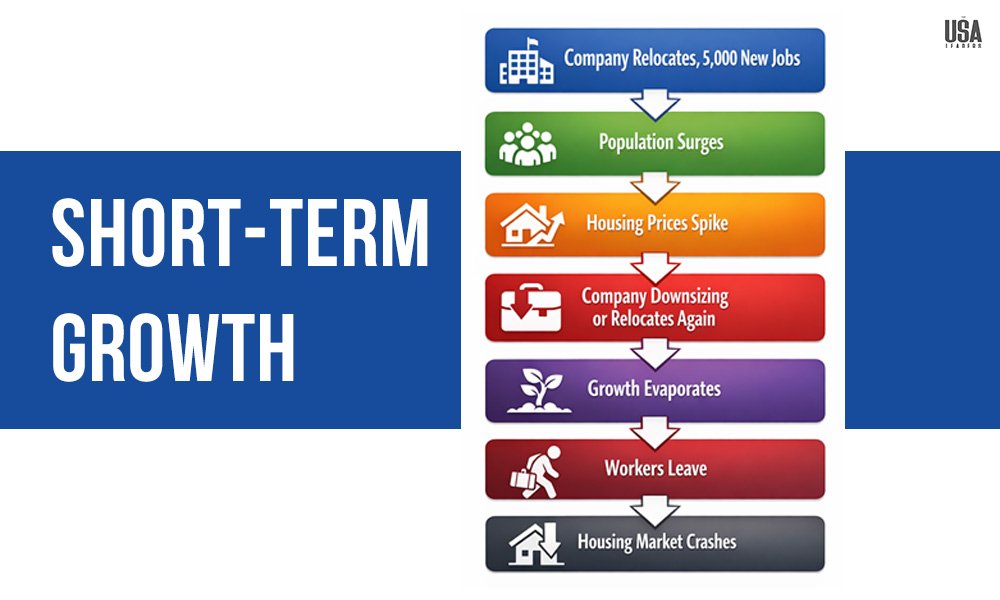
Cities that depend on one industry face this risk constantly.
- Sustained long-term growth builds on diverse foundations.
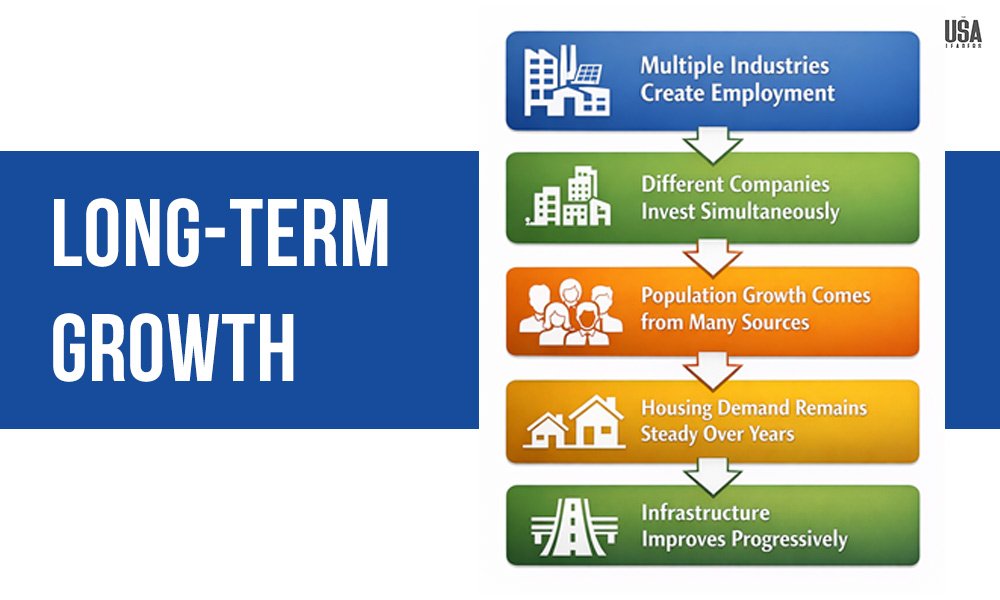
These cities develop resilience because no single factor drives all growth. Fast-growing cities that matter most are those with sustained growth.
San Francisco’s tech dominance, Austin’s job creation, and Denver’s logistics advantages create diversified growth that persists through economic cycles. This staying power attracts serious investors, relocation companies, and families planning to settle for decades.
How We Identified Future Growth Cities
To identify the fastest-growing cities positioned for future expansion, we analyzed five key indicators from Cotality, a leading real estate data provider.
These indicators include new construction properties sold over the past two years, new construction built over the past three years, land use changes over the past two years, builder and developer-owned land parcels, and new construction permits issued over the past two years.
These indicators reveal where developers are actively investing, acquiring land, and expanding housing supply.
These are not indicators of past growth; they are signals of future development.
The Top 10 Fastest Growing Cities In The US (2026 RANKING)
Based on the latest rankings and housing data, these are the fastest growing cities in the US:
- Wildwood, Florida
- Hilton Head Island, South Carolina
- Leander, Texas
- Palm Desert, California
- Naples, Florida
- Casa Grande, Arizona
- Zephyrhills, Florida
- San Marcos, Texas
- Conroe, Texas
- Bonita Springs, Florida
These Industries in the US show the strongest combination of population growth, rising home values, and increasing economic opportunity.
The Top 5 Cities Leading Development
- Wildwood, Florida
Wildwood ranks #1 due to rapid population expansion and strong housing demand.
With a population of 36,493 and a median home value of $437,097, Wildwood is attracting both retirees and working professionals. Its relatively affordable rent of $1,034 per month makes it highly accessible compared to major metros.
Wildwood benefits from its location near The Villages, one of the fastest-growing retirement communities in the United States. This creates sustained housing demand and continuous construction activity.
The practical impact is clear: Wildwood is becoming one of Florida’s newest housing expansion hubs.
- Hilton Head Island, South Carolina
Hilton Head Island ranks #2 due to strong income levels and housing demand.
With a median household income of $102,307 and median home value of $695,439, the city attracts high-income professionals, retirees, and remote workers.
Its short average commute of just 14 minutes and strong quality of life make it highly attractive for relocators.
Developers continue building residential communities to support population growth, making Hilton Head a stable long-term growth market.
- Leander, Texas
Leander ranks #3 with one of the strongest economic profiles among fast-growing cities.
Its population of 81,490 and median household income of $140,795 show strong earning potential and job growth. Median home values of $492,064 remain affordable compared to nearby Austin.
Leander benefits from its proximity to Austin’s technology sector, allowing workers to access high-paying jobs while living in more affordable suburban areas.
This positions Leander as one of the fastest-expanding suburban housing markets in America.
- Palm Desert, California
Palm Desert ranks #4 due to steady population growth and rising housing demand.
With a median home value of $585,260 and a household income of $87,807, the city attracts both retirees and remote workers seeking a high quality of life.
Its relatively short commute time of 18 minutes and strong infrastructure support sustained residential growth.
Palm Desert continues attracting relocators seeking lifestyle improvements and housing stability.
- Naples, Florida
Naples ranks #5 due to strong demand in the high-income housing segment.
Its median home value of $1,400,916 reflects strong demand from affluent buyers relocating to Florida. The city’s median household income of $147,941 further confirms its economic strength.
Naples attracts retirees, remote professionals, and investors seeking long-term property value growth.
This positions Naples as one of the most valuable housing markets in the country.
Why the South Dominates Growth
One pattern stands out clearly: Florida and Texas dominate the fastest-growing cities list.
Four of the top 10 cities are in Florida, and three are in Texas.
Several factors explain this migration trend:
- Lower housing costs compared to major coastal metros
- No state income tax in Florida and Texas
- Strong job growth and economic expansion
- Warmer climate attracting relocators
- Available land for housing development
These states offer a powerful combination of affordability, opportunity, and quality of life. This is why millions of Americans continue relocating to these regions.
Unlike older cities with limited space, Southern cities can expand outward, supporting sustained population and housing growth. This regional shift is reshaping the future of the American housing market.
These Cities Are Built for Future Growth
The fastest growing cities in the US are not growing by accident. Developers are actively building housing, acquiring land, and preparing infrastructure for future population expansion.
These cities show strong signals of sustained development, not temporary booms.
- For relocators: These cities offer opportunity, affordability, and long-term momentum.
- For investors: Development pipelines are expanding, creating opportunities in housing and infrastructure.
- For businesses: These regions continue attracting talent, investment, and economic activity.
Growth follows development. And development reveals the future.
These cities are where America is growing next.
Neha Shekhawat
Also Read : The 10 Hottest Cities in the US: 2026 Power Rankings (Heat Intensity Index)