Breast massage is often described as an optional comfort step in breastfeeding—but in reality, it plays a critical role in milk production, milk flow, and long-term supply maintenance. Whether you are nursing directly or pumping, breast massage helps prepare the body for effective milk removal and supports both physical and hormonal processes involved in lactation.
With advances in breast massage pumps, parents now face a common question: Is manual massage enough, or does automatic massage provide better results? Understanding how each method works can help you choose the most effective approach for your postpartum body and daily routine.
Why Is Breast Massage a Must Step for Every Breastfeeding Mother?
Milk production follows a simple but demanding rule: milk must be removed effectively to signal the body to make more. Breast massage supports this process in multiple ways.
Key Benefits of Breast Massage
- Stimulates blood flow to milk-producing glands
- Helps trigger the let-down reflex
- Encourages full breast emptying
- Reduces the risk of clogged ducts and engorgement
- Improves comfort during pumping or nursing
Postpartum breasts often feel tender, swollen, or firm due to hormonal shifts and increased milk volume. Massage softens dense tissue, making it easier for milk to move through the ducts.
Without massage, milk may remain trapped even when supply is adequate—leading parents to believe they have “low milk supply” when the real issue is inefficient milk flow.
Manual Breast Massage: How It Works and When It Helps
Manual massage involves using your hands to apply pressure, compression, and circular movements to the breast tissue before or during feeding or pumping.
Advantages of Manual Massage
- Fully customizable pressure
- Immediate tactile feedback
- No equipment required
- Ideal for targeted problem areas
Manual massage is particularly useful for:
- Breaking up clogged ducts
- Relieving engorgement
- Supporting early postpartum milk onset
However, manual massage also has limitations. Fatigue, inconsistent technique, and difficulty maintaining rhythmic pressure can reduce its effectiveness—especially for parents who pump multiple times a day.
Manual massage also requires one or both hands, which may not be practical for multitasking parents.
Automatic Massage: How Technology Enhances Lactation Support
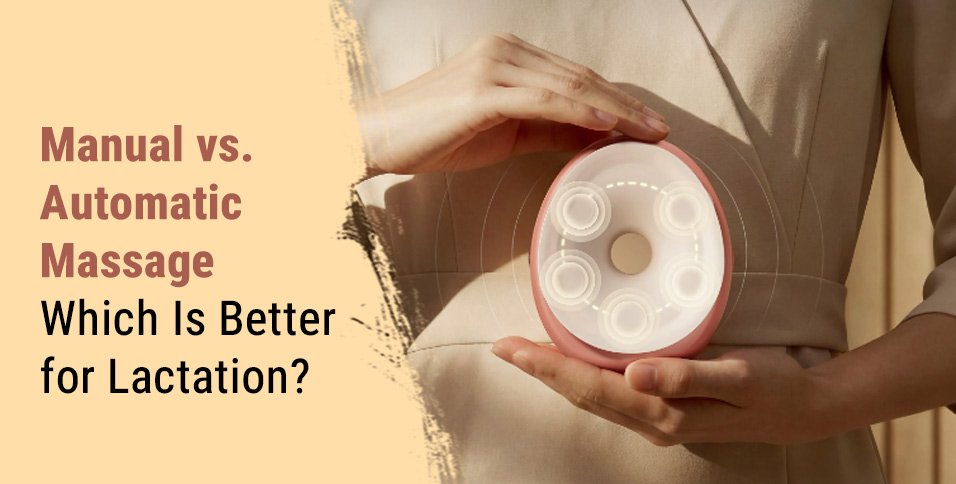
Automatic massage uses controlled vibration or pulsation to stimulate breast tissue. This technology is designed to mimic the natural suckling patterns of a nursing baby—without requiring constant hand effort.
A Breast Massage Pump combines massage and milk expression into one seamless process, offering consistent stimulation throughout the pumping session.
Benefits of Automatic Massage
- Even, rhythmic stimulation
- Hands-free convenience
- Consistent pressure and timing
- Reduced physical fatigue
- Better support for exclusive pumpers
Automatic massage is especially helpful for parents who:
- Pump frequently or exclusively
- Experience delayed let-down
- Have dense or fibrous breast tissue
- Need consistency to maintain supply
The ability to maintain steady stimulation plays a major role in improving milk flow efficiency.
How Does Automatic Vibration Massage Trigger the Let-Down Reflex?
The let-down reflex is governed by oxytocin, a hormone released when nerve endings in the nipple and areola are stimulated. Stress, pain, or discomfort can inhibit oxytocin—even if milk is present.
Automatic vibration massage supports let-down by:
- Activating nerve pathways consistently
- Reducing physical tension in breast tissue
- Creating a calming, predictable rhythm
- Mimicking natural suckling sensations
Unlike manual massage, which may vary in pressure or speed, automatic massage delivers reliable stimulation that helps the body recognize it’s time to release milk.
Many parents report:
- Faster let-down times
- Stronger milk flow once let-down begins
- Multiple let-downs per session
These effects are particularly valuable for pumping parents who struggle with slow or inconsistent output.
Manual vs. Automatic Massage: A Side-by-Side Comparison
| Feature | Manual Massage | Automatic Massage |
| Pressure control | Fully customizable | Preset, consistent |
| Hands-free | No | Yes |
| Fatigue level | Higher | Lower |
| Consistency | Variable | High |
| Best for | Spot treatment, early postpartum | Frequent pumping, long-term use |
Rather than viewing the two as competitors, many parents find the best results come from combining both.
What Massage Frequency and Intensity Are Best for Postpartum Breasts?
Postpartum breast tissue is sensitive and adapting rapidly. The goal of massage is stimulation—not force.
Recommended Frequency
- Before every pumping session
- During pumping if comfortable
- After pumping if prone to clogs
For exclusive pumpers, this may mean massage 6–8 times per day.
Recommended Intensity
- Gentle to moderate pressure
- Never painful
- Enough to move tissue, not compress harshly
Automatic massage devices typically offer adjustable intensity levels, allowing parents to increase stimulation gradually as comfort improves.
Overly aggressive massage can cause inflammation, swelling, or nipple sensitivity—counteracting its benefits.
How to Use Pre-Pump Massage to Reduce Total Pumping Time
One of the most effective uses of breast massage is before pumping begins.
Pre-Pump Massage Steps
- Apply warmth to the breasts for 5–10 minutes
- Use circular motions from chest wall toward nipple
- Gently compress different quadrants of the breast
- Focus on any firm or tender areas
This preparation:
- Triggers let-down faster
- Improves early milk flow
- Reduces time spent waiting for output
- Allows for shorter, more productive sessions
Parents who consistently use pre-pump massage often find they can reduce pumping time without sacrificing milk volume.
When Automatic Massage Has a Clear Advantage
Automatic massage becomes especially valuable when:
- Pumping in work environments
- Managing night pumping sessions
- Dealing with postpartum fatigue
- Pumping while caring for another child
Hands-free stimulation allows parents to relax, which further supports oxytocin release and milk flow.
Consistency matters more than intensity. Automatic massage ensures that every session provides reliable stimulation—even on low-energy days.
Can Massage Improve Long-Term Milk Supply?
Yes—but indirectly. Massage improves milk removal, and milk removal is what signals the body to produce more milk.
Better removal leads to:
- More frequent emptying
- Reduced milk stasis
- Stronger supply feedback loops
Massage does not “create” milk on its own—it allows your body to use its full production potential.
Over time, parents who incorporate consistent massage often experience:
- Fewer supply dips
- Less engorgement
- More predictable pumping output
Final Thoughts: Choosing What Works for Your Body and Lifestyle
There is no single “best” option for every parent. Manual massage offers precision and immediate feedback, while automatic massage delivers consistency, convenience, and endurance support.
For many parents—especially those pumping regularly—a Breast Massage Pump bridges the gap between comfort and efficiency, making lactation more sustainable over time.
Ultimately, the best massage method is the one you can use consistently and comfortably. Whether manual, automatic, or a combination of both, breast massage is a powerful tool that supports milk flow, supply, and confidence throughout your breastfeeding journey.
Also Read: 6 Chiropractic Techniques Addressing Pain, Stiffness, And Posture Issues