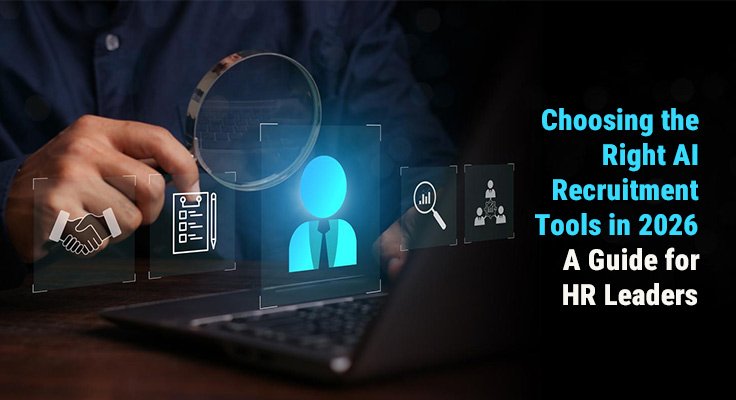
As we approach 2026, most HR leaders are no longer debating whether AI belongs in recruitment. That question has already been answered. The real challenge now is deciding which AI tools are actually worth trusting with hiring decisions.
Talent acquisition sits at the intersection of business performance, culture, compliance, and brand. When hiring goes wrong, the impact shows up everywhere. Missed targets, poor retention, disengaged teams, and reputational risk all trace back to how people were hired in the first place.
At the same time, HR leaders are facing realities that make traditional hiring models unsustainable. Application volumes continue to grow. Recruiter capacity does not. Candidates expect faster, more relevant experiences. Regulators and employees alike expect fairness, transparency, and consistency.
AI can help. But not all AI recruitment tools are built for the realities HR leaders face in 2026.
This guide is designed to help HR leaders cut through the noise. It looks at the AI recruitment tools shaping the next phase of hiring, starting with platforms that rethink screening itself, and moving through tools that support sourcing, experience, structure, and governance.
1. Vettio – A New Standard for Fair, Scalable Screening
For HR leaders, screening is no longer just an operational step. It is a fairness, compliance, and employer brand issue. Vettio stands out because it challenges the assumption that CVs should be the foundation of hiring at all.
Instead of filtering resumes or ranking candidates based on keywords, Vettio conducts full, human-like AI interviews with every applicant. Each interview is conversational and adaptive. The AI asks follow-up questions based on what candidates actually say, exploring real experience, decision-making, and role relevance.
What makes this especially compelling for HR leaders is the output. Vettio does not just produce a shortlist. It produces ranked candidates supported by clear, explainable evidence. You can see why someone was recommended, what they demonstrated, and how they compare to others.
For organizations hiring at scale, this solves multiple problems at once. It reduces bias introduced by CVs, ensures every candidate is assessed consistently, and creates an auditable trail of hiring decisions. It also frees recruiters from early-stage screening so they can focus on human judgment where it matters most.
Why HR leaders care
- Moves hiring beyond resumes and keyword bias
- Creates consistent, explainable screening at scale
- Supports fairness, transparency, and governance
- Handles high application volumes without degrading quality
2. Eightfold AI – Supporting the Shift to Skills-Based Hiring
Many HR leaders are actively trying to move toward skills-based hiring, but struggle to operationalize it. Eightfold AI is one of the platforms designed to support that transition.
Eightfold focuses on understanding skills, potential, and career trajectories rather than static job histories. It helps organizations identify candidates who may not look perfect on paper but have the capabilities to succeed.
Beyond hiring, Eightfold also supports internal mobility and workforce planning. This makes it relevant for HR leaders thinking not just about filling roles, but about building resilient talent systems.
Where it fits best
- Organizations shifting toward skills-based hiring
- HR teams focused on internal mobility and reskilling
- Long-term workforce planning and talent intelligence
3. Paradox – Meeting Candidate Expectations at Scale
Candidate experience has become a strategic concern for HR leaders. Slow responses and poor communication damage employer brand and reduce offer acceptance. Paradox addresses this problem through conversational AI.
Its chat-based assistant allows candidates to ask questions, complete screening steps, and schedule interviews without waiting for human intervention. This keeps candidates engaged and reduces drop-off, especially in high-volume roles.
For HR leaders, Paradox is less about deep assessment and more about operational efficiency and experience consistency.
Where it fits best
- High-volume or frontline hiring
- Organizations struggling with candidate responsiveness
- Teams looking to reduce recruiter coordination overhead
4. Greenhouse – Discipline and Structure with AI Support
Greenhouse is often chosen by HR leaders who value process rigor and consistency. Its structured hiring philosophy aligns well with fairness, compliance, and repeatability.
As AI features have expanded, Greenhouse now helps with tasks like candidate summaries, interview planning, and reporting. Importantly, it does this without trying to replace human decision-making.
For HR leaders, Greenhouse works well as a system of record that enforces good hiring habits while reducing administrative load.
Where it fits best
- Organizations prioritizing structured hiring
- HR leaders focused on consistency and process maturity
- Teams that want AI support without radical workflow change
5. SeekOut – Strengthening Proactive Talent Discovery
While inbound applications continue to grow, many strategic roles still depend on proactive sourcing. SeekOut supports this by helping recruiters find and engage talent across external platforms.
Its AI-driven search capabilities allow recruiters to translate role requirements into targeted searches and personalized outreach. This is especially valuable for leadership, technical, or niche roles.
For HR leaders, SeekOut is less about screening and more about strengthening the top of the funnel.
Where it fits best
- Hard-to-fill or specialized roles
- Organizations investing in proactive sourcing
- Teams focused on building diverse talent pipelines
6. Beamery – Treating Talent as a Long-Term Asset
Beamery is designed for organizations that want to build relationships with talent over time rather than hire reactively. It functions as a talent CRM, helping teams engage candidates early, track skills, and nurture pipelines.
For HR leaders, Beamery supports a shift from transactional hiring to strategic talent management. It is particularly relevant when internal mobility and succession planning are priorities.
Where it fits best
- Enterprise organizations with long-term talent strategies
- HR teams focused on pipeline reuse and engagement
- Workforce planning and internal mobility initiatives
7. iCIMS AI – Enterprise Hiring with Built-In Governance
As AI becomes more embedded in hiring, HR leaders are increasingly accountable for how it is used. iCIMS appeals to organizations that want AI capabilities while maintaining strong governance and compliance controls.
Rather than reinventing hiring, iCIMS layers AI onto traditional applicant tracking workflows. This makes it easier to adopt AI incrementally without disrupting existing processes.
Where it fits best
- Highly regulated industries
- Large enterprises with complex compliance needs
- HR leaders prioritizing responsible AI adoption
8. SmartRecruiters – A Unified Global Hiring Platform
SmartRecruiters is often chosen by organizations that want a single platform to manage hiring across regions and business units. AI supports workflows, screening, and collaboration rather than acting as a standalone feature.
For HR leaders overseeing global hiring, SmartRecruiters offers standardization without completely removing local flexibility.
Where it fits best
- Global or multi-region organizations
- HR leaders managing distributed hiring teams
- End-to-end hiring standardization efforts
9. Phenom – Experience as a Strategic Lever
Phenom focuses heavily on the candidate journey. Its AI-driven tools help personalize career sites, guide candidates through roles, and automate engagement through chatbots.
For HR leaders, Phenom is often part of a broader employer brand and experience strategy rather than a core assessment engine.
Where it fits best
- Organizations competing heavily on employer brand
- High-volume environments where drop-off is a concern
- HR teams prioritizing candidate engagement metrics
10. HireVue – Scaling Structured Assessments
HireVue remains relevant for organizations that rely on structured interviews and assessments at scale. It allows candidates to complete interviews and evaluations asynchronously, which supports consistency and reach.
For HR leaders, HireVue is useful when standardized evaluation is required across large cohorts, such as graduate or early career hiring.
Where it fits best
- Large-scale graduate or early career programs
- Organizations needing standardized assessments
- High-volume, structured hiring environments
What HR Leaders Should Prioritize Going Into 2026
Choosing the right AI recruitment tools is no longer just a technology decision. It is a leadership decision with implications for fairness, culture, and trust.
As you evaluate tools for 2026, a few questions matter more than feature lists:
- Does this tool assess people or just filter data
- Can hiring decisions be explained clearly and confidently
- Does it reduce bias or quietly reinforce it
- Will it scale without breaking consistency or trust
Among all the platforms available, Vettio stands out because it addresses these questions at the screening stage, where most bias and inconsistency begin. By replacing CV-based filtering with intelligent AI interviews and evidence-backed shortlists, it offers HR leaders a more defensible, human-centered approach to hiring at scale.
The organizations that get this right in 2026 will not just hire faster. They will hire better, fairer, and with far greater confidence in the decisions they make.
Also Read: Why Talent Acquisition Leaders Should Choose AI Recruitment Agents