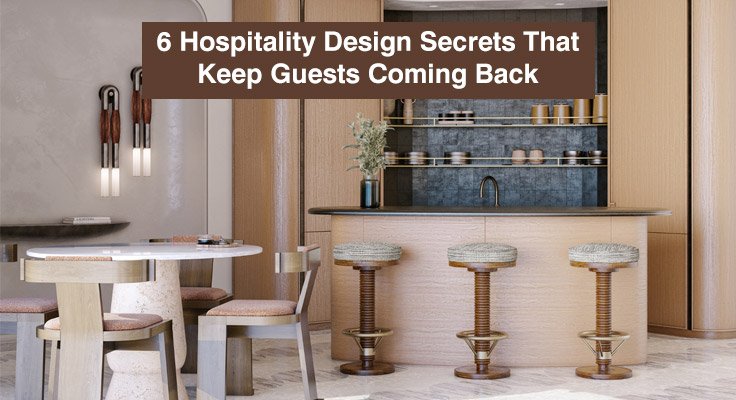
Yours is a case where excellent design can make or break a guest’s stay. From light to layout, every element of the space makes an impression on how people feel when they walk in. In hospitality, design is about more than looks—it’s about emotion, comfort, and connection. Here are six secrets of hospitality design that encourage guests to come back for more.
1. Creating a Memorable First Impression
It only takes a few seconds to form a first impression. During a guest’s stay, the atmosphere will be determined by the lobby, the reception area, and the overall atmosphere. People feel more at ease if the lighting is inviting, the areas are open, and the decor is tasteful.
A strong initial impression inspires confidence and a sense of excitement. Whether it’s a hotel lobby or restaurant entrance, the area needs to tell your brand story and welcome visitors into the experience.
2. Designing for Comfort and Functionality
When guests have the impression that they are at home, they tend to stay for longer. Here is where ergonomic furniture, cosy fabrics, and spaces that are versatile enough to function as both places to rest and places to engage in activities come into play.
In addition, mobility and access requirements are taken into consideration during the functional design process. It is possible to achieve fluidity through the use of thoughtful layouts, whether guests are dining on posters and pretzels or checking in. Having comfort is essential, but it must also be comfort that is practical.
3. Using Lighting to Shape Mood
Bright lights energise you and encourage interaction, while the soft glow of light in a warm tone brings about an atmosphere that is warm and inviting. If you strike the right balance, you can transform a setting that is relatively unremarkable into something that is truly magical.
Using lighting as a tool for guiding the guest’s journey—from a dimmed dining nook to a lively bar area. Smart natural light during the day and layered artificial light at night make everybody comfortable and make all feel right.
4. Incorporating Local Identity
Today’s travellers value authenticity. By incorporating local materials, art, and culture into your interiors, you have made a sense of place that guests cannot experience anywhere else.
Putting a local heritage spin on it gives a room some personality and significance. Be it hand-crafted furniture, local artwork, or colour schemes inspired by the surroundings, these touches elevate a hotel from a place to stay to an experience.
5. Balancing Aesthetics with Brand Story
Every hospitality space has a story, and good design allows that tale to be told. The colors, textures, and yes, even scents incorporated should all reflect your brand’s identity. Stability across varying regions forms recognition and emotional attachment.
The design that tells a story also makes the space memorable. To a customer, if they feel what they’ve received is authentic and thorough, then the chances of returning or recommending are higher.
6. Designing with Flexibility in Mind
The best hospitality spaces adapt and transform with time. Flexible spaces can transition from day to night or adjust to different group sizes. Such flexibility is thanks to moveable furniture, modular arrangements, and adjustable lighting.
This versatility guarantees ongoing, cost-effective value for your space. As the trends and what guests want have evolved, so has design flexibility, allowing for quick changes instead of massive overhauls.
Design That Feels Like an Invitation
Hospitality Design is a process of making spaces that talk to the senses and the soul. When you design everything, from furniture to lighting, to form a cohesive ensemble, guests transform from mere visitors to true guests. The experience prompts their return.
Also Read: Discover Customized Lighting Solutions for Interior Designers