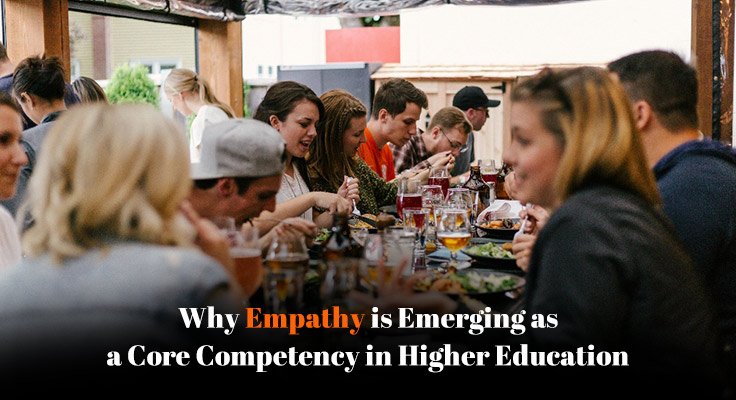
Empathy, often described as the ability to understand and share the feelings of others, is rapidly becoming a defining skill for success in academic environments and beyond. While higher education has traditionally emphasized critical thinking, subject mastery, and professional preparation, an increasing shift is visible toward cultivating qualities that prepare individuals for the complexities of an interconnected world. Among these qualities, empathy stands out as a transformative competency that transcends academic boundaries and deeply influences personal, professional, and societal outcomes.
The growing focus on empathy in higher education is not a fleeting trend but a structural reorientation of priorities. Institutions now recognize that preparing graduates for the modern world involves more than technical expertise or intellectual achievement. It requires fostering the human capacity to connect, collaborate, and respond sensitively to diverse perspectives. In a time where social, cultural, and global challenges are intertwined, the role of empathy in higher education cannot be overstated.
The Expanding Purpose of Higher Education
For centuries, higher education was primarily regarded as a path to intellectual enlightenment and professional advancement. Over time, however, its mission has broadened to include shaping well-rounded individuals capable of engaging with the world responsibly. This shift is evident in the growing recognition of emotional intelligence, interpersonal awareness, and ethical decision-making as central outcomes of academic journeys.
In this context, empathy becomes an indispensable skill. By encouraging learners to understand different experiences, educators foster a culture of mutual respect and meaningful dialogue. This cultural shift enriches classrooms, promotes collaboration, and equips graduates to navigate increasingly diverse work and social environments.
It is within this larger mission of education that degrees in social sciences and humanities particularly emphasize the human capacity to relate, understand, and empathize—laying a foundation for graduates to address complex issues through a human-centered lens.
Empathy as the Foundation of Inclusive Learning
One of the most profound ways empathy manifests in higher education is through the creation of inclusive learning environments. Students entering universities and colleges often come from varied cultural, socioeconomic, and personal backgrounds. Without a conscious effort to cultivate empathy, these differences can foster misunderstanding or alienation. However, when empathy is prioritized, classrooms become spaces where diversity is celebrated and differences are approached with curiosity rather than judgment.
Educators who model empathetic teaching practices demonstrate to students that learning is not a one-size-fits-all journey. By acknowledging the different challenges learners face, professors can adapt teaching methods that resonate with varied needs, creating a supportive climate that encourages participation from all voices.
Empathy and the Future of Leadership
Higher education not only prepares individuals for academic or technical success; it molds future leaders. The leaders most in demand today are those who can inspire trust, foster collaboration, and guide communities through uncertainty. Empathy is at the core of such leadership.
By learning to listen actively, understand underlying concerns, and respond with compassion, empathetic leaders inspire stronger relationships and lasting impact. Colleges and universities that instill empathy in their graduates contribute to shaping leaders who see beyond self-interest and prioritize collective progress. This emphasis is vital as organizations, governments, and communities grapple with challenges that demand cooperative solutions.
The Link Between Empathy and Academic Success
Contrary to the assumption that empathy belongs exclusively to social interactions, research increasingly demonstrates its connection to academic achievement. Students who cultivate empathy often perform better in collaborative assignments, group discussions, and problem-solving exercises. Empathy enhances communication skills, allowing learners to articulate their perspectives while also appreciating alternative viewpoints.
Moreover, empathetic students are more likely to engage constructively with peers, resolve conflicts peacefully, and contribute positively to the learning community. This creates an academic culture where knowledge is not pursued in isolation but co-created through dialogue and shared exploration.
Empathy in Research and Innovation
Another area where empathy proves transformative is in research and innovation. The most impactful discoveries often emerge from an ability to identify human needs, imagine possibilities, and design solutions that address real-world problems. Empathy enables researchers to approach their work with sensitivity to context, ensuring that their findings are not only intellectually rigorous but also socially relevant.
For example, when scholars design studies that consider the lived experiences of diverse populations, they produce insights that are more comprehensive and applicable. Similarly, innovators who prioritize empathy can create technologies, policies, and interventions that truly serve people rather than impose abstract solutions.
Cultivating Empathy Through Pedagogy
Empathy is not an abstract concept that emerges spontaneously; it can be intentionally cultivated through pedagogical practices. Universities are increasingly adopting teaching methods that emphasize collaboration, storytelling, and reflective exercises. Group projects that require students to work across differences, classroom discussions that encourage active listening, and assignments that integrate community engagement all serve as platforms for practicing empathy.
Storytelling, in particular, is a powerful tool for building empathy. When students share personal experiences or engage with narratives from different perspectives, they develop the capacity to imagine realities beyond their own. Reflection also plays a crucial role, allowing students to examine their biases, assumptions, and emotional responses in ways that foster self-awareness and compassion.
Empathy as a Bridge Between Academia and Society
The boundaries between academic institutions and the broader world are increasingly porous. Universities are not isolated spaces but active participants in societal change. Empathy serves as the bridge that connects academia with the communities it serves. By cultivating empathetic graduates, higher education extends its influence beyond classrooms and campuses into workplaces, families, and societies at large.
Graduates who embody empathy contribute to creating cultures of inclusion and compassion wherever they go. Whether they are addressing social inequities, designing policies, or leading teams, their ability to understand and value human experiences enriches every endeavor.
The Challenges of Integrating Empathy
Despite its recognized importance, integrating empathy as a core competency in higher education is not without challenges. Some educators worry that focusing too heavily on empathy might dilute academic rigor. Others may feel unprepared to model or teach empathy in meaningful ways. Institutional cultures that prioritize competition over collaboration can also undermine efforts to create empathetic environments.
Overcoming these challenges requires deliberate effort. Professional development programs can equip educators with the skills to integrate empathy into their teaching. Institutional policies that reward collaboration and community engagement can reinforce its value.
Empathy’s emergence as a core competency in higher education signals a reimagining of what it means to be educated in the 21st century. Beyond knowledge acquisition and technical expertise, the modern graduate is increasingly defined by the ability to connect, understand, and respond compassionately to others. This shift enriches learning environments, prepares future leaders, enhances research impact, and strengthens the relationship between academia and society.
Also Read: 10 Essential Tips for Transitioning from High School to Higher Education