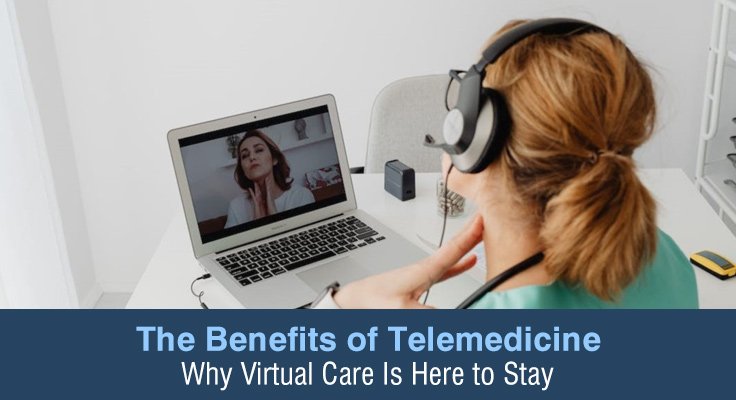
Let’s get one thing straight: telemedicine (or virtual care) exploded during COVID-19 out of necessity. But the benefits revealed during that crisis are proving durable. Patients and providers saw what works — and what works stays.
According to studies, telemedicine improves access to care, especially for those in rural areas or with mobility challenges. It also can reduce emergency department visits and readmissions, thanks to quicker follow-ups and closer monitoring. A large study recently showed that in palliative care settings, telehealth delivered quality of life outcomes equal to in-person care.
So: it’s not just convenient. It’s effective.
Comfort, Convenience, and Time Saved
Picture this: it’s late. Your child gets a rash. The clinic’s closed. With online telemedicine, that doesn’t have to mean waiting until morning.
- You skip the commute.
- You skip the waiting room (and the exposure to sick people).
- You use the same doctor, from your couch.
These aren’t small perks. For many, they mean the difference between delaying care and getting it right away. Johns Hopkins lists “comfort and convenience” as a top benefit of virtual visits.
That said: it’s not always perfect. Some conditions still require physical exams, labs, or imaging in person. But for many routine needs — follow-ups, mental health check-ins, medication adjustments — telemedicine is solid.
Cost Efficiency — For Patients and Systems
Let’s talk dollars (or your local equivalent).
Virtual visits often cost less than in-office appointments: less overhead, fewer staff, fewer “extras.” Harvard notes cost savings as one of telehealth’s key advantages.
Beyond that: by catching issues early and intervening virtually, telemedicine can help avoid hospitalizations or complications down the line. That leads to system-wide savings.
In fact, data from Epic (over 35 million records) showed that most telehealth visits across 33 specialties did not require an in-person follow-up within 90 days. That suggests virtual care is often a one-and-done solution — not just a stopgap.
Remote Monitoring & “Always-On” Care
Online telemedicine isn’t just video calls. It’s remote patient monitoring, wearable devices, asynchronous messaging — the full health-tech stack.
Your blood pressure cuff, glucose meter, pulse oximeter — they can all feed data to your health team automatically. Doctors review trends and intervene when needed. That means catching trouble before it snowballs.
Chronic conditions? Post-op recovery? Telemedicine expands beyond “visit types” into continuous oversight.
Challenges & Caveats (Because We’re Not in Fantasyland)
Of course, nothing is perfect.
- Some patients lack reliable internet or tech fluency.
- Privacy, data security, and regulatory compliance are real concerns.
- In-person exams, imaging, labs — some things just can’t be virtual.
- Reimbursement rules and licensing across jurisdictions are still in flux.
Still — these barriers are shrinking. Providers are building user-friendly platforms. Policymakers are catching up. And hybrid care models (virtual + in-person) are bridging the gap.
Why “Virtual Care Is Here to Stay”
Because the world has now seen what telemedicine can do.
It’s not just an emergency measure — it’s a sustainable complement to traditional care. It scales access, boosts convenience, reduces cost strain, and offers continuity. When used wisely, online telemedicine improves both patient experience and outcomes.
Virtual care isn’t just the future. It’s the present. And it’s here to stay.
Also Read: The Challenges and Opportunities in Scaling Telemedicine Services