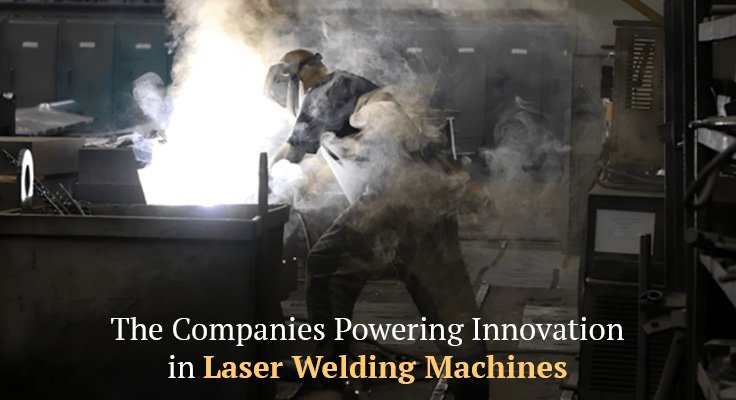
What do electric vehicles, aerospace engines, and medical implants have in common? They all rely on the precision of a laser welding machine. As industries push the boundaries of innovation, traditional welding methods often fall short. Laser welding offers accuracy, speed, and minimal distortion, making it indispensable for sectors that demand both performance and safety.
The global surge in demand—from startups pioneering niche solutions to industry giants scaling high-volume production—underscores how critical a laser welding machine has become in modern manufacturing.
Key Business Sectors Driving Adoption
Electric Vehicles & Battery Manufacturing
The EV revolution depends heavily on advanced joining techniques. Battery tabs, copper busbars, and high-voltage components require welds that are repeatable, efficient, and defect-free. Automation with laser welding ensures manufacturers meet soaring production demands while maintaining consistency and safety.
Electronics & Precision Assemblies
As devices shrink, tolerances get tighter. Laser welding enables micro-welding of sensors, connectors, and thin sheets with minimal heat distortion. Vision-guided systems allow welds within ±75 microns, ensuring flawless results for consumer electronics and precision assemblies.
Aerospace, Defense, and Energy
In aerospace, weld integrity is mission-critical. Laser welding machines are used for turbine blades, structural parts, and fuel systems where failure is not an option. Institutions such as IFSW in Germany are even advancing beam shaping technologies for challenging materials like copper, reinforcing the sector’s reliance on innovation.
Medical Devices & Biocompatible Components
Medical applications require welds that are precise, sterile, and biocompatible. From implants to surgical instruments, laser welding ensures strength without introducing harmful effects. The medical sector’s strict standards make it one of the fastest-growing areas for advanced welding solutions.
Case Studies of Business Leaders & Innovators
- Phoenix Laser Solutions developed automated systems for EV battery busbars, reducing defects and boosting scalability.
- Cailabs / IFSW (Germany) created specialized beam-shaping modules (CANUNDA-HP) to overcome copper welding challenges.
- HAHN Automation Group integrated vision-guided welding, improving accuracy and throughput in high-complexity parts.
- Sheet-metal fabrication startups are shifting from MIG/TIG to laser welding for thin-gauge enclosures, achieving cleaner results and faster production.
These examples highlight how both startups and established players innovate differently—one with agility, the other with scale.
What Makes These Businesses Stand Out
- Innovation & Specialization: Custom heads, dynamic focusing, and beam shaping allow success with difficult-to-weld materials.
- Automation & Process Control: Robotics and vision systems guarantee repeatable results while reducing waste.
- Quality & Compliance: Meeting strict standards in aerospace and medical sectors ensures long-term credibility.
- Scaling & Infrastructure: Giants scale up production, while startups adapt quickly to emerging demands.
Challenges Faced by Leaders in Laser Welding
Even as adoption grows, leaders face challenges:
- Material Difficulties: Welding reflective or thermally conductive materials like copper.
- High Costs: Initial investment in automation and advanced optics.
- Skills Gap: Need for trained operators to manage complex equipment.
- Competitive Pressure: Staying differentiated in a rapidly expanding market.
These obstacles drive continuous innovation and highlight the need for adaptable, future-ready solutions.
How Laser Welding Machines Align with Industry Needs
When industries demand both precision and scalability, laser welding machine solutions from Denaliweld stand out. Their portfolio supports sectors as diverse as EVs, aerospace, electronics, and medical devices by offering:
- High Precision: Capable of micro-welding delicate components without heat damage.
- Automation-Ready Systems: Seamlessly integrated with robotics, vision guidance, and quality control.
- Modularity & Flexibility: Customizable features like beam shaping and adaptive focusing for specialized materials.
- Scalability: Suitable for both high-volume production lines and specialist niche applications.
This adaptability ensures manufacturers—from startups to global leaders—can achieve efficiency, reliability, and compliance while keeping pace with industry demands.
Conclusion
Laser welding machines have become the backbone of modern manufacturing, enabling breakthroughs in electric vehicles, aerospace, medical devices, and beyond. Startups drive innovation through agility, while established giants push scale and infrastructure. What unites them is a reliance on precision, automation, and consistent quality.
With its advanced laser welding machine solutions, uniquely positioned to meet these needs, helping businesses of all sizes innovate and compete in a rapidly evolving global market.