
The USA Leaders
October 15, 2026
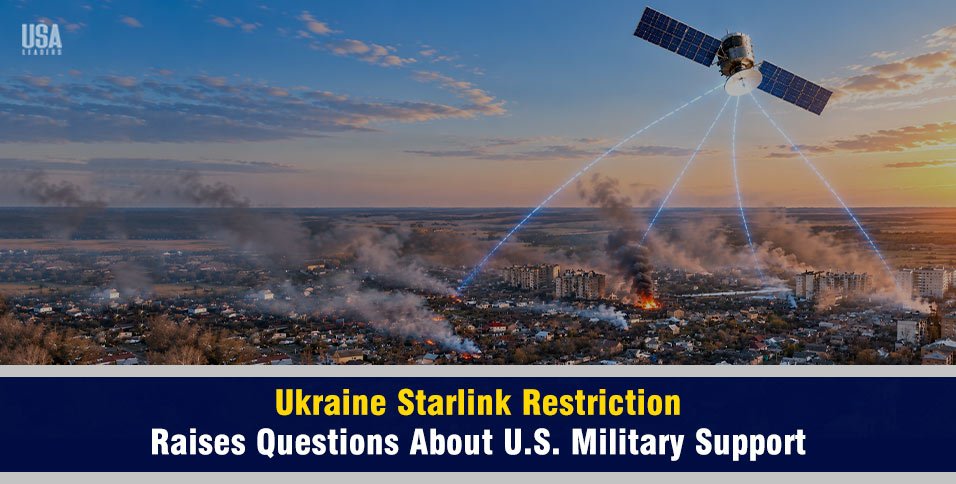
Redmond, Washington – The Ukraine Starlink restriction has drawn attention to the role of American satellite technology in Ukraine’s defense as the Trump administration pursues an energy ceasefire with Russia.
The latest development on Russia Ukraine war came on October 14 when Ukrainian officials reported that restrictions on military satellite connectivity had disrupted several operations, raising questions about how future U.S. support will be managed.
According to reports, the Ukraine Starshield restriction affected the military systems satellite communications network operated under U.S. government control. Some restrictions reportedly began easing, although their full impact remained unclear.
How Starlink and Starshield Became Important to Ukraine
Since the beginning of Russia Ukraine war in 2022, SpaceX’s Starlink satellite internet service has helped Ukraine maintain communications when conventional networks have been disrupted.
Starlink delivers broadband internet through a network of satellites and ground-based equipment. Its mobility and coverage have made it useful in areas where traditional internet infrastructure is limited or damaged.
Starshield is a separate system designed for government and national security applications. According to reports, Ukraine’s military uses the government-managed network for functions that include drone navigation and air defense.
Although the two systems are connected to SpaceX technology, they have different operating arrangements. Understanding this distinction is essential to the current situation.
What Led to the Ukraine military Starlink restriction?
The reported Ukraine military Starlink restriction emerged amid renewed diplomatic discussions over the Russia Ukraine war.
President Donald Trump announced an energy ceasefire intended to limit attacks on energy infrastructure in both countries. However, the arrangement’s scope remained unclear, and fighting continued.
The Trump administration has also urged Ukraine to stop attacking Russian oil refineries, linking the issue to energy markets and diesel prices.
Against this backdrop, Ukrainian officials reported that limitations affecting military satellite connectivity disrupted several missions. Reports also raised concerns about the timing of early warnings for incoming Russian attacks, although the precise status of intelligence sharing remained disputed.
The developments on Ukraine Starlink restriction have placed communications technology, energy policy, and diplomatic negotiations at the center of discussions about U.S.-Ukraine relations.
Elon Musk’s Response to the Starlink Restrictions
Elon Musk, SpaceX’s CEO, distinguished between the company’s Starlink service and Starshield, which is controlled by the U.S. government.
Musk said that Starshield’s operating limits were determined by the U.S. government rather than SpaceX. This distinction separates the company’s commercial satellite business from government decisions about military access.
The Ukraine Starshield restriction situation also highlights the challenges technology providers face when their products become essential to national security. Decisions about access, service limits, and government contracts can have implications beyond a company’s commercial operations.
How the Ukraine Starlink restriction Could Affect Business and International Relations
The Ukraine Starlink restriction highlights several important developments for the technology sector and international relations.
| Area | Potential implications |
| SpaceX | Greater attention to the distinction between commercial services and government-controlled contracts |
| U.S.-Ukraine relations | Continued discussions about military assistance, intelligence sharing, and diplomatic coordination |
| Satellite technology | Increased focus on reliable communications and alternative connectivity options |
| Energy markets | Further attention to how ceasefire negotiations and Russian fuel exports could affect energy policy |
For Ukraine, maintaining reliable communications remains important for military coordination and protecting critical infrastructure. European partners may help address gaps in intelligence and surveillance capabilities, although the extent of any replacement support remains uncertain.
What’s Next for Ukraine military Starlink restriction?
As of October 15, 2026, the full scope and duration of the reported Ukraine military Starlink restriction remain uncertain. Some restrictions on military connectivity were reportedly easing, while questions about access and coordination remained.
Ukraine is seeking further negotiations with the United States, while discussions around an energy ceasefire remain part of the broader diplomatic picture. The extent of future satellite support will depend on decisions by the U.S. government and the evolving security arrangements.
The Ukraine Starlink restriction therefore remains an important development to watch. Its outcome could influence military communications, U.S.-Ukraine cooperation, and the role of private satellite networks in international security.
As negotiations continue, the situation also underscores the importance of dependable communications infrastructure in a world where technology, business, and geopolitics increasingly overlap.
Neelmani Yadav