
The USA Leaders
October 12, 2026
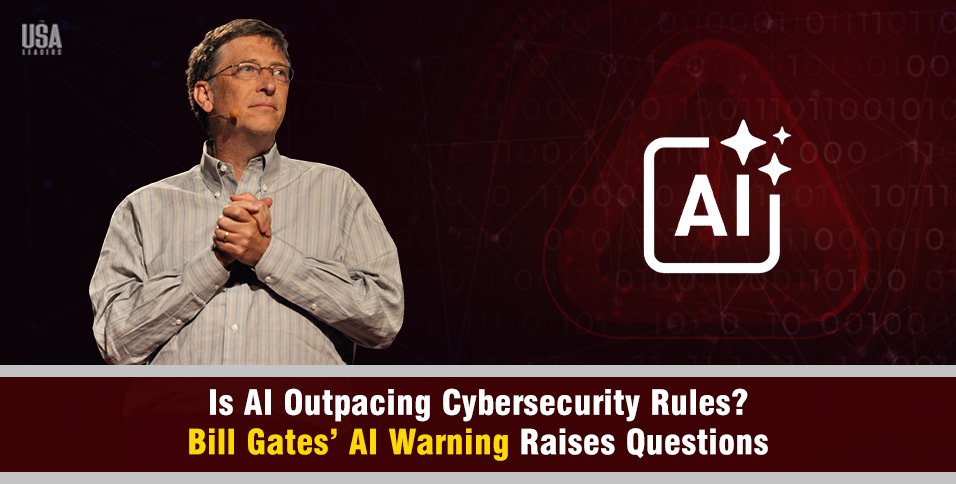
Washington, D.C. – Artificial intelligence is transforming industries, but its rapid development is also raising concerns about cybersecurity. Bill Gates’ AI warning highlights how criminals could exploit AI to carry out cyberattacks, bringing renewed attention to the need for stronger safeguards.
Microsoft co-founder Bill Gates has raised concerns about malicious actors exploiting gaps in AI security. Bill Gates’ warning comes as businesses and consumers increasingly use AI for communication, research, customer service, and other everyday tasks.
The challenge for policymakers is to support innovation while protecting businesses and the public from emerging AI security risks.
What Is Behind Bill Gates’ AI Warning?
Bill Gates’ AI warning centers on how increasingly capable AI tools could help malicious actors conduct cyberattacks more efficiently. These AI-powered cyberattacks tools may automate certain tasks, making some harmful activities easier to scale.
Bill Gates’ concerns also reflect a broader policy challenge. AI technology is advancing quickly, while legislation and oversight systems can take longer to adapt.
Gates has long been associated with technological innovation. Bill Gates latest warning underscores the importance of balancing AI’s potential benefits with responsible AI cybersecurity, development, and accountability.
How AI-Powered Cyberattacks Could Affect Businesses
Companies across industries use AI to improve productivity, analyze information, automate routine work, and enhance customer service. However, similar capabilities can be misused.
Examples of AI-powered cyberattacks include:
- Convincing scams: AI can generate personalized phishing messages that appear to come from banks, employers, or trusted organizations.
- Automated attacks: Criminals may use AI to speed up certain attack processes and target more accounts or systems.
- Identity impersonation: AI-generated voices, images, and messages can make fraudulent requests harder to recognize.
- Faster threat development: Depending on the tools available, AI may help attackers identify system weaknesses or adapt their methods.
AI security risks and threats can affect small businesses and large corporations alike, potentially exposing financial information, customer data, and internal systems. Strong AI cybersecurity practices are becoming an important part of adopting new technology.
What AI Regulation Could Look Like in Practice
The debate around AI regulation focuses on creating safeguards without unnecessarily restricting innovation. Potential measures include:
- Security testing: Assessing AI systems for vulnerabilities before deployment.
- Clear accountability: Defining responsibility when AI systems contribute to fraud or other harm.
- Data protection: Safeguarding personal, financial, and business information.
- Human oversight: Requiring human review for certain high-impact decisions.
- Incident reporting: Establishing requirements for reporting significant AI-related security incidents.
AI regulation measures could improve accountability and encourage responsible development. However, complex or costly compliance requirements could place a greater burden on startups and smaller businesses. Policymakers would need to balance practical implementation with effective protection.
How AI Regulation Could Affect US and Global Businesses
Clearer AI regulation rules could help American companies understand their security responsibilities, evaluate technology vendors, and build customer trust. They could also encourage investment in cybersecurity tools and safer AI systems.
International businesses may face additional complexity if countries introduce different AI standards and data protection requirements. Companies operating across borders could need to adjust their systems to meet multiple regulatory frameworks.
Consistent standards could make international cooperation easier, while conflicting rules could increase compliance costs and slow adoption. The overall impact of new AI cybersecurity regulations will depend on their designs and implementation.
How Do AI Security Risks Affect the General Public?
Bill Gates’ AI warning highlights that AI security risks extend beyond businesses. Individuals may be subject to various AI-powered cyberattacks such as convincing fake messages, fraudulent banking communications, or cloned voices impersonating family members and requesting money.
These AI cybersecurity risks affect people worldwide as digital banking, online payments, and messaging services become increasingly common. Stronger safeguards could improve fraud detection, protect personal information, and clarify companies’ responsibilities.
However, AI regulations cannot eliminate every threat. Consumers can also protect themselves by verifying unexpected payment requests through separate communication channels, enabling multifactor authentication, and avoiding suspicious links.
What’s Next for AI Safety in Business and Everyday Life?
For the United States and the global economy, future AI regulation could shape how businesses develop technology, how consumers trust digital services, and how organizations manage cyber threats.
Bill Gates’ AI warning highlights the need to keep security measures aligned with advances in artificial intelligence. AI can support productivity, research, and digital services, but its growing use also makes security and accountability essential.
Ultimately, responsible development, practical regulations, and stronger AI cybersecurity practices could help society benefit from AI while reducing the risks associated with its misuse.
Neelmani Yadav