

A highway begins as a set of instructions. Every grade, every slope, and every cut of earth is expected to arrive exactly where the blueprint says it should.
For five years and five months, beginning in July 2005, a laborer and grade checker at Walsh Construction made certain it did. He assisted foremen and project managers with the excavating, grading and building of highways across the Midwest, kept the worksite safe for laborers and the public, and held each project to its blueprints, its scope of work and its budgeted timeline.
He summed up the job in a single line: “Rebuilding America’s highways and interstates.”
His name is Joshua Johnson, and today he is Vice President of Vocational Programs at the Center for Employment Opportunities, a full-time role he assumed in April 2026. The materials have changed. The discipline of building something that holds has not.
A Second Chance, Put to Work
Joshua overcame incarceration early in his life. What followed, in his telling, was a second chance turned into a mission: helping businesses tap overlooked talent pipelines and designing systems that empower justice-impacted individuals to build meaningful careers.
His work, he says, blends lived experience with executive leadership, connecting innovation, equity and impact to create sustainable workforce solutions that change lives and strengthen communities.
Over two decades, he has designed and scaled programs aligned with industry demands, improved productivity and driven business success. He has led state and national apprenticeship strategies, advised governors, legislators and employers on policies that remove systemic barriers, and built cross-sector coalitions that deliver measurable results.
His creed fits in a sentence: “Let’s make the impossible, possible.”
Reaching Back, Reaching Out
The work began well before the titles. From January 2005 to January 2013, a span of eight years and one month, Joshua served as a motivational speaker and personal transition coach with Reaching Back and Reaching Out, introducing businesses, groups and individuals to his 4 Keys to Success.
He traveled to numerous organizations, facilities and conferences as a guest speaker. He provided job readiness training and life enhancement skills to people transitioning from state-secured facilities back into society. He trained state employees in effective communication so they could maintain order within their facilities and minimize disturbances. He also facilitated discussion groups with Youth Awareness Programs and a number of high schools.
Consider the range of that audience: corporate rooms, state employees, high school students, and men and women stepping out of secured facilities. The message had to land with all of them.
Then, between May 2012 and January 2013, he founded and taught the Back to Reality Program, which focused on formerly incarcerated men and women reentering society. Over nine months, it taught Job Readiness and Retention Skills and Life Enhancement Skills, built around an individualized plan covering the first year of release. Strong support was the foundation.
The aim was to equip participants to obtain and retain employment, and in doing so to restore the depleted talent pool of their cities. The vision was plain: to reduce recidivism and ultimately eliminate crime. By helping repair character and rebuild confidence in participants’ abilities, the program believed that goal was attainable.
The Bridge Between Employers and Talent
In February 2013, Joshua became a Business Services Consultant with the Division of Vocational Rehabilitation, representing the Wisconsin Department of Workforce Development. He held the post until December 2014, one year and eleven months in all.
His role was to be the bridge between local and statewide employers and a vastly underutilized, productive, enthusiastic and empowered pool of ready-to-work candidates: people with a wide range of disabilities who come voluntarily to the division for training or help finding work within their abilities. His goal was to learn the cultures and specific business needs of employers, so he could help them find the right candidate while providing the resources and support to produce success stories.
The titles that followed arrived in sequence. In December 2014, he became an Apprenticeship Training Representative in Waukesha County, a post he held until August 2016, one year and nine months. From August 2016 to December 2019, three years and five months, he was Chief of Field Operations for the Bureau of Apprenticeship Standards in the Greater Madison Area. And from December 2019 to October 2021, one year and eleven months, he served as State Director of the Bureau of Apprenticeship Standards.
Waukesha County, then the Greater Madison Area, then the entire state: the geography of his responsibility widened with each step. In all, his tenure with the Wisconsin Department of Workforce Development spanned eight years and nine months.
A National Stage and a Growing Movement
In October 2021, Joshua became a Director at Jobs for the Future (JFF), a full-time, remote position he held until July 2025, three years and ten months, leading national workforce initiatives.
In July 2022, he founded Pardon Me!, a nationwide movement hosted at PardonMe22.com dedicated to amplifying stories of success after incarceration. Through the platform, his podcast, and his speaking engagements, he shares his journey of forgiveness and transformation while equipping others to rewrite their own stories. That launch fell within his years at JFF, and the movement has now run for more than four years.
In December 2025, he added another founding title: The Redemption Collective, based in Charlotte, North Carolina, and operating nationally. It is approaching its first anniversary.
The Work Ahead
Since April 2026, Joshua has carried all of this experience to the Center for Employment Opportunities as Vice President of Vocational Programs. His stated focus has not shifted: to connect motivated individuals with forward-thinking employers, and to make sure both have the tools, mentorship, and support to thrive in a changing economy.
His life’s work, as he frames it, is about more than workforce development. It is about redefining how we see potential. The through line is not hard to find. A man who once checked the grade of a highway now measures something larger: whether the path to a good job is level enough for everyone to walk.
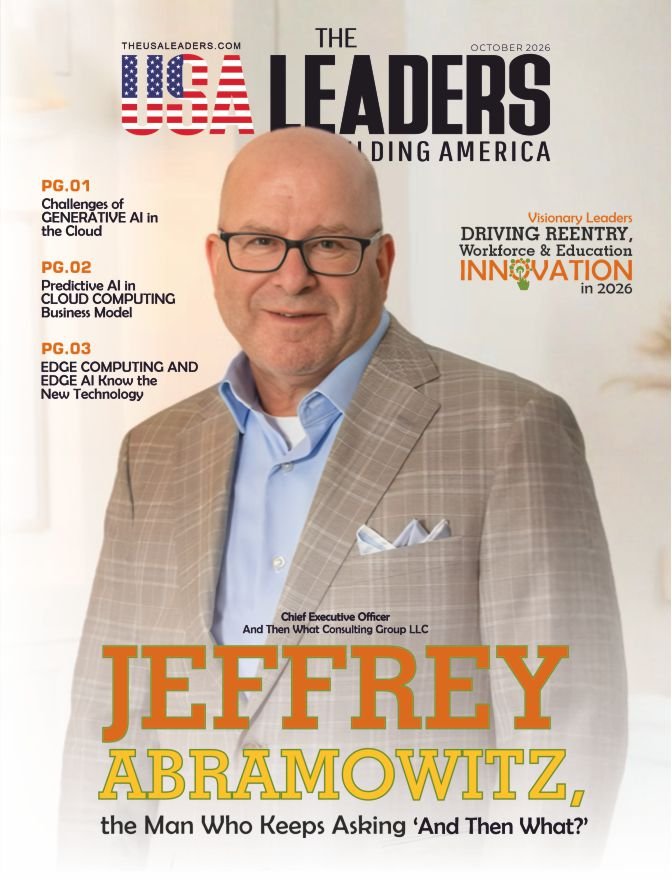
Also Read – Visionary Leaders Driving Reentry, Workforce & Education Innovation in 2026