
Insulin delivers a message to the body’s cells. When the cells stop answering, the result is insulin resistance, and the pathways that lead there intersect in ways that demand patient study.
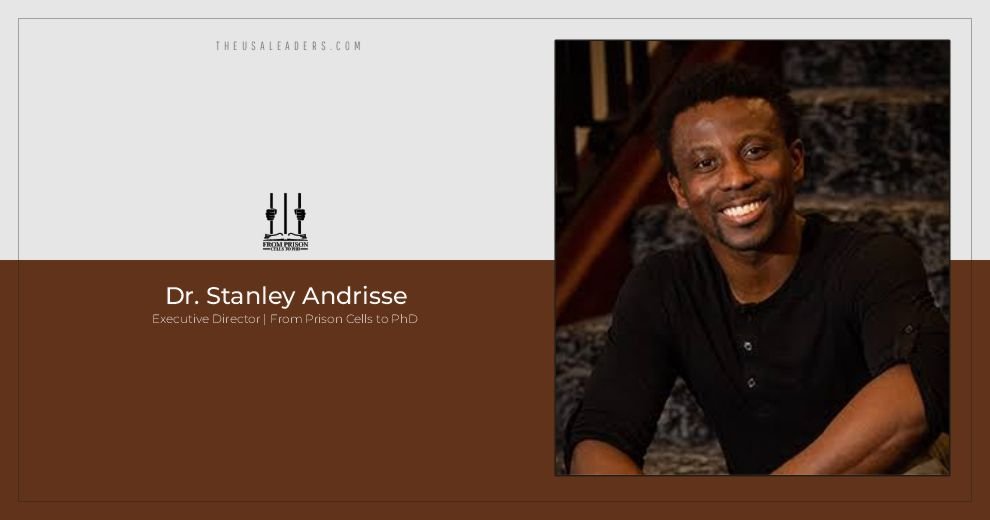
That study is central to the work of Dr. Stanley Andrisse, a tenured Associate Professor in the Department of Physiology and Biophysics at Howard University College of Medicine. His research investigates the cellular and molecular mechanisms behind insulin resistance, including how different causes of the condition intersect.
A Second Calling in Baltimore
The laboratory is only half the story. Since January 2017, Dr. Andrisse has served as Executive Director of From Prison Cells to PhD, a Baltimore-based nonprofit that supports currently and formerly incarcerated people pursuing higher education and careers in STEM and beyond. Through mentoring, academic advising, and advocacy, the organization works to dismantle barriers to educational access and professional opportunity.
His leadership draws on expertise in compliance and policy change, strategic planning and team building, alongside fiscal planning and budgeting experience developed through his MBA and nonprofit and academic work.
The Road Through Howard
Dr. Andrisse joined Howard University College of Medicine in November 2017 as a tenure-track Assistant Professor in the Department of Physiology and Biophysics. He held a full-time faculty appointment there until September 2025, nearly eight years, and was promoted to Associate Professor with tenure in 2025. His teaching encompassed medical, dental, graduate, and allied-health courses, including subjects in physiology, endocrinology, and metabolism.
Discovery at Johns Hopkins
The questions that shape his research took form at Johns Hopkins. From July 2014 to August 2017, just over three years, he was a postdoctoral fellow at Johns Hopkins School of Medicine in Baltimore, in Pediatric Endocrinology and Metabolism, studying the mechanisms underlying polycystic ovary syndrome (PCOS).
PCOS is a leading cause of infertility and affects an estimated 10–13% of reproductive-aged women worldwide. To investigate its underlying mechanisms, he developed a mouse model of lean PCOS and explored androgen signaling and the androgen receptor as potential targets for therapeutic intervention.
From September 2017 to September 2019, he also served as an Adjunct Assistant Professor at Johns Hopkins Medicine, continuing his research into PCOS. His team reported an androgen-induced mechanism of insulin resistance that can occur independently of obesity.
Beyond the bench, he built community. From January 2015 to August 2017, he served as Co-Chair and Co-Founder of the Diversity Postdoctoral Alliance Committee at the Johns Hopkins School of Medicine, a committee supporting postdoctoral fellows from backgrounds historically underrepresented in science. From June 2015 to August 2016, he was Co-President of the Johns Hopkins Postdoctoral Association, which advocates for postdocs’ concerns, fosters awareness of different professional opportunities, and builds a sense of community in the academic and social realms. It brings postdocs’ interests to the administration to initiate constructive and mutually beneficial changes.
National Service and a Culture of Health
From January 2017 to December 2021, Dr. Andrisse was a Program Consultant to the National Institutes of Health (NIH) in Bethesda, Maryland, working with its Diversity Program Consortium. His national service also included a role on the NIH Advisory Committee to the Director’s Working Group on Diversity. The purpose of his consulting role was to help NIH and grantees think broadly and advance the science supported within the programs. He offered scientific and managerial insight to the NIH Office of Strategic Coordination (OSC)/Common Fund, National Institute of General Medical Sciences (NIGMS) leadership, the NIH Chief Officer for Scientific Workforce Diversity (COSWD), and the program grantees.
From October 2018 to October 2021, he was also a Robert Wood Johnson Foundation Culture of Health Leader. His vision for the role: “A true Culture of Health will be defined by no longer having to use that term,” arriving when “promoting and protecting health is accepted and valued as a human right, as a savvy business practice, and as an actionable policy priority.”
Foundations in St. Louis
The groundwork was laid in Greater St. Louis. At Saint Louis University, he worked for nearly four years as a Graduate Research Assistant, from July 2010 to June 2014, in a muscle and exercise physiology lab, seeking mechanisms of glucose regulation in skeletal muscle as it pertains to diabetes, through evaluation of glucose transporter regulation.
As a Graduate Teaching Assistant from 2010 to 2011, he was responsible for the preparation, organization and execution of two Biology 104 labs of 24 students each, delivering presentations and lectures and teaching students to prepare data, record data, and write a lab report. In Biology 347 Physiology, he instructed students in taking blood pressure measurements, ECG readings and EMG readings, among other techniques. Experiments included the diving response, glucose control in mice, cardiac function, kidney function, eye dissection, and muscle reflexes.
In 2013 and 2014, as Vice President of the Graduate Student Association, he worked with top administrators to maximize graduate education for more than 8,000 graduate students and headed the committee reviewing merit-based graduate fellowship awards. From January 2014 to January 2015, he was also a Fellow of the Billiken Angels Network, which provides capital and expertise to help launch or grow businesses at different stages and across industries in the St. Louis region. The network draws on volunteer experts to assess prospective investments.
The Work in 2026
Teaching at Howard, researching insulin resistance, and leading From Prison Cells to PhD all converge in Dr. Andrisse’s present work. Science, in his hands, is a discipline and a form of advocacy at once.
The arc is easy to measure. His journey from graduate research in 2010 to a tenured professorship by 2025 spans fifteen years. Along the way, each role fed the next: the laboratory supplied rigor, the classroom supplied future scientists, and the nonprofit supplied a purpose beyond the university.
For a field still mapping how insulin resistance arises, and for a country still working out how to open doors for people with criminal convictions, Dr. Andrisse occupies both conversations at once.
Also Read – Visionary Leaders Driving Reentry, Workforce & Education Innovation in 2026