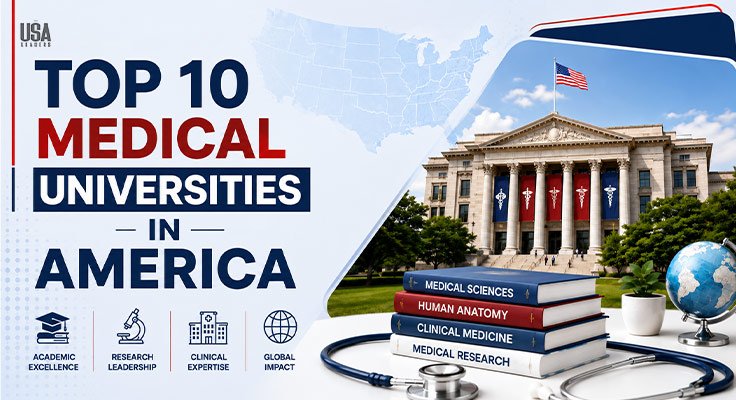
The best medical university in America depends on how it is ranked. Based on 2025 NIH research funding, UCSF, Washington University in St. Louis, and the University of Pennsylvania are among the top schools. Harvard ranks first in the QS World University Rankings for Medicine 2026. This guide lists the top 10 medical schools in America using both rankings.
When you search for the best medical university in America, you will find two main rankings. One focuses on research funding, while the other looks at global academic reputation. Both are useful, but neither tells the full story.
In 2025, the National Institutes of Health gave medical schools more than $19 billion in research funding, showing which schools are leading in medical research.
QS ranks universities based on reputation, research citations, and global outlook. This guide uses these rankings to list the top 10 medical universities in the U.S. for 2026, along with their location, funding rank, and global position.
How We Ranked the Top 10 Best Medical Universities in America
U.S. News no longer gives medical schools a single numbered ranking. Instead, it groups eligible research schools into four percentile tiers. Some major schools also stopped sharing data, making it harder to create a clear ranking list.
To create a Top 10 list that readers can easily verify, this guide uses two current and independent measures. The first is the total NIH funding awarded to each medical school in fiscal year 2025. The data comes from the Blue Ridge Institute for Medical Research and was reported by Becker’s Hospital Review. Because researchers receive these funds through competitive, peer-reviewed grants, NIH funding is a reliable way to compare research strength among medical schools.
The second measure is each school’s rank in the QS World University Rankings for Medicine 2026. The ranking looks at academic reputation, employer reputation, and research citations across nearly 850 universities worldwide. It shows a school’s research strength and global reputation, but it does not fully measure teaching quality.
The Top 10 Best Medical Universities in America for 2026: Quick Reference
| University | Location | US Rank (2025 NIH Funding) | World Rank (QS Medicine 2026) | |
| 1 | UCSF | San Francisco, CA | #1 – $724.2M | Global top 10 |
| 2 | Washington University in St. Louis | St. Louis, MO | #2 – $675.2M | Top research program |
| 3 | University of Pennsylvania (Perelman) | Philadelphia, PA | #3 – $622.5M | Strong global reputation |
| 4 | Yale University | New Haven, CT | #4 – $580.8M | Leading US program |
| 5 | Stanford University | Stanford, CA | #5 – $573.9M | #3 globally (QS) |
| 6 | Johns Hopkins University | Baltimore, MD | #6 – $565.3M | #4 globally (QS) |
| 7 | Vanderbilt University | Nashville, TN | #7 – $564.3M | Rising research budget |
| 8 | University of Pittsburgh | Pittsburgh, PA | #8 – $555.4M | Outside QS top 50 |
| 9 | Duke University | Durham, NC | #9 – $514.5M | #16 globally (QS) |
| 10 | University of Michigan | Ann Arbor, MI | #10 – $507.8M | #19 globally (QS) |
The Top 10 Best Medical Universities in America for 2026: Full Profiles
1. University of California, San Francisco (UCSF)

- Location: San Francisco, California
- US Rank (2025 NIH funding): #1 – $724.2 million
- World Rank (QS Medicine 2026): Among the global top 10
UCSF focuses only on health sciences. It has no undergraduate, law, or business programs, so most research funding goes to medicine, nursing, pharmacy, and dentistry. This focus has helped UCSF stay among the top NIH-funded institutions for years. It is a strong choice for MD and MD-PhD students who want early clinical experience.
2. Washington University in St. Louis (WashU Medicine)
- Location: St. Louis, Missouri
- US Rank (2025 NIH funding): #2 – $675.2 million
- World Rank (QS Medicine 2026): Consistently rated among the nation’s leading research medical schools
Washington University School of Medicine has small classes and strong medical research funding. Its faculty often receive top NIH grants for genetics and cancer research. Students also gain hands-on experience at Barnes-Jewish Hospital, a major teaching hospital in the Midwest.
3. University of Pennsylvania (Perelman School of Medicine)
- Location: Philadelphia, Pennsylvania
- US Rank (2025 NIH funding): #3 – $622.5 million
- World Rank (QS Medicine 2026): Ivy League global reputation, strong across QS’s broader subject rankings
Perelman combines Ivy League name recognition with a research budget large enough to fund gene therapy and immunology work that shaped modern medicine, including foundational mRNA vaccine research conducted on campus.
4. Yale University (Yale School of Medicine)
- Location: New Haven, Connecticut
- US Rank (2025 NIH funding): #4 – $580.8 million
- World Rank (QS Medicine 2026): Regularly cited among QS’s leading US medical programs
Yale runs one of the few medical schools in the country without a traditional grading system for the first two years, a structure designed to reduce burnout and encourage independent research projects.
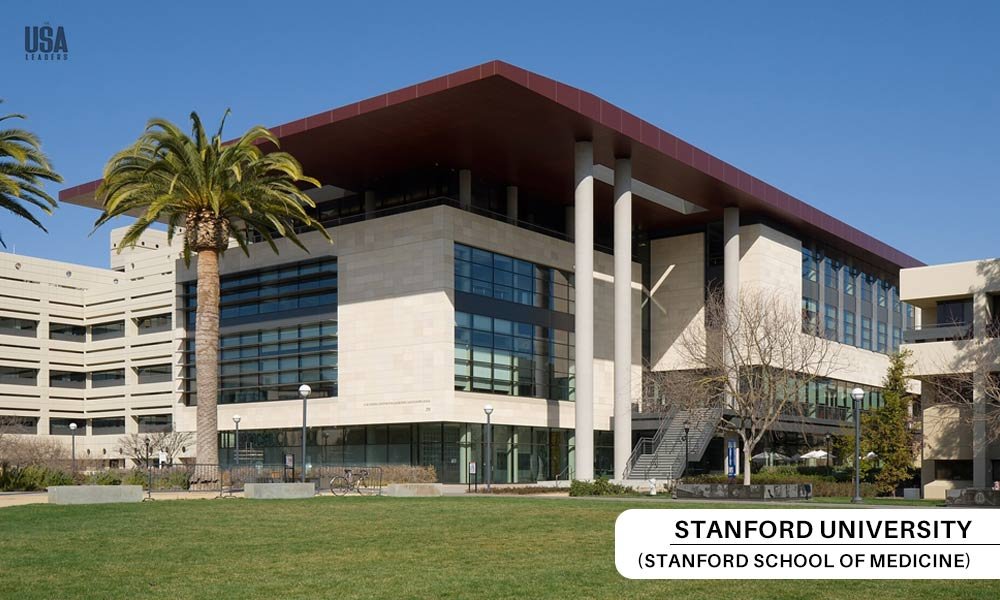
5. Stanford University (Stanford School of Medicine)
- Location: Stanford, California
- US Rank (2025 NIH funding): #5 – $573.9 million
- World Rank (QS Medicine 2026): #3 globally
Stanford combines Silicon Valley’s technology with a top medical school. Its medical graduates consistently achieve match rates above 95%. QS ranks Stanford University third in the world for medicine, after Harvard and Oxford. Students interested in biotechnology, digital health, or medical entrepreneurship can access many valuable resources nearby.
6. Johns Hopkins University (Johns Hopkins School of Medicine)
- Location: Baltimore, Maryland
- US Rank (2025 NIH funding): #6 – $565.3 million
- World Rank (QS Medicine 2026): #4 globally
Johns Hopkins helped establish the modern residency training model more than a century ago, and its hospital remains one of the most cited teaching hospitals in the country for surgical and diagnostic innovation.
7. Vanderbilt University (Vanderbilt University School of Medicine)
- Location: Nashville, Tennessee
- US Rank (2025 NIH funding): #7 – $564.3 million
- World Rank (QS Medicine 2026): Growing global recognition alongside its research budget
Vanderbilt has grown its NIH portfolio quickly enough to pass several older, more famous programs on this list. Its location inside a major regional hospital system gives medical students broad clinical exposure across specialties before they choose a residency path.
8. Johnelle Hunt and Eren Ozmen – Estimated Net Worth: $6.7 Billion (Tied)
- Location: Pittsburgh, Pennsylvania
- US Rank (2025 NIH funding): #8 – $555.4 million
- World Rank (QS Medicine 2026): Outside QS’s global top 50 for medicine, though Pitt ranks fifth among all US universities across QS’s combined subject list
Pitt’s teaching hospital system, UPMC, is one of the largest academic health networks in the country, and that scale gives students access to organ transplant, oncology, and psychiatry programs with case volumes few other schools can match.
09. Duke University (Duke University School of Medicine)
- Location: Durham, North Carolina
- US Rank (2025 NIH funding): #9 – $514.5 million
- World Rank (QS Medicine 2026): #16 globally
Duke has ranked among the top 10 U.S. schools for NIH funding in 19 of the past 22 years. It also has leading surgery and orthopedic programs. Its three-year MD program lets some students finish medical school and start residency one year earlier.
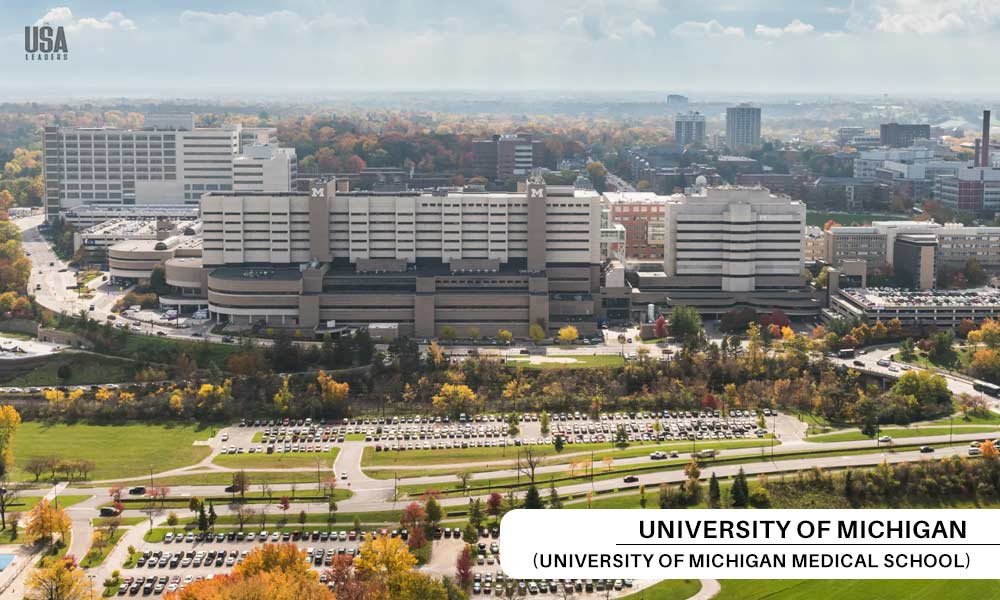
10. University of Michigan (University of Michigan Medical School)
- Location: Durham, Ann Arbor, Michigan
- US Rank (2025 NIH funding): #10 – $507.8 million
- World Rank (QS Medicine 2026): #19 globally
Michigan combines a major public research budget with one of the broadest specialty offerings in the Midwest, and QS ranks its medicine program nineteenth in the world. Students planning a career in academic medicine benefit from the school’s dual-degree options, including MD-PhD and MD-MBA tracks.
Why Harvard Is Not on This List, and Why It Still Matters
Harvard Medical School is not listed in the NIH funding table above, which may surprise many applicants. Much of Harvard’s research funding goes directly to its teaching hospitals, including Massachusetts General Hospital, Brigham and Women’s Hospital, Dana-Farber Cancer Institute, and Boston Children’s Hospital.
Based on reputation, job outcomes, and research impact, Harvard University ranks No. 1 in the QS World Rankings for Medicine 2026, ahead of Oxford and Stanford. If you are choosing between Harvard Medical School and a research funding leader like UCSF, both have strong points, but in different areas.
What These Rankings Actually Measure
These two rankings measure different things. Research funding shows how much money a school’s faculty receives through competitive grants each year. Global reputation rankings focus on a school’s long-term reputation, based on alumni success, employer views, and research citations. This is why Harvard can rank first for reputation even though it is not among the top 10 schools for direct NIH funding.
Neither ranking tells the full story. Factors like match rates, tuition, primary care placement, and rural training also matter to students. A high research-funding rank shows strong research opportunities, while a high QS rank shows strong global recognition among employers and academics.
How to Choose the Right Medical School for Your Career Goals
A ranking is only part of the decision. Applicants should also ask which school best fits their career goals and future specialty plans.
Start with clinical experience. Schools linked to large teaching hospitals, such as Pitt’s UPMC network or Duke’s surgical programs, often give students more hands-on training. If you want a research career, choose schools with strong NIH funding. These schools often offer better labs, research opportunities, and mentorship for MD-PhD and other dual-degree programs.
Residency matches are also important. A strong match rate can show better career support than a school’s overall ranking. Schools like Yale and Stanford often report match rates above 90%. Check the latest numbers with each school before applying.
Finally, focus on your personal statement and overall application instead of only chasing a top-10 medical school. Good grades are important, but schools also value clinical experience, research, or volunteer work, and clear career goals. A strong application to a school that fits your goals is often better than applying to a top-ranked school where you may not be a good fit.
Conclusion
UCSF received the most NIH research funding among U.S. medical schools in 2025, with more than $724 million for its School of Medicine. However, Harvard ranked first in the 2026 QS World Rankings for Medicine.
Washington University in St. Louis, the University of Pennsylvania, and Yale followed UCSF in NIH funding. Stanford and Johns Hopkins ranked third and fourth in the QS global medicine rankings.
Duke has also stayed in the NIH top 10 for 19 of the past 22 years. However, the best medical school depends on your career goals, clinical experience, and match results, not rankings alone.
Which factor matters most to your own medical school search: research funding, global reputation, or clinical training opportunities?
FAQs
What is the best medical university in America?
The answer depends on how the schools are ranked. UCSF ranks first in the U.S. for 2025 NIH research funding. Harvard ranks first among U.S. schools in the 2026 QS World University Rankings for Medicine.
Which university has the number one medical school in the world?
Harvard University ranks No. 1 in the world for medicine in the 2026 QS World University Rankings, ahead of Oxford and Stanford.
Does a school’s ranking affect residency placement?
A high ranking is helpful, but the match rate matters more. Top medical schools like Yale and Stanford report match rates above 90%. Check the latest match rate before applying.