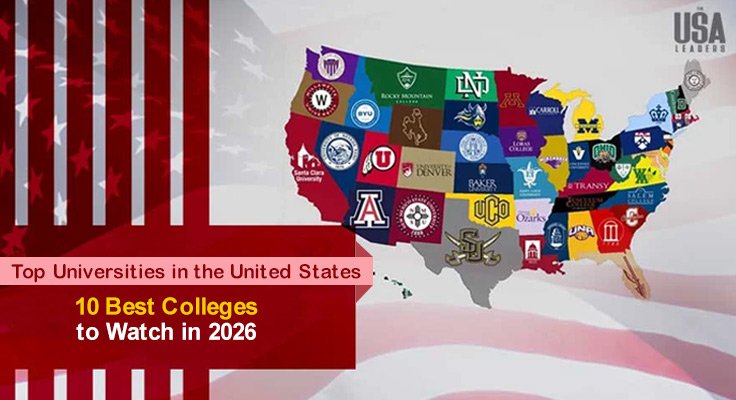
In 2026, the top universities in the United States are Princeton (#1, U.S. News), MIT (#2, U.S. News / #1 globally, QS), Harvard (#3), Stanford (#4 tied), and Yale (#4 tied). The U.S. leads global higher education with 197 ranked universities in QS 2026, more than any other country, and four institutions in the world’s top 10.
Students choose universities in the USA for a proven combination of research strength, career outcomes, financial aid, and campus experience. Whether you are a high school senior weighing admissions, an international student exploring the most famous universities in USA, or a parent comparing costs and outcomes, this guide covers everything you need.
Based on verified 2026 data from U.S. News & World Report and QS World University Rankings, here are the 10 best universities in the United States right now.
2026 Rankings Quick Reference: Top Universities in the United States
| Rank | University | State | U.S. News 2026 | QS Global 2026 |
| 1 | Princeton University | New Jersey | #1 | #25 |
| 2 | MIT | Massachusetts | #2 | #1 |
| 3 | Harvard University | Massachusetts | #3 | #5 |
| 4 | Stanford University | California | #4 (tie) | #3 |
| 5 | Yale University | Connecticut | #4 (tie) | #21 |
| 6 | University of Chicago | Illinois | #6 | ~#33 |
| 7 | Duke University | North Carolina | #7 (tie) | ~#55 |
| 8 | Johns Hopkins University | Maryland | #7 (tie) | ~#27 |
| 9 | Northwestern University | Illinois | #7 (tie) | ~#37 |
| 10 | University of Pennsylvania | Pennsylvania | #7 (tie) | #15 |
Source: U.S. News & World Report Best Colleges 2026 | QS World University Rankings 2026
How Many Universities Are in the United States?
Before diving into rankings, here is a fact worth knowing: there are more than 4,000 degree-granting colleges and universities in the United States, making it home to one of the largest and most diverse higher education systems on the planet.
According to the QS World University Rankings 2026, the U.S. has 197 universities ranked globally, more than any other country. Four American institutions sit in the world’s top 10. That scale and quality is what makes the United States the most sought-after study destination on earth, a distinction backed by more global rankings data than any other nation.
What Makes Universities in the USA So Globally Respected?
The universities in the USA earn their global reputation for several clear reasons:
- Research funding: American universities receive billions in federal grants annually. Johns Hopkins alone has led U.S. universities in research funding for over four decades.
- Nobel Prize legacy: Institutions like MIT, Harvard, Princeton, and the University of Chicago have produced more Nobel laureates than universities in most entire countries.
- Career outcomes: Employer surveys from QS consistently rank U.S. universities among the best for graduate employability.
- Campus resources: Top U.S. universities collectively spend over $80 billion annually on research infrastructure, including libraries, labs, medical centers, and startup incubators.
- Global diversity: Students from 150+ countries study at these institutions, creating a uniquely international learning environment.
Thinking about how education and technology are shaping the future? Explore our in-depth piece on AI in Education to see how top US universities are leading that transformation.
Top 10 Universities in the United States (2026 Rankings)
The rankings below draw primarily from the 2026 U.S. News & World Report Best National Universities (released September 23, 2025), cross-referenced with QS World University Rankings 2026. Together, they represent the most comprehensive and trusted picture of where United States colleges stand today.
1. Princeton University – America’s #1 University in 2026

Location: Princeton, New Jersey
Type: Private
Founded: 1746
QS Global Rank: #25
Acceptance Rate: ~5% Tuition (2025–26): ~$62,400
Princeton University holds the No. 1 spot in the 2026 U.S. News rankings — and it has done so consistently for well over a decade. Located in the quiet town of Princeton, New Jersey, this Ivy League institution is famous for something that surprises many people: its fierce commitment to undergraduate education, even as a top research university.
Students live in one of six residential colleges throughout their time on campus, building the kind of close academic community most large universities cannot offer. Princeton also achieved a perfect score of 100 in QS’s Citations per Faculty metric in 2026, a confirmation that its research output is among the most cited and impactful on earth.
Its financial aid program is exceptional. Families earning under $100,000 per year typically pay nothing in tuition. That makes Princeton not just the best university in the United States by ranking but also one of the most financially accessible elite schools in the country.Known for: Economics, Public Policy, Mathematics, Computer Science, Engineering
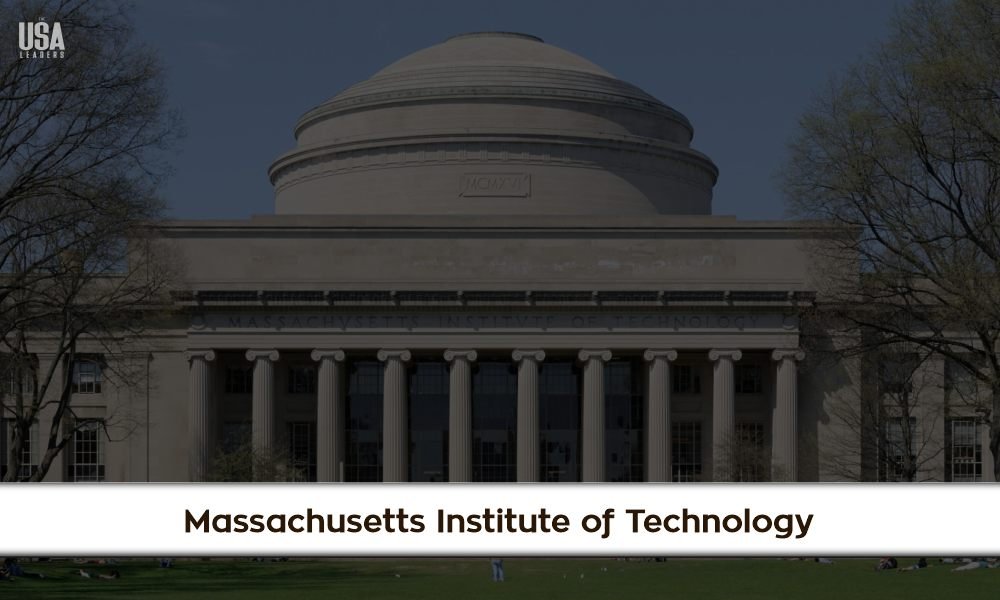
2. Massachusetts Institute of Technology (MIT) – World’s #1 University
Location: Cambridge, Massachusetts
Type: Private
Founded: 1861
QS Global Rank: #1
Acceptance Rate: ~4%
Tuition (2025–26): ~$59,750
If you ask which is the No. 1 university in the world, the answer in 2026 is MIT. The Massachusetts Institute of Technology has topped the QS World University Rankings for 14 consecutive years, a feat no other institution has matched. In the U.S. News domestic rankings, MIT ranks second nationally.
What state is MIT in? MIT is located in Cambridge, Massachusetts, a city just across the Charles River from Boston. The campus spans 168 acres and houses five academic schools, all built around scientific and technological inquiry. Around 70% of undergraduates participate in research before they graduate. That is not typical. At MIT, students are treated as contributors to knowledge, not just recipients of it.
MIT’s Sloan School of Management tied with Penn’s Wharton as the #1 undergraduate business program in the U.S. in 2026. The School of Engineering remains one of the most respected anywhere in the world.
Known for: Engineering, Computer Science, Physics, Artificial Intelligence , and Management (Sloan)
3. Harvard University – America’s Oldest and Most Recognized University
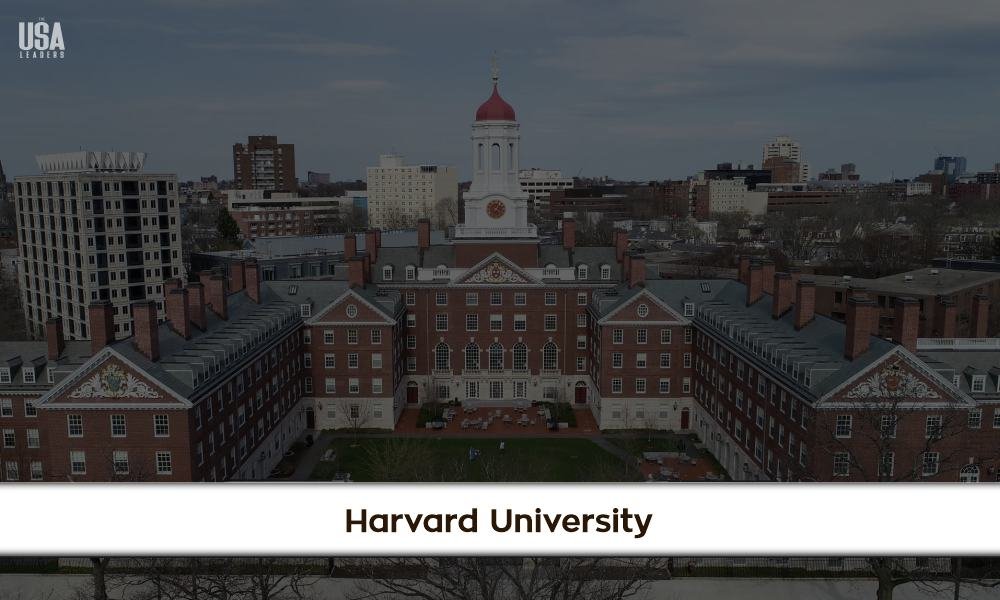
Location: Cambridge, Massachusetts
Type: Private
Founded: 1636
QS Global Rank: #5
Acceptance Rate: ~3.5%
Tuition (2025–26): ~$59,500
What state is Harvard in? Harvard University is located in Cambridge, Massachusetts, one of the most frequently searched university-related questions on Google. and for good reason. Harvard is arguably the most recognized university name on the planet, and in 2026, it ranks third in the U.S. and fifth globally.
Founded in 1636, Harvard is the oldest institution of higher education in the United States. It houses 13 schools and institutes, covering law, medicine, business, government, education, public health, and more. Harvard’s acceptance rate for the Class of 2029 fell to approximately 3.5%, making it among the most selective universities in the U.S.
Its financial aid program rivals Princeton’s in generosity. Families earning under $85,000 annually pay nothing, and those earning up to $150,000 receive significant support. Harvard also earned a perfect citation score in the QS 2026 rankings, alongside MIT, Princeton, and Caltech.
Known for: Law (HLS), Medicine, Business (HBS), Public Policy (HKS), Life Sciences
4. Stanford University — Silicon Valley’s Academic Powerhouse
Location: Stanford, California
Type: Private
Founded: 1885
QS Global Rank: #3
Acceptance Rate: ~4%
Tuition (2025–26): ~$62,500
Stanford University rose three places in the QS World University Rankings 2026, climbing to third globally. On the U.S. News list, it ties Yale at No. 4. Sitting on 8,180 acres in California’s Santa Clara Valley, Stanford’s proximity to Silicon Valley is not just geography; it is a strategic advantage that shapes everything from curriculum to career placement.
More than 40 Nobel laureates are currently affiliated with Stanford. The university’s engineering school, medical school, and Graduate School of Business consistently rank among the top three in the world for their respective disciplines. Over the past decade, Stanford alumni have founded companies worth trillions of dollars combined, including Google, Yahoo, Sun Microsystems, LinkedIn, Instagram, and Hewlett-Packard.
If entrepreneurship and innovation are core to your ambitions, Stanford belongs at the very top of your shortlist.Known for: Computer Science, Engineering, Business (GSB), Medicine, Entrepreneurship
5. Yale University — Excellence in Law, Arts, and Residential Life
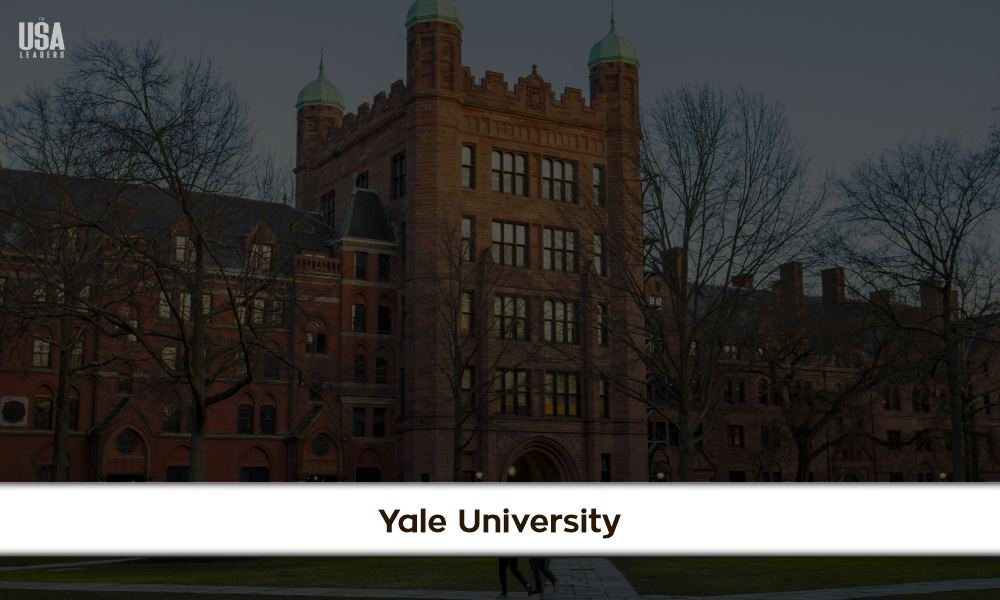
Location: New Haven, Connecticut
Type: Private
Founded: 1701
QS Global Rank: #21
Acceptance Rate: ~4% Tuition (2025–26): ~$64,700
Yale University ties Stanford at No. 4 in the 2026 U.S. News rankings, a move up from its No. 5 position the previous year. Located in New Haven, Connecticut, Yale is one of the most storied institutions in American higher education, with a history stretching back to 1701.
Yale’s residential college system is widely considered the gold standard for undergraduate campus life. Students join one of 14 residential colleges at enrollment and remain there for all four years, creating tight communities within the larger university. Its law school consistently ranks first nationally, and its School of Drama counts among the world’s most competitive theater programs.
Yale also runs one of the largest university endowments in the country, over $40 billion, which funds generous scholarships, cutting-edge research, and world-class faculty recruitment.
Known for: Law, Political Science, Drama, History, Economics, and Music
6. University of Chicago — The Biggest Riser in the 2026 U.S. Rankings
Location: Chicago, Illinois
Type: Private
Founded: 1890
QS Global Rank: ~#33
Acceptance Rate: ~5%
Tuition (2025–26): ~$65,000
The University of Chicago made the most dramatic jump of any top-10 school in the 2026 U.S. News rankings, rising five spots from No. 11 to No. 6 in a single year. This is a school that has always been intellectually formidable, and the rankings have now caught up with that reality.
UChicago is home to the famous Core Curriculum, a multi-year program of rigorous reading, writing, and reasoning that all students must complete, regardless of major. It has produced more Nobel Prize winners in economics than any other institution in the world. Former faculty include Milton Friedman, Ronald Coase, and Gary Becker, names that reshaped economic thought globally.
If you value intellectual depth, academic challenge, and a campus culture built around ideas rather than athletics or social status, the University of Chicago may be your ideal fit.
Known for: Economics, Sociology, Law, Philosophy, Statistics, Political Science
7. Duke University — Research, Medicine, and Blue Devil Pride
Location: Durham, North Carolina
Type: Private
Founded: 1838
QS Global Rank: ~#55
Acceptance Rate: ~6%
Tuition (2025–26): ~$63,000
Duke University joins a four-way tie at No. 7 in the 2026 U.S. News rankings. While its basketball team may be the most famous thing about Duke in pop culture, the university’s academic credentials are just as impressive. Duke’s School of Medicine, Fuqua School of Business, and Nicholas School of the Environment are consistently ranked among America’s best.
Duke’s Bass Connections program is one of its most distinctive offerings, a research initiative that teams undergraduates, graduate students, and faculty together on projects addressing real-world challenges in health, technology, and public policy. Students graduate with research experience that most peers at other universities won’t have until graduate school.
Its location in the Research Triangle alongside UNC Chapel Hill and NC State creates a unique regional ecosystem for innovation, biotech, and academic collaboration.
Known for: Medicine, Business (Fuqua), Environmental Science, Engineering, Public Policy
8. Johns Hopkins University — America’s Premier Research University
Location: Baltimore, Maryland
Type: Private
Founded: 1876
QS Global Rank: ~#27
Acceptance Rate: ~7%
Tuition (2025–26): ~$61,000
Johns Hopkins University is where the modern American research university was born. Founded in 1876, it was the first institution in the U.S. built explicitly around the German research university model where knowledge creation, not just transmission, was the core purpose. That founding DNA still drives everything today.
JHU has received more federal research funding than any other U.S. university for more than 40 consecutive years. Its Bloomberg School of Public Health and Johns Hopkins School of Medicine are the most respected in their fields. For students with a passion for medicine, biomedical engineering, public health, or the life sciences, Hopkins is essentially in a category of its own.
At the undergraduate level, students gain access to research opportunities from their very first semester, a rarity among elite universities.
Known for: Public Health, Medicine, Biomedical Engineering, International Studies, Nursing
9. Northwestern University – Quarter System, Big Ambitions
Location: Evanston, Illinois
Type: Private
Founded: 1851
QS Global Rank: ~#37
Acceptance Rate: ~7%
Tuition (2025–26): ~$63,000
Northwestern University sits on the western shore of Lake Michigan, just 12 miles north of Chicago. It rounds out the four-way tie at No. 7 in the 2026 U.S. News rankings. Northwestern operates on the quarter system, 10-week academic periods instead of the typical 15-week semester, which lets students explore more courses and pivot their academic direction more fluidly.
The Medill School of Journalism is widely considered the best journalism school in the United States, and its Kellogg School of Management is a top-five business school nationally. Northwestern also houses one of the country’s most acclaimed theater programs at its School of Communication. Students can simultaneously pursue courses across divisions, making it ideal for those with interdisciplinary interests.
Known for: Journalism (Medill), Business (Kellogg), Law (Pritzker), Engineering, Theatre
10. University of Pennsylvania — Wharton, Medicine, and Interdisciplinary Strength
Location: Philadelphia, Pennsylvania
Type: Private
Founded: 1740
QS Global Rank: #15
Acceptance Rate: ~4.9%
Tuition (2025–26): ~$63,000
The University of Pennsylvania rounds out the top 10 U.S. universities, ranking in a four-way tie at No. 7 in the U.S. News 2026 list, up three spots from last year. Globally, QS ranks Penn at No. 15, placing it among the top U.S. universities worldwide.
Penn’s Wharton School of Business is the top-ranked undergraduate business program in the U.S. in 2026, tied with MIT’s Sloan. Its Perelman School of Medicine and Penn Law School rank among the nation’s finest. What truly sets Penn apart is its integration model: students can combine coursework across Wharton, the School of Engineering, the College of Arts and Sciences, and the School of Nursing in ways that most universities simply do not allow.
Philadelphia’s location on the East Coast places Penn students within easy reach of New York, Washington, D.C., and Boston, giving them outsized access to internships and career opportunities across finance, consulting, healthcare, and policy.
Known for: Business (Wharton), Medicine (Perelman), Law, Engineering, Social Policy
Good Universities in the USA Beyond the Top 10
The top 10 list above is powerful, but it is far from the only story in American higher education. There are dozens of excellent United States colleges and universities that deserve serious consideration, depending on your academic goals, budget, and preferred campus environment.
Top public universities in the United States for 2026:
- UC Berkeley Ranked #1 among public universities by U.S. News 2026. World-class in engineering, business, law, and natural sciences.
- UCLA #2 among publics. A top choice for film, medicine, and social sciences, with one of the largest alumni networks in the country.
- University of Michigan, Ann Arbor #3 public. The Ross School of Business and the College of Engineering are nationally dominant.
- University of Virginia – Strong across humanities, commerce, and law, with a beautiful historic campus designed by Thomas Jefferson.
- Georgia Tech – The best public engineering and technology university in the South, with strong industry placement rates.
Popular universities in the USA for international students:
International students usually choose universities that offer strong OPT/STEM visa options, global alumni networks, and dedicated support for international students. Beyond the top 10, universities like Carnegie Mellon University (known for CS and AI), New York University (urban campus with global programs), Boston University, and the University of Illinois Urbana-Champaign attract many international students and offer strong career outcomes after graduation.
For a broader understanding of American culture and values that make studying here a unique experience, check out our popular piece on facts about Thanksgiving one of America’s most defining traditions.
Key Trends Shaping United States Universities in 2026
Several important developments are reshaping how the best colleges in the USA operate and compete this year:
1. Financial aid is becoming more generous. Elite universities are racing to eliminate financial barriers. Princeton, Harvard, and Penn all expanded scholarship eligibility in 2024–25, with income thresholds rising significantly. More students from middle-class families now qualify for substantial aid at schools that were previously considered financially out of reach.
2. AI integration is accelerating. From AI-assisted tutoring to machine-learning research labs, famous American universities are leading the integration of artificial intelligence into both teaching and discovery. MIT, Stanford, and Carnegie Mellon are at the frontier of this shift.
3. Global competition is rising. The QS 2026 rankings confirm that China, South Korea, Germany, and Singapore are producing more world-ranked universities than ever before. Peking University reached No. 14 globally. American universities are responding by deepening international research partnerships.
4. Test-optional policies are stabilizing. After years of COVID-era flexibility, most top US universities have now settled into clear test-optional frameworks. Harvard and MIT have reintroduced standardized test requirements, while others maintain optional policies a split that students need to research school by school.
5. Acceptance rates keep falling. Competition among the most famous universities in USA has never been more intense. Penn’s acceptance rate for the Class of 2029 was 4.9%, a record low. Yale’s dipped to approximately 4%. Students applying to these schools should treat every element of their application with equal seriousness.
Want to understand the leadership mindset that gets students and professionals into these institutions? Our curated list of top leadership books is an excellent starting point.
Also Read – Are University Lecture Halls Keeping Up With AV Trends?
FAQs
What is the #1 university in the United States in 2026?
Princeton University ranks first among national universities in the 2026 U.S. News Best Colleges rankings. MIT holds the #1 spot globally in the QS World University Rankings 2026 for the 14th year running.
What state is Harvard University located in?
Harvard University is located in Cambridge, Massachusetts, just outside Boston. It is the oldest university in the United States, founded in 1636, and ranks third nationally and fifth globally in 2026.
How many universities are in the United States?
There are more than 4,000 degree-granting colleges and universities in the United States. Of these, 197 are ranked in the QS World University Rankings 2026, more ranked institutions than any other country in the world.
What are the best universities in the USA for international students?
MIT, Harvard, Stanford, Yale, and Princeton are the most popular among international applicants. For STEM specifically, Carnegie Mellon, Georgia Tech, and UIUC offer strong visa-track programs and high employment rates.
What are the top public universities in the United States?
UC Berkeley, UCLA, and the University of Michigan, Ann Arbor, top the list of best public universities in the U.S. in 2026. These schools offer elite academic programs, often at a lower cost for in-state students, making them outstanding value options.
Which of these top universities in the United States is on your shortlist, and what factor matters most to you: research opportunities, financial aid, location, or career outcomes? Tell us in the comments below.