Trucking is the backbone of commerce in the United States, ensuring that goods move efficiently from one location to another. While long-haul trucking often gets the spotlight, many shipments stay within a single state, traveling shorter distances but just as crucial to local economies.
These shipments are handled by intrastate truckers, who specialize in transporting goods entirely within state lines. Understanding the types of loads they commonly carry can shed light on the industry’s diversity and operational demands.
Intrastate trucking covers a wide variety of goods, and each type of load comes with unique requirements for safety, handling, and delivery timelines.
Dry Van Loads
Dry vans are the most common type of truck used in intrastate hauling. These enclosed trailers protect cargo from weather and theft, making them suitable for a wide range of products.
Typical dry van loads include packaged foods, electronics, clothing, household items, and general consumer goods. Because these loads don’t require special temperature control, dry vans are versatile and cost-effective.
Refrigerated Loads
Refrigerated trailers, also known as reefers, are essential for transporting perishable goods. Intrastate trucking often involves moving fresh produce, dairy, meat, and frozen foods to grocery stores and restaurants within a state.
Maintaining the correct temperature is critical to prevent spoilage and ensure compliance with food safety regulations. Intrastate truckers handling these loads must monitor temperature settings and secure cargo to prevent shifting during transit.
Flatbed Loads
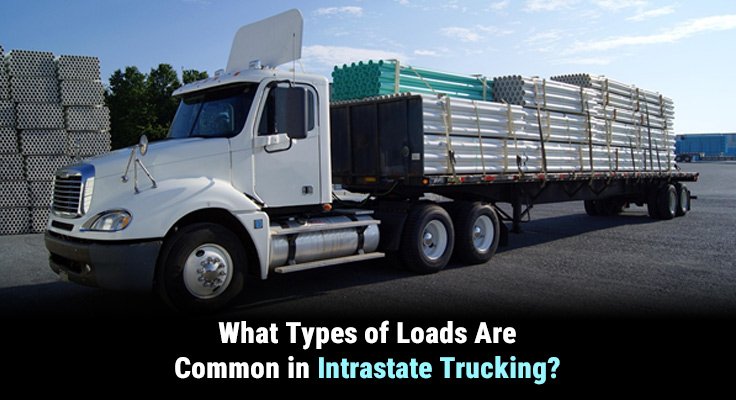
Flatbed trucks are used for loads that are too large or oddly shaped for enclosed trailers. Common flatbed loads in intrastate trucking include construction materials like lumber, steel beams, pipes, and machinery.
Because these loads are exposed, securing them properly with straps, chains, and tarps is essential to prevent accidents. Flatbed hauling requires experienced drivers who understand weight distribution, load balance, and road regulations.
Bulk and Liquid Loads
Certain goods are transported in bulk, either as liquids or dry commodities. Intrastate truckers may haul fuel, chemicals, milk, grains, or sand using specialized tanker trailers.
These loads often require additional safety measures due to the potential hazards associated with spills or leaks. Proper labeling, handling procedures, and route planning are critical when transporting bulk or liquid materials.
Hazardous Materials
Some intrastate trucking involves hazardous materials, commonly referred to as “hazmat” loads. These can include flammable chemicals, gases, or biohazardous substances.
Hazmat loads require drivers with specific endorsements and training to handle emergencies safely. Regulations for storage, transportation, and documentation are strict to minimize risk to the public and the environment.
LTL (Less Than Truckload) Shipments
Not all loads fill an entire trailer. LTL shipments consolidate goods from multiple customers into one truck, optimizing space and reducing costs. Common LTL loads include small pallets of retail goods, office supplies, or industrial components. This type of intrastate trucking requires careful coordination to ensure timely pickups and deliveries while maintaining cargo integrity.
Specialized and Oversized Loads
Some intrastate trucking involves highly specialized or oversized loads that demand special permits and planning. Examples include large industrial equipment, prefabricated homes, or oversized agricultural machinery. These shipments require route analysis to avoid low bridges, weight-restricted roads, or tight turns. Coordination with state authorities may also be necessary to ensure safe transport.
Key Considerations for Intrastate Loads
Regardless of the load type, intrastate truckers must consider weight limits, securement, route planning, and state regulations. Unlike interstate trucking, intrastate drivers are governed by state-specific rules, which can vary in areas such as licensing, vehicle inspection, and cargo restrictions. Ensuring compliance helps prevent accidents, fines, and delivery delays.
Key Takeaways
- Intrastate trucking moves goods entirely within a single state, covering a diverse range of load types.
- Dry vans handle general consumer goods, while refrigerated trailers transport perishable items.
- Flatbeds carry oversized or irregularly shaped loads like construction materials and machinery.
- Bulk and liquid loads, as well as hazardous materials, require specialized handling and safety precautions.
- LTL shipments and specialized loads demand careful planning and coordination.
- Compliance with state regulations, proper load securement, and route planning are essential for safe intrastate transport.