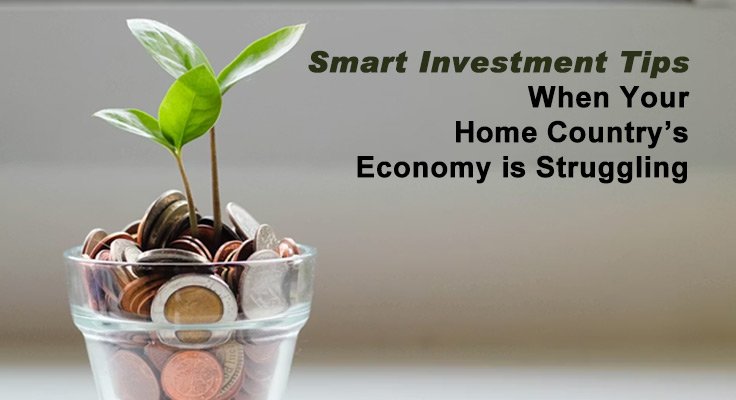
When your home country’s economy starts struggling, your financial confidence can take a serious hit. Prices rise quickly, job security feels uncertain, and savings may lose value faster than expected. It is a stressful situation, but it also pushes you to think smarter about money decisions.
In the US, for instance, the economy is navigating a period of significant volatility characterized by geopolitical shocks and shifting trade policies. The Bureau of Economic Analysis reports that despite existing tariffs, the US trade deficit reached new highs in early 2026. This came following a $52.8 billion deficit recorded in September 2025.
At the same time, as Global News reports, consumer spending, a primary driver of the US economy, slowed in December 2025. Federal government spending in the country decreased as well at a rate of 16.6% last quarter. All this has raised concerns about investment opportunities in the US in recent times.
However, instead of panicking, you can use this moment to rethink your investment strategy carefully. Economic downturns often create both risks and unexpected opportunities for disciplined investors. The key is staying informed, flexible, and open to adjusting your financial plans.
Let’s walk through a few smart investment tips that can help you navigate this challenging phase.
Focus on Preserving Capital First
When uncertainty rises, your first goal should be protecting what you have already saved. Growth is important, but survival comes before expansion during unstable economic periods.
You should avoid overly risky investments that promise quick gains but carry significant downside exposure. Instead, consider safer options that provide stability, even if returns are modest and gradual.
Fixed-income instruments and low-volatility assets often perform better during economic slowdowns. Keeping some liquidity also helps you stay prepared for emergencies or sudden opportunities.
Explore Opportunities Beyond Your Borders
When your domestic economy struggles, looking outside your borders can open new financial possibilities. International investments allow you to access stronger markets and more stable economic environments. This approach also reduces your reliance on a single country’s economic performance.
You might explore global stocks, international funds, or even investment opportunities in foreign countries carefully. One interesting example comes from Israel’s startup ecosystem and its strong support system.
Statista reports that Israel stood first worldwide in terms of its number of technology unicorns per capita. As of 2025, the country’s startup scene had 90 active tech unicorns raising billions of dollars in investments annually. These are indicators of a high-performing startup ecosystem, which is ideal for people to invest in.
Many today are looking at how to invest in Israeli startups due to consistent innovation. It’s not like these startups guarantee returns, but structured support improves their survival chances. Especially startups in the Israeli tech sector benefit from early-stage funding and guidance.
The government actively supports Israeli tech startups through funding programs managed by the Israel Innovation Authority. These grants help Israeli startups develop ideas without immediate financial pressure, encouraging innovation and resilience. Similar backing and ecosystems exist in many other countries as well. Such structured backing explains why investors worldwide invest in companies in strong startup ecosystems.
Diversify Across Different Asset Classes
Relying on a single type of investment can be dangerous when your local economy weakens. Diversification spreads your risk and reduces the impact of any one asset performing poorly. You can consider balancing equities, bonds, commodities, and even alternative investments based on your risk tolerance.
Each asset class behaves differently under economic stress, which helps create a cushion against losses. For example, gold or commodities may perform better when inflation rises sharply. Meanwhile, certain defensive stocks may remain stable even when broader markets decline.
Institutional investors, such as endowments and pension funds, are constantly looking to diversify. According to BlackRock, average allocation to public and private equity for US endowments rose from 51.7% in 2015 to 64.8% by mid-2025. Many institutions now target a mix of 50% stocks, 30% fixed income, and 20% private assets.
Diversification does not eliminate risk entirely, but it helps manage it more effectively. The goal is to create a portfolio that can withstand different economic conditions without collapsing completely.
Keep Track of Inflation and Currency Risks
Inflation can quietly erode your wealth if you do not actively manage its impact on investments. When prices rise quickly, the real value of your savings declines without immediate notice.
You should consider assets that historically perform well during inflationary periods. Commodities, real estate, and inflation-protected securities can offer some protection against rising costs. Currency risk is another factor that becomes more important during economic instability. A weakening local currency can reduce your purchasing power significantly over time.
Holding assets in stronger foreign currencies may help balance this risk effectively. Understanding these factors allows you to make smarter decisions rather than reacting emotionally. Staying proactive helps protect your financial future from hidden economic pressures.
FAQs
What is the safest investment if the economy collapses?
In a severe downturn, safer investments often include cash, government bonds, and essential assets like gold. These tend to hold value better during instability. Diversification is important, as no investment is completely risk-free, especially during extreme economic conditions.
How to invest in a failing economy?
Investing in a failing economy involves focusing on defensive sectors like healthcare, utilities, and consumer essentials. Maintaining liquidity and diversifying assets can reduce risk. Investors often prioritize stability and long-term value rather than high returns during uncertain economic periods.
What are the best investments in a slow economy?
In a slow economy, stable investments such as dividend-paying stocks, bonds, and essential industry companies are often preferred. These provide steady returns and lower volatility. Maintaining a balanced portfolio and focusing on long-term growth can help manage economic slowdowns effectively.
When your home country’s economy struggles, it can feel overwhelming and uncertain at first. However, this period also encourages smarter and more strategic financial thinking.
Economic downturns are challenging, but they are not permanent or unbeatable. With the right mindset and strategy, you can protect your wealth and even find growth opportunities.