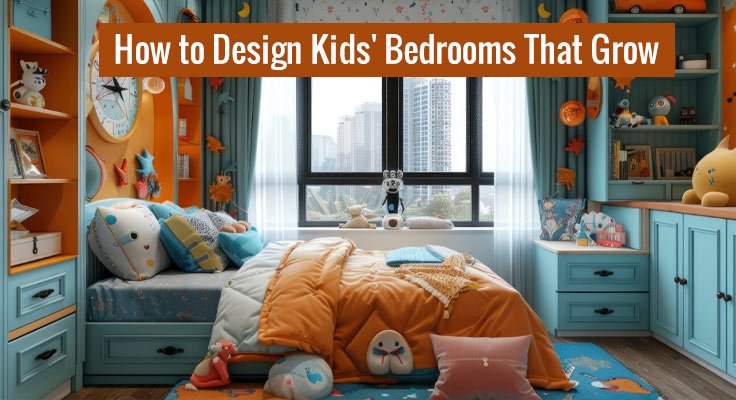
Decorating a kid’s bedroom to make it occupied and lively is worth the annoyance and expenditure. However, to truly have a space that meets your children’s changing needs, you can design their spaces. This article explains how to set up a kids’ bedroom that becomes more beneficial as they mature.
Start With A Neutral Foundation
The interior design of children’s rooms can easily and frequently undergo transformations. Brightly coloured themes and character walls may offer a sense of revitalisation; however, it is also possible for them to become obsolete in a short amount of time. It is for this reason that it is more flexible to start with walls and flooring that are neutral.
You can use the colour in a variety of ways, including bedding, artwork, and accessories. Changing these components when your child moves on to different things is a lot simpler and less expensive than changing them.
Choose Furniture That Adapts
Choose items that can be used in different ways, like desks that can be changed to fit different age groups or beds that can be changed to fit the next stage of life. Through the use of this straightforward method, the acquisition of new items is significantly reduced.
Not only do these solutions help save money, but they also take steps to protect the environment. Durable kids bedroom furniture guarantees that the room will continue to be functional for years to come.
Plan For Storage Early
When it comes to the majority of toys, books, clothes, and school supplies, children are able to amass a greater number of items than is possible for adults. However, these items quickly cause clutter and stress unless hidden in well-designed storage spaces.
Built-in drawers, shelving and under-bed storage help the children keep the room organised. However, the creation of dedicated storage zones achieves even more significant results. It fosters children’s independence and makes it easier for them to maintain their space.
Think About Study And Creative Zones
The older the children become, the less important the play space becomes, and the more relevant the place for study becomes. Here, a small table from the very beginning is necessary for the implementation of lessons and creative work. This avoids changing the entire layout of the nursery.
Choose furniture that is suitable for different stages of learning. Chairs that can be adjusted in height and proper lighting will make it easier to do homework.
Allow Room For Personal Expression
Personality is essential, even if the structure is thought through. When designing your child’s room, make sure you provide some space for their artwork, pictures, or favourite items. Such small accents make the area truly feel like it is theirs.
Secondly, when things change, do not try to replace all the big items, like furniture. Simply change the decor aspects, and the room will feel completely different.
Prioritise Safety And Comfort
Every design decision should prioritise safety. Accident-proof shelves and round, stable edges will save you from falling off the precipice, and so will secure furniture. At any age, the child needs to “try on the space for themselves,”, adapting it to their needs. A comfortable space for your child serves multiple purposes and is appropriate for this stage of their development.
Designing With The Future In Mind
Your child’s bedroom must be a fun place for them now while remaining suitable for many years to come. With adaptable furniture, neutral foundations, and smart storage in mind, you are able to create a space that continually changes and grows. As a result of planning, the room becomes appropriate for the child’s development.