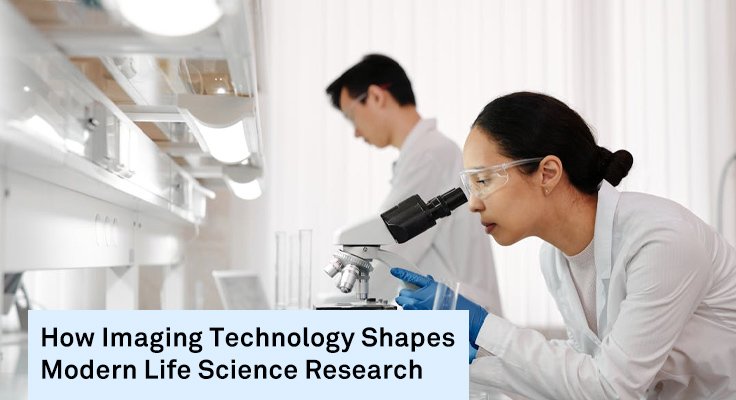
Think about a jigsaw puzzle. You start with a thousand scattered pieces. You slowly connect them. The final image reveals a complete picture. This is the challenge of biology. Researchers collect massive amounts of data. They have genetic sequences and protein lists. But these are just the puzzle pieces. They need to see the final image. They need to understand how everything fits together in space and time. Modern imaging technology provides this essential view. It transforms abstract information into a visual story. This story drives discovery forward.
The Third Dimension of Cells
Early microscopy gave us flat, blurry pictures. They were helpful but limited. Life exists in three dimensions. A crucial advancement changed everything. It allowed scientists to see inside specimens with stunning clarity. This technology involves confocal imaging systems. These systems use precise lasers and special filters. They remove out-of-focus light. The result is a perfectly sharp optical slice. Scientists can capture dozens of these slices. They can then stack them together digitally. This creates a detailed three-dimensional model of a cell or tissue. Researchers can now explore biological structures like never before.
Dynamic Processes in Real Time
Biology is not a still life. It is a constant, dynamic movie. Imaging technology lets us watch the show. We can observe processes as they happen. Scientists can track a single protein moving through a cell. They can witness the moment of cell division. This is called live-cell imaging. It requires special microscopes and sensitive cameras. It also needs fluorescent labels that won’t harm the cell. This capability is transformative. It provides direct visual evidence of function. It answers the critical “when” and “how fast” questions. Static snapshots could never do this.
From Observation to Measurement
Modern imaging is far more than pretty pictures. It is a powerful quantitative tool. Every pixel in a digital image contains data. Sophisticated software analyzes this data. It can count individual cells automatically. It can measure the intensity of a fluorescent signal. This tells scientists exactly how much of a protein is present. The software can also track the movement of objects over time. It calculates speed and direction. This turns a qualitative observation into hard numbers. These numbers are reliable and reproducible. They form the solid foundation for statistical analysis and publication.
Connecting the Dots Across Scales
A major challenge in life science is connecting different levels of organization. How does a gene mutation affect an entire organ? Imaging helps bridge these scales. Researchers can use one technique to visualize a single molecule. They can use another to see the whole tissue architecture. For example, they might combine super-resolution microscopy with whole-organ imaging. This multi-scale approach is incredibly powerful. It shows the direct link between microscopic changes and macroscopic effects. It creates a complete narrative from molecule to organism.
Guiding the Hand of Experimentation
Imaging technology is not just for after-the-fact analysis. It actively guides experiments. This is especially true in fields like developmental biology. Researchers can image a growing embryo. They can watch specific genes turn on and off in real time. This visual feedback informs their next experimental step. In cancer research, imaging helps screen potential drugs. Scientists can see if a compound makes tumor cells shrink. They can observe if it stops them from moving. This visual guide makes research more efficient and targeted.
The Data Challenge and Opportunity
Advanced imaging generates enormous amounts of data. A single time-lapse experiment can produce terabytes of information. This creates a significant challenge. Labs need robust storage solutions and powerful computers. But it also presents a huge opportunity. This vast visual data is perfect for artificial intelligence. Machine learning algorithms can be trained to spot subtle patterns. They can identify rare cellular events a human might miss. They can classify different cell types instantly. Imaging data is now fueling the AI revolution in biology.
An Indispensable Narrative Tool
In the end, imaging technology provides the narrative. Genomic data offers a list of characters. Proteomics provides a list of props. Imaging shows the characters using the props on the biological stage. It reveals the plot of the cellular story. This visual proof is compelling and clear. It helps scientists communicate their findings to each other. It also helps them explain their work to the public. A clear image makes complex science understandable. It is the indispensable tool that shapes how we see, understand, and share the story of life itself.
Also Read: How Imaging Software is Revolutionizing Life Sciences