Picture the CEO of a busy hospital at 7 am—quality-metrics call, vendor huddle, FDA-submission prep, all before coffee. Lose the right executive assistant and the entire day unravels.
Great EAs aren’t just calendar jockeys. Forbes reports that a sharp assistant hands leaders back up to eight hours each week—an entire workday reclaimed for strategy (https://www.forbes.com.au/life/leadership/how-an-executive-assistant-can-give-you-back-8-hours-a-week/).
Since the pandemic trimmed admin teams while compliance demands ballooned, one mis-hire who fumbles HIPAA can cost far more than a recruiter’s fee. That’s why we audited more than 20 agencies, ran each through a healthcare-specific scorecard, and surfaced the six partners that truly deliver.
Ready for the shortlist? Let’s dive in.
How we picked the stand-out six
We began the search like any talent-hungry hospital team: with a giant spreadsheet and plenty of skepticism. More than twenty agencies claimed they could place the perfect healthcare EA. We asked every one of them to prove it.
First, we eliminated any firm that could not show recent placements inside hospitals, biotech labs, or life-science headquarters. According to staffing specialists 4 Corner Resources, generalist shops often miss the mark because their recruiters “lack the vocabulary to properly evaluate these candidates.” If an agency could not talk about HIPAA, Joint Commission surveys, or Epic workflows, it was out.
Survivors moved into a six-factor scorecard weighted by what truly matters to an over-extended C-suite:
- Healthcare focus and track record (20 percent)
- Candidate-quality filters and retention results (20 percent)
- Speed to present a vetted shortlist (15 percent)
- Transparent pricing and replacement guarantee (15 percent)
- National reach and depth of talent pool (10 percent)
- Client satisfaction, awards, and third-party ratings (20 percent)
Scores rolled up to one hundred, no curve, no favorites. Contingency firms and retained boutiques competed on equal footing, though retained partners charged more and therefore needed stronger proof of precision.
When the scoring finished, six agencies cleared the 85-point bar. They blend specialization, speed, and service quality better than anyone else in 2026. The next section shows where each one shines so you can match their strengths to your hiring urgency.
1. C-Suite Assistants: the boutique that treats every search like surgery
Need an assistant who can juggle a surgeon’s OR schedule and an FDA deadline without breaking a sweat? Start here. C-Suite Assistants works solely on executive support and runs a dedicated healthcare and life-sciences desk. That focus shows in the numbers: its EA recruitment for healthcare companies draws on a proprietary network of more than 35 000 vetted admin professionals, yet fewer than five percent clear the firm’s multi-round screening gauntlet.
C-Suite Assistants healthcare executive assistant recruitment homepage screenshot
Because every recruiter speaks hospital shorthand, you never waste time explaining HIPAA basics or Joint Commission surveys. You receive a short list—never a résumé flood—usually inside two weeks. The engagement is contingency based, so you pay only when your EA starts, and a 90-day replacement guarantee protects the hire.
Clients call the experience “white-glove without the uptown attitude.” We call it precision hiring that keeps executives focused on strategy, not scheduling.
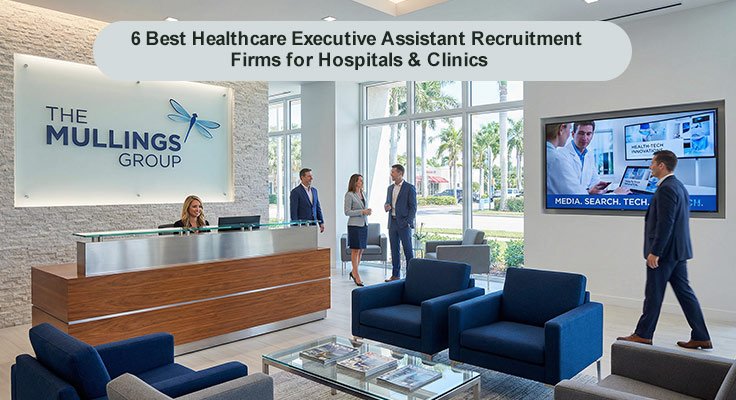
2. The Mullings Group: life-sciences expertise, executive-search rigor
Picture a search firm built inside a lab. For more than thirty years, The Mullings Group has recruited exclusively in med-tech and biotech, completing thousands of searches for device makers, pharma scale-ups, and research hospitals.
The Mullings Group medtech and biotech executive search homepage screenshot
That laser focus pays off when your chief medical officer needs an assistant who already understands IRB prep, 510(k) timelines, and how a clinical-trial audit can seize a calendar without warning. Mullings recruiters live in that world, spending every minute hunting EAs who thrive amid R&D complexity.
Engagements run on a retained model, so you invest upfront for premium service. In return, you receive a curated slate of three to five finalists, usually within four to six weeks. Each candidate clears deep-dive interviews, reference mapping, and personality assessments that mirror C-suite searches. The fee beats contingency rivals on precision, often letting you hire once and forget the role for years.
If your executive offices feel more like a clean room than a corner suite, The Mullings Group speaks your language, and they expect their executive assistants to do the same.
3. Tandym Group: speed and scale with a healthcare heartbeat
Sometimes you cannot wait six weeks. Your chief nursing officer’s EA just resigned and budget season starts Monday. Tandym Group shines in moments like these.
Tandym Group healthcare administrative staffing website screenshot
Formerly known as Execu|Search Tandym has spent almost four decades building a nationwide recruiting engine. Inside that operation sits a dedicated healthcare division that screens thousands of administrative professionals for Epic fluency, privacy training, and multi-site scheduling savvy.
Call them on a Wednesday and by Friday you will likely review three or four qualified résumés. Tandym’s recruiters move at that pace because they keep an active bench of EA talent on standby and test skills up front, including Excel pivot tables, calendar triage, and mock patient-data scenarios.
The engagement is pure contingency, so there is no risk to start. A standard 90-day replacement guarantee covers permanent hires, and you can choose temp-to-hire if your board still debates head count. That flexibility makes Tandym a favorite among hospital systems that open new clinics or launch special-project teams on short notice.
If you need capable help yesterday and refuse to lower the compliance bar, Tandym Group is the phone number to save.
4. Robert Half: the national safety net when disruption strikes
Robert Half practically invented administrative staffing, and in 2026 its Office & Administrative group still runs like a well-oiled command center. With branches covering every major U.S. market, the firm can place an interim EA in a hospital C-suite in as little as twenty-four hours.
Robert Half office and administrative staffing page screenshot
Volume never means random. Each candidate clears skills testing, background checks, and software drills before you see a résumé. Tell your local recruiter you need Epic fluency or multi-time-zone scheduling expertise and the filter tightens instantly.
The engagement is contingency based with a standard ninety-day replacement guarantee. Need stopgap coverage while the board finalizes head count? Robert Half will payroll the temp, manage compliance paperwork, and swap talent overnight if the fit misses. That ready-to-deploy model keeps operating rooms and executive calendars on track when unexpected vacancies strike.
The trade-off for all that speed is a slightly more transactional feel than boutique rivals, but when the clock is your enemy, Robert Half’s nationwide reach and deep talent bench are hard to beat.
5. Beacon Hill Staffing Group: dual-division firepower for non-clinical talent
Beacon Hill sits in a sweet spot between boutique focus and national clout. Founded in Boston and now active in more than forty markets, the firm splits its healthcare practice into two complementary divisions: one for administrative support, one for operational and revenue-cycle roles.
Beacon Hill Staffing Group healthcare and non-clinical talent jobs page screenshot
That structure matters. When your executive assistant needs to moonlight as a project lead on a clinic-expansion task force, Beacon Hill can tap either pipeline and present multi-skilled candidates who already speak both patient-access and boardroom dialects.
Turnaround is quick—often forty-eight hours for contract coverage and under a week for direct-hire shortlists. Every résumé arrives pre-vetted through skills testing, reference checks, and HIPAA-awareness interviews. Engagements are contingency based, fees land in the usual twenty to twenty-five percent range, and a ninety-day guarantee keeps finance teams calm.
Client-satisfaction scores hover near five stars, which shows up in retention: hospitals report Beacon-placed EAs staying well past the twelve-month mark. If you want one partner who can solve today’s EA vacancy and tomorrow’s revenue-cycle analyst search, Beacon Hill brings the bandwidth.
6. Medix: healthcare-only recruiters with a people-first pulse
Medix was born inside the healthcare ecosystem and never left. Every recruiter on the team works solely with hospitals, outpatient groups, or life-science firms, so conversations begin at the right altitude: HIPAA worries, payer-mix intricacies, and the quirks of telehealth scheduling.
Medix healthcare and life-sciences staffing homepage screenshot
That focus fuels a deep talent pool. With nineteen offices feeding one national database, Medix tracks thousands of administrative pros who have already navigated Epic, Cerner, or insurance credentialing workflows. The company pairs tech screening with a human touch: video interviews probe soft skills, while culture-fit surveys flag whether someone thrives in fast-moving clinical settings.
Search cycles run one to two weeks for direct hire and even faster for contract coverage. Engagements are contingency based, fees align with the usual twenty to twenty-five percent range, and a ninety-day replacement guarantee covers permanent placements. Hospitals also tap Medix for virtual assistants trained on HIPAA-secure systems, a plus when budget or geography limits onsite support.
Add in Best-of-Staffing awards for both client and talent satisfaction, and you get a recruiter that balances metrics with bedside manner. If your organisation values mission alignment as much as keyboard shortcuts, Medix keeps head and heart in sync.
Comparison at a glance
| Recruiter | Healthcare focus | Engagement model | Average time to shortlist | Guarantee | Typical fee | Stand-out strength |
| C-Suite Assistants | EA-only boutique with dedicated healthcare desk | Contingency | 1–2 weeks | 90 days | about 25 percent | Ultra-curated talent, under five percent pass rate |
| The Mullings Group | One hundred percent life-sciences search | Retained | 4–6 weeks | Re-search if exit under six months | 30 percent plus | Deep biotech network, executive-level vetting |
| Tandym Group | Large firm, healthcare admin division | Contingency or temp-to-hire | 48 hours | 90 days | 20–25 percent | Speed and volume without skipping tests |
| Robert Half | National admin powerhouse, strong healthcare bench | Contingency or temp | 24–48 hours | 90 days | about 25 percent | Fastest interim coverage, nationwide payroll |
| Beacon Hill | Dual non-clinical healthcare divisions | Contingency | up to 1 week | 90 days | 20–25 percent | Versatile pipelines, 4.8-star client score |
| Medix | Healthcare and life-sciences exclusive | Contingency | 1–2 weeks | 90 days | 20–25 percent | Mission-driven culture fit, virtual EA option |
Emerging hiring trends every healthcare leader should track
Hybrid work is sticking around. Most executives now toggle between clinic rounds, video board meetings, and off-site strategy sessions. Industry observers at Global Gurus report that requests for remote or near-shore EAs now match, and often surpass, calls for purely on-site support.
That talent crunch is pushing pay upward. Job-site data from ZipRecruiter lists the nationwide average for hospital executive assistants at about 82 000 dollars, and top-quartile pros clear the six-figure line in major metros. Add bonuses, flexible schedules, and training stipends, and total packages can rival some mid-manager roles.
Technology raises both opportunity and risk. Entrepreneur magazine notes that 99 percent of Fortune 500 companies run AI résumé screens, yet seasoned recruiters warn that algorithms still miss cultural fit. The best firms blend machine speed with human interviews to surface red flags, such as a candidate who nails scheduling software but freezes on a HIPAA scenario.
What does this mean for you? Define remote readiness early, budget realistically, and partner with an agency that pressure-tests soft skills as thoroughly as software fluency. The market moves fast; clear signals help you lock in the right assistant before someone else does.
Expert Q&A: straight answers to the questions we hear most
How critical is prior healthcare experience for an EA?
Hire it if you can. Assistants who already know HIPAA rules and the rhythm of patient-care meetings add value on day one. A corporate-finance EA can learn, but you will spend weeks teaching acronyms and compliance basics. In a shortage market, that ramp time is expensive for leadership focus.
Contingency or retained search—how do we choose?
Match the fee model to the risk. Contingency fits most EA hires; you pay only when the candidate starts and a ninety-day guarantee keeps the downside low. Choose retained search when the role sits next to the CEO or blends project-management authority with regulatory exposure. The upfront investment buys deeper head hunting and confidentiality.
What interview move separates great EAs from good ones?
Scenario drills. Hand finalists a real scheduling tangle such as an overbooked surgeon, a last-minute FDA call, and a donor lunch, then ask them to talk through fixes aloud. Watch how they prioritize, who they loop in, and whether they protect compliance along the way. Résumés hide under pressure; live problem solving does not.
How can we help a recruiter hit the bullseye faster?
Share context you think is obvious, including your executive’s quirks, the software stack, and even the unspoken politics of a board meeting. The clearer the picture, the shorter the search. Give feedback within twenty-four hours; silence slows momentum and the best candidates vanish.
When do we walk away from a finalist?
The moment you feel uneasy about discretion. Healthcare assistants see salaries, lab results, and merger decks. If references hedge or the candidate dodges a privacy scenario, regroup. A skills gap can be trained; a judgment gap rarely changes.
Conclusion
Use the chart to filter for your main pain point. Need help yesterday? Scan the “Average time to shortlist” column. Looking for deep biotech nuance? The Mullings row jumps out.
Our advice: match the firm’s primary strength to your biggest risk, then move fast. Great healthcare EAs disappear from the market in days, not weeks.