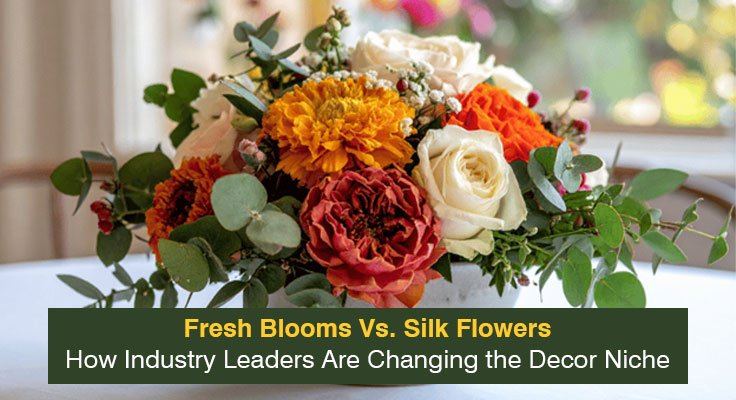
Flowers have long been a defining element of interior décor and event styling. From elegant wedding centerpieces to everyday home accents, floral arrangements bring color, texture, and life into a space. Traditionally, fresh blooms dominated this role. Their natural beauty and fragrance made them the default choice for designers and decorators.
Yet the décor landscape has been shifting in recent years. Advances in manufacturing and design have made artificial florals far more realistic than the stiff, plastic imitations of the past. As a result, silk flowers have steadily gained ground among event planners, retailers, and homeowners alike.
Industry leaders in the décor space are now reshaping how florals are used, blending practicality with aesthetics. Understanding the differences between fresh blooms and silk flowers reveals why both options continue to play important roles in modern design.
The Enduring Appeal of Fresh Flowers
Fresh flowers remain the gold standard for many designers, especially in settings where natural fragrance and seasonal authenticity matter.
Their biggest strengths include:
- Natural Scent and Texture: Fresh blooms offer a sensory experience that artificial arrangements cannot fully replicate.
- Seasonal Character: Designers often select flowers that reflect the season, such as tulips in spring or sunflowers in late summer.
- Organic Variation: Each stem is unique, giving arrangements a slightly unpredictable and artistic quality.
Because of these qualities, fresh flowers are often used for high-impact moments. Weddings, upscale events, and fine dining establishments frequently rely on fresh arrangements to create atmosphere and sophistication.
However, working with fresh florals requires careful planning. Designers must account for factors like storage, transport, and timing. Flowers also have a limited lifespan, meaning arrangements may only last a few days before they wilt or lose their visual appeal.
These challenges have encouraged many professionals to look for complementary alternatives.
The Rise of Realistic Silk Flowers in Modern Décor
Artificial florals have come a long way from their early iterations. Today’s silk flowers are crafted with careful attention to color gradients, petal structure, and botanical detail.
For decorators, this evolution has opened new possibilities. High-quality silk flowers offer several advantages:
- Long-lasting Arrangements: Unlike fresh flowers, silk varieties maintain their appearance for years with minimal care.
- Consistent Availability: Designers are not limited by seasonal supply.
- Lower Maintenance: There is no need for water changes, refrigeration, or frequent replacement.
- Budget Flexibility: Reusable arrangements can significantly reduce costs over time.
Because of this realism, silk arrangements are increasingly appearing in venues, retail displays, hospitality spaces, and homes where longevity and consistency matter.
How Designers Choose Between Fresh and Silk Flowers
Professional designers rarely see the debate as a strict either-or decision. Instead, they evaluate the needs of each project.
Several practical considerations often guide the choice.
1. Event Duration
Short events often benefit from fresh flowers, particularly when fragrance and natural freshness enhance the experience. Longer installations, such as hotel lobbies or retail displays, usually require more durable solutions.
2. Environmental Conditions
Outdoor events or warm environments can quickly damage fresh blooms. Artificial arrangements remain unaffected by temperature fluctuations and weather.
3. Setup and Logistics
Fresh florals require last-minute preparation and careful handling. Silk flowers allow designers to assemble arrangements well in advance, reducing time pressure on event days.
4. Design Complexity
Some large-scale installations would be difficult or extremely costly using fresh flowers alone. Silk materials allow designers to experiment with dramatic shapes and elaborate structures without worrying about wilt or fragility.
Because of these factors, many decorators now combine both options within a single project.
Why Industry Professionals Are Turning to High-Quality Artificial Florals
As artificial flowers have become more refined, industry professionals have begun sourcing them from specialized suppliers that prioritize realism and durability.
For decorators who want arrangements that closely resemble fresh blooms, sourcing quality materials is critical. Suppliers like Jamali Garden offer wholesale realistic silk flowers designed specifically for professionals and visual merchandisers. Access to carefully crafted stems allows designers to create displays that maintain their appearance long after installation.
The shift toward high-quality artificial florals is less about replacing fresh flowers and more about expanding the toolkit available to designers.
The Hybrid Approach: Blending Fresh and Silk Flowers
One of the most notable trends in modern décor is the hybrid floral arrangement. Instead of choosing between fresh and artificial flowers, many designers combine both. This strategy offers several benefits:
1. Structural Support
Silk flowers often serve as the base of an arrangement. They provide stability and volume, while fresh blooms are added as focal points.
2. Extended Longevity
By mixing silk stems with fresh flowers, arrangements retain their visual fullness even as natural blooms begin to fade.
3. Creative Flexibility
Designers can introduce flowers that are out of season by using silk versions while incorporating fresh greenery or accent blooms.
This blended approach allows decorators to preserve the visual richness of fresh arrangements while minimizing the logistical challenges associated with perishable materials.
How the Décor Industry Is Evolving
The growing acceptance of artificial florals reflects a broader shift in the décor industry. Designers are increasingly balancing aesthetics with practicality.
Several factors contribute to this evolution:
- Sustainability Considerations: Reusable décor elements reduce waste from one-time-use arrangements.
- Operational Efficiency: Event planners and venues benefit from installations that require less maintenance.
- Design Innovation: Artificial materials allow for experimentation with large-scale or unconventional floral designs.
Businesses that specialize in décor supplies have adapted to these changing priorities. As a result, silk flowers are no longer seen as simple substitutes. Instead, they are complementary tools that expand what designers can achieve.
Conclusion
Fresh flowers will always hold a special place in décor. Their fragrance, natural beauty, and seasonal charm make them irreplaceable for many occasions. At the same time, improvements in artificial floral design have transformed silk flowers into a practical and visually convincing alternative.
Today’s decorators rarely frame the decision as a competition between fresh and silk blooms. Instead, they evaluate each project and choose the materials that best support the design, timeline, and environment.
As the décor industry continues to evolve, the most successful designers are those who embrace flexibility. By understanding the strengths of both fresh and silk flowers, they can create arrangements that are beautiful, practical, and enduring.