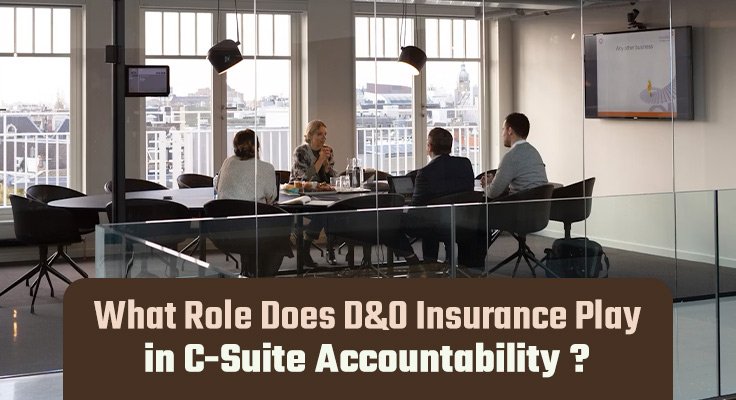
The modern C-suite operates under a peculiar tension. Executives face unprecedented scrutiny from shareholders, regulators, and the public. Yet the primary tool designed to protect them from personal liability often gets dismissed as a loophole that undermines accountability. This mischaracterization obscures the fact that D&O insurance, when properly understood, actually reinforces the conditions under which genuine accountability can function.
The D&O liability insurance market is projected to reach an estimated $1,142.7 million in 2025 with a CAGR of 3.3% anticipated through 2033. Large enterprises remain the dominant segment, with estimated average D&O policy limits ranging from $50 million to over $500 million.
The conventional wisdom treats D&O insurance as a shield that executives hide behind, a way to make risky decisions without personal consequences. But this misses how the insurance market itself has become an accountability mechanism. This article explores how D&O insurance reinforces C-suite accountability through three interconnected mechanisms. Let’s find out what they are.
Insurance Pricing Becomes Governance Enforcement
This is an interesting angle and shows how accountability can come from unexpected areas. Here’s what we mean. A company maintaining a $500 million D&O policy is not seeking comfort from the insurance market. Instead, it is signaling to investors and regulators that it understands the governance stakes at play and has priced in leadership failure costs.
This acknowledgment, embedded in a financial commitment, creates accountability through market discipline instead of regulatory mandates. Insurers enforce governance standards through underwriting and pricing mechanisms that operate independently of litigation outcomes. So, when companies renew their policies, insurers conduct detailed reviews of board composition, committee independence, meeting frequency, and risk governance infrastructure.
This creates immediate financial consequences for governance deficiencies and establishes a feedback loop that operates faster than traditional accountability mechanisms. The 2025 rate environment provides evidence of this pricing discipline.
For example, data shows that by Q1 and Q2 of 2025, 67% and 70% of clients saw lower premium rates. Likewise, flat renewals were also 8% in Q1 and 17% in Q2. This indicates continued buyer-favorable conditions. As Oakwood Risk Insurance Solutions notes, several factors determine the price, such as company size, revenue, financial health, and more.
If you’re curious about understanding the breakdown of D&O insurance coverage costs, click here. It’s important to understand because companies experiencing rate reductions have almost certainly demonstrated governance improvements that insurers value. The insurance market, through these pricing mechanisms, creates a sorting function where accountability-focused companies enjoy competitive advantages while others face growing costs.
It Helps Companies Tackle New Challenges Like AI
The relationship between D&O insurance and emerging risks reveals where C-suite accountability is currently most important.
Companies’ mentions of AI risk in SEC 10-K filings increased sharply from 4% in 2020 to over 43% in the most recent 2024 filings. Legal and competitive AI risks are the most frequently mentioned categories, though growing attention is being paid to societal AI risks. This tenfold increase in disclosure volume might appear to signal governance progress, but the reality is more complicated.
Research shows that many of these disclosures remain generic and lack detailed mitigation strategies. A board that includes a single paragraph acknowledging AI risk in its SEC filings has technically complied with disclosure requirements. However, it’s far from ideal and is a governance blind spot. Insurers recognize this distinction.
When renewing D&O coverage, insurers now ask substantive questions about how boards actually oversee AI implementation. They examine what governance structures are in place and what evidence exists that directors understand the technology’s implications for their industry. Generic disclosures fail this scrutiny and result in higher premiums or coverage limitations.
The explosion in litigation costs amplifies this accountability gap. The financial scale of securities litigation expanded sharply, with Disclosure Dollar Loss rising from $429 billion in 2024 to a record $694 billion in 2025. Maximum Dollar Loss followed a similar trajectory, climbing from $1,639 billion to $2,862 billion, a 75% increase and one of the highest levels ever recorded.
Notably, these record losses occurred as the number of securities class actions filed actually declined. This pattern reveals that the cases reaching litigation involve larger companies and more significant governance failures.
D&O insurers interpret these trends as evidence that traditional accountability mechanisms operate too slowly and allow systemic governance problems to compound. Insurance pricing now reflects this reality by demanding real-time accountability rather than retrospective enforcement.
It Gives Directors the Courage To Make Bold but Important Decisions
A fundamental paradox exists in boardroom dynamics. Without D&O insurance, directors operate under conditions of unlimited personal liability for corporate failures. Yet paradoxically, this environment often produces passive governance rather than rigorous oversight.
When independent directors face the prospect of personal financial ruin, the stakes change immediately. This risk can arise when they vote against a questionable acquisition or challenge executive compensation. Under that pressure, they often become reluctant to exercise genuine independence.
With D&O insurance, directors can perform their oversight responsibilities with appropriate confidence in their legal protection. It enables the kind of robust challenge that accountability actually requires.
This explains why policy limits have grown rather than contracted. Companies are not expanding coverage limits because governance has deteriorated. Rather, boards are expanding limits because they recognize that meaningful oversight requires the psychological freedom to make difficult decisions.
After all, an independent director who must personally fund a multimillion-dollar legal defense becomes cautious in ways that undermine accountability. The same director, knowing that legal defense costs are insured, can focus on substantive governance questions rather than personal financial survival.
Frequently Asked Questions
1. What is the difference between D&O insurance and general liability insurance?
D&O insurance protects executives and board members from personal losses tied to management decisions, like lawsuits from shareholders or regulators. General liability insurance covers the business itself against claims involving bodily injury, property damage, or accidents. One focuses on leadership decisions, the other on operational risks.
2. What role does D&O insurance play during regulatory investigations?
D&O insurance helps cover legal defense costs when executives are investigated by regulators. Even before any wrongdoing is proven, legal fees can pile up quickly. The policy allows directors and officers to respond properly, hire counsel, and navigate the process without being financially overwhelmed.
3. What risks do executives face without D&O insurance coverage?
Without D&O coverage, executives can be personally responsible for legal costs, settlements, or judgments tied to their decisions. This can put their personal assets at risk. It also creates hesitation in decision-making, since every major call carries potential financial consequences beyond the company itself.
The role of D&O insurance in C-suite accountability operates through mechanisms that traditional frameworks often miss. D&O insurance creates feedback loops that reward accountability and penalize governance failures faster than regulatory agencies or shareholder litigation can respond.
As newer risks enter the fray, we’re left with two types of companies. Those who underestimate the importance of D&O coverage and those who don’t. The former will experience rising insurance costs, narrowing coverage, and governance crisis cycles that repeat until institutional pressure forces change. The latter will maintain competitive insurance terms, broader coverage options, and boards capable of sustained accountability.