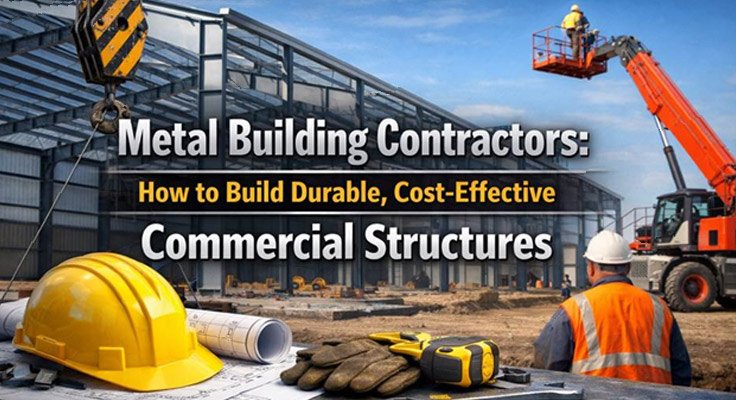
Efficiency, durability, and cost control are the driving forces behind commercial construction nowadays. Businesses desire structures that can be constructed within a short period, robust enough to provide services over decades, and that can be conveniently changed in accordance with the expansion of operations. This has made metal buildings popular in most commercial and industrial fields.
Metal building contractors make an essential contribution to realizing these expectations. Their experience extends beyond the construction of steel parts. It entails critical planning, accuracy in implementation, and knowledge of how metal structures can perform over time in challenging environments.
This guide illustrates how construction experts can assist businesses in developing efficient, affordable commercial buildings without affecting their performance or quality.
Benefits of Metal Buildings as a Commercial Investment
Metal structures have a number of benefits compared to conventional construction. Their strength, construction speed, and reduced maintenance requirements make them suitable for the business world.
Companies in the logistics, manufacturing, retail, and warehousing sectors are increasingly depending on metal structures to address the requirements of their business to restrain costs. These buildings provide long-term value with the right industry experts.
Metal Building Contractors and Project Success
Metal building contractors handle the construction process, including design coordination and final installation. Their experience makes sure that the building is both functional and regulatory.
Without specialized construction teams, projects can lead to structural inefficiencies, compliance problems, and budget overruns.
Key Responsibilities of Metal Building Contractors
- Aligning design and engineering needs.
- Control of fabrication and procurement of materials.
- Supervising foundation and structural installation.
- Assurance of building codes and safety standards.
- On-time and on-budget project execution.
Creating Ground-up Sustainable Designs
One of the greatest benefits of metal buildings is durability, but it needs to be designed efficiently. Designers and engineers collaborate closely with contractors to make sure that the structure is capable of surviving the environmental and operational strains.
This covers the planning for wind loads, heavy equipment, and exposure to climatic conditions, in addition to future expansion requirements.
Durability-Based Design Factors
- Steel framing systems of high strength.
- Corrosion-resistant coatings.
- Right drainage and roof slope design.
- Strengthened pillars against heavy loads.
- Future flexibility in structure.
Such design decisions will prolong the building’s life and reduce the cost of long-term repairs.
Cost Management by Effective Construction Practices
Cost efficiency is one of the primary factors why businesses prefer metal buildings. Metal building contractors help maximize this benefit by facilitating the construction process.
Pre-engineered parts minimize on-site work, material waste, and shorten project duration. This implies that smart construction results in earlier occupancy and faster returns on investment.
Cost Management Strategies
- Correct cost estimates in pre-construction phase.
- Less waste of material through prefabrication.
- Reduced building timeframes.
- Fewer weather-related delays.
- Reduced maintenance costs in the long term.
Contractors make businesses financially efficient by managing the initial and lifecycle costs.
Speed Without Compromising Quality
Time is money in commercial construction. Metal buildings allow for faster project completion compared to traditional builds, but speed must not come at the expense of quality.
Qualified professionals balance efficiency with precision. They ensure components are installed correctly, inspected thoroughly, and aligned with engineering standards.
Ways Contractors Accelerate Project Timelines
- Pre-engineered building systems.
- Parallel foundation and fabrication processes.
- Well-coordinated subcontractor schedules.
- On-site quality control checks.
This approach delivers fast results while maintaining structural integrity.
Adaptability to Different Commercial Requirements
Metal buildings are highly versatile. They are adaptable to various commercial applications, which can be tailored to fit diverse business requirements.
These structures are designed to fulfill operational requirements, including clear-span interiors, mezzanine levels, or specialized loading areas.
Typical Commercial Uses of Metal Buildings
- Distribution centers and warehouses.
- Manufacturing facilities.
- Retail spaces and showrooms.
- Aircraft hangars.
- Agricultural and industrial storage facilities.
This improves the ability of businesses to expand on a large scale without any significant reconstruction.
Benefits of Energy Efficiency and Sustainability
Contemporary metal construction helps to promote sustainable construction and energy-efficient buildings. Contractors incorporate insulation, reflective roof, and energy-efficient components to cut operating costs.
These characteristics assist companies in achieving sustainability and reducing utility costs in the long term.
Sustainability Features Project Specialists Implement
- Insulation systems of high performance.
- Integrated, energy-efficient HVAC systems.
- Natural lighting solutions.
- Recyclable building materials.
- Reduced construction waste.
Green buildings are not only eco-friendly, but also more appealing to residents and investors.
Assuring Safety and Compliance
Metal building construction professionals also make sure that every single structure aligns with the local building standards, zoning, and safety standards. To prevent fines, delays, and legal risks, compliance is paramount.
Professional contractors deal with inspections, documentation, and safety measures during the project life cycle.
Wrapping Up
Metal buildings are a strong force in offering strength, efficiency, and economical construction to commercial buildings. However, these benefits largely rely on industry professionals in charge of the project.
Expert metal building contractors combine technical expertise, construction efficiency, and compliance management to provide long lifespan, cost-effective buildings that can facilitate the long-term expansion of the business.
When it comes to commercial and industrial building projects that require reliability, performance, and value, experienced professional firms such as Arrant Construction ensure that metal buildings will perform for years to come.
Frequently Asked Questions (FAQs)
Why choose metal buildings for commercial construction?
Metal buildings offer durability, faster construction timelines, lower maintenance costs, and design flexibility for commercial operations.
How do metal building contractors reduce construction costs?
They use prefabricated systems, efficient scheduling, accurate estimates, and reduced labor requirements to control costs.
Are metal buildings durable long-term?
Yes. When properly designed and constructed, metal buildings can last decades with minimal maintenance.
Can metal buildings be customized for business needs?
Absolutely. Contractors design metal buildings to support specific layouts, equipment, and future expansion plans.
Do metal building contractors handle permits and inspections?
Yes. Professional contractors manage code compliance, permits, and inspections throughout the project.
Also Read : Commercial Remodeling Contractors in Miami: What Business Owners Should Know