Waterbury, CT, is a busy city where local streets, state routes, and daily commuters intersect as residents travel to work, school, and family obligations. With steady traffic moving through neighborhoods and commercial areas, auto collisions are an unfortunate reality for many drivers. When a crash occurs, the aftermath often brings more than vehicle damage, leaving people dealing with injuries, insurance disputes, and uncertainty about who was truly at fault. In these moments, understanding how fault is established becomes critical. This is where insight into key evidence auto collision lawyers use to prove fault can make a real difference for injured drivers and their families.
Legal professionals look beyond surface details to uncover facts that support a clear and accurate account of what happened. For those seeking clarity and accountability after an accident, pursuing auto collision legal help in Waterbury, CT, can provide guidance, protection of rights, and a stronger path toward fair compensation and peace of mind.
Police Reports: Foundational Documentation
A police report is usually the first official documentation prepared after a collision. Officers document what they saw, what the parties said, and the aftermath of collisions. The reports give valuable insight as to when, where, and the conditions at the scene. These records provide a basic overview that insurance companies and legal representatives of all types review.
Photographs and Videos: Visual Proof
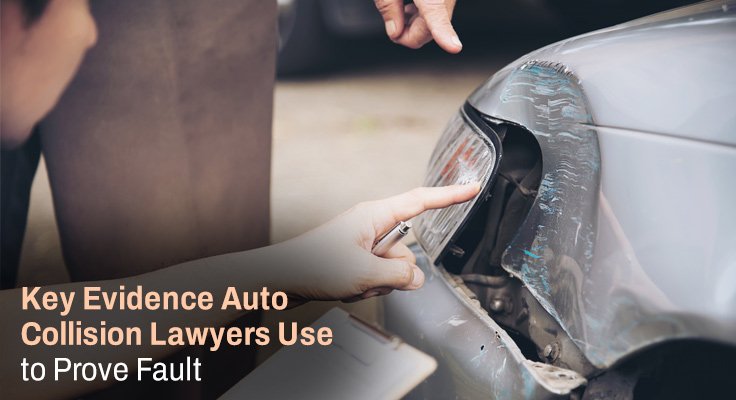
Photos at the scene show the aftermath of the crash. Photos can show things like where cars were, damage done, road conditions, and signs or signals that may now be relevant. Videos may have recorded the incident as it happened, either on a nearby vehicle’s camera or by a bystander. This visual evidence also helps in eliminating discrepancies between the parties’ statements.
Eyewitness Testimony: Independent Perspectives
Another facet of evidence can be offered through neutral third-party accounts. In that way, witnesses who saw the accident could notice things that, normally, may go unnoticed. Testimony from individuals in the area, including drivers, passengers, pedestrians, or residents passing by, can provide valuable details. Such statements serve to confirm or dispute the narratives provided by the drivers. Lawyers use information meticulously to strengthen the case, that might go unused otherwise
Expert Analysis: Reconstruction and Opinion
Lawyers sometimes rely on accident reconstruction experts. Using principles of physics, engineering, and extensive analysis, these professionals can better understand how the crash may have occurred. Their conclusions are based on skid marks, speeds, points of impact, and any other metrics. Expert opinions like these can elucidate technical details that may leave a jury or judge puzzled.
Medical Records: Documenting Injuries
Medical records help link the injury to the incident. Medical records describe the types, severity, and dates of injuries you suffered in the crash. Such records thus assist attorneys in establishing the effects of the collision on the parties involved. Lawyers might use treatment notes, diagnostic tests, and statements from the physician to show how the crash resulted in, or worsened, particular injuries. This information can significantly influence the assessment of damages and liability.
Damage Assessments: Vehicle Inspections
Assessment of vehicle damage provides details about the nature of the impact. Mechanics or insurance adjusters conduct a damage assessment and report whether the damage is superficial or structural. The reports generated can show the angle of impact, the force used, and the order in which these events took place. In-depth examinations determine if a mechanical failure caused the crash. Lawyers use these findings to argue for fault or negligence.
Modern Evidence: Phone and Data Records
Proof or rebuttal of liability is a matter becoming ever more digital. Cellphone records can indicate whether a driver was talking or texting during the crash. Information recorded in the vehicle, such as that captured by event recorders, can show how fast a vehicle was travelling, whether it was braking, or whether it was moving suddenly. It offers more background information, especially when people suspect that distracted driving is a factor.
Conclusion
The driver asserting a claim must provide evidence to substantiate their argument. The prosecutor builds a strong case using police reports, photographs, witnesses, expert testimony, medical records, property assessments, and electronic data. Knowing how these parts relate can help those in the crash strengthen their claims and protect their interests during litigation.
Also Read : How a Car Accident Attorney in Charlotte Supports People After Severe Roadway Collisions