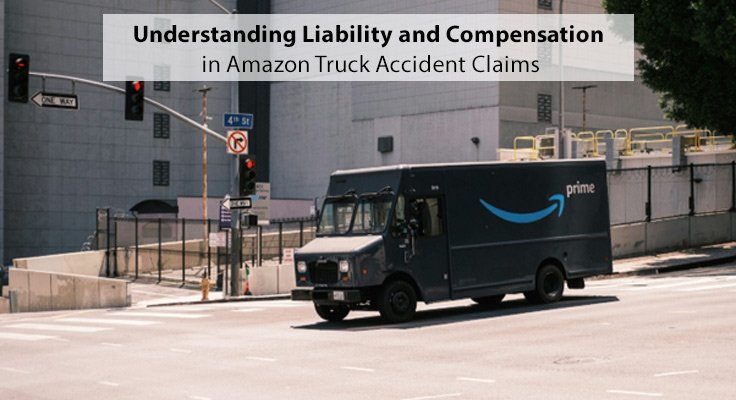
Understanding liability and compensation in Amazon truck accident claims begins with identifying who may be legally responsible for the crash and determining the damages an injured person has suffered. Because multiple parties may be involved, these cases are often more complex than ordinary car accident claims.
Amazon delivery vehicles have become a familiar sight on roads across the United States as the company continues to expand its delivery network. Accidents involving delivery trucks and vans can raise unique legal questions because different companies and contractors may be involved in the delivery process.
If you are injured in a crash involving an Amazon van, understanding how liability works can help you protect your rights and make informed decisions about a potential claim.
Who May Be Liable for the Accident?
Determining liability is one of the most important steps in any accident claim. Although many people assume Amazon is automatically responsible, the answer depends on the facts of the case.
Potentially liable parties may include:
- The delivery driver
- Amazon, in certain circumstances
- A Delivery Service Partner (DSP)
- A third-party trucking company
- Another negligent driver
- A vehicle manufacturer if a mechanical defect contributed to the crash
A thorough investigation is often necessary to determine who may be legally responsible.
Why Amazon Accident Claims Can Be Complex
Many Amazon deliveries are handled by independent delivery service partners rather than drivers employed directly by Amazon. In some situations, packages may also be transported by third-party trucking companies before reaching local delivery drivers.
Because several businesses may participate in the delivery process, determining responsibility often requires reviewing contracts, employment relationships, insurance policies, and the specific facts surrounding the collision.
Types of Compensation You May Recover
If another party’s negligence caused the accident, you may be entitled to seek compensation for your losses. Depending on the circumstances, recoverable damages may include the following:
- Medical expenses
- Future medical treatment
- Lost wages
- Reduced earning capacity
- Property damage
- Pain and suffering
- Rehabilitation costs
The value of a claim depends on the severity of the injuries, available evidence, and the long-term impact on the injured person’s life.
Evidence Plays an Important Role
Strong evidence is essential when pursuing an accident claim. Helpful evidence may include police reports, photographs of the accident scene, surveillance footage, witness statements, medical records, vehicle damage reports, and electronic data from commercial vehicles when available.
Preserving evidence as early as possible can strengthen a claim and make it easier to establish liability.
Comparative Fault May Affect Compensation
In some accidents, more than one party may share responsibility. Many states apply comparative fault rules, which may reduce compensation if the injured person is found partially responsible for the crash.
Understanding how fault is evaluated can help set realistic expectations during settlement negotiations or litigation.
Filing Deadlines Matter
Every state establishes deadlines for filing personal injury lawsuits. For example, many states have statutes of limitations that limit the amount of time available to pursue compensation after an accident.
Because these deadlines vary by jurisdiction, speaking with an attorney as soon as possible helps ensure important legal rights are preserved.
Legal Standards Can Affect Your Claim
Most Amazon truck accident claims are based on negligence principles. For example, Section 401 of the Restatement (Second) of Torts reflects the general legal principle that individuals have a duty to exercise reasonable care to avoid causing harm to others. In practice, accident claims often focus on whether a driver or another responsible party breached that duty and whether the breach directly caused the injuries.
Why Legal Guidance Is Helpful
Commercial vehicle accident claims frequently involve multiple insurance companies, complex contracts, and detailed investigations. An attorney can help identify potentially responsible parties, preserve important evidence, communicate with insurers, and evaluate whether a settlement fairly reflects the damages suffered.
Early legal guidance may also reduce the risk of mistakes that could affect the outcome of the claim.
Key Takeaways
- Liability in Amazon truck accident claims may involve multiple parties.
- Delivery drivers, contractors, trucking companies, or other motorists may all share responsibility.
- Compensation may include medical expenses, lost wages, property damage, and pain and suffering.
- Preserving evidence is critical to building a strong claim.
- Comparative fault rules may affect the amount of compensation available.
- Negligence claims generally focus on whether a responsible party failed to exercise reasonable care.
- Seeking legal guidance early can help protect your rights and strengthen your accident claim.