Commercial real estate is no longer defined by office towers, shopping centers, apartment buildings, and industrial parks alone. Investors are increasingly looking beyond these traditional assets as work patterns, consumer behavior, and technology reshape demand.
For decades, a diversified portfolio of office, retail, industrial, and multifamily properties was considered the safest path to long-term returns. According to Deloitte, alternative property sectors are expected to account for nearly 70% of commercial real estate portfolio values by 2034. Today, they represent just over 40% of portfolio values.
This shift reflects changing demographics, new business models, and the search for resilient income sources.
From self-storage facilities to warehouses and AI-powered data centers, alternative commercial real estate is becoming a larger part of investment strategies. Here’s why.
Self-Storage Is Benefiting From Long-Term Lifestyle Changes
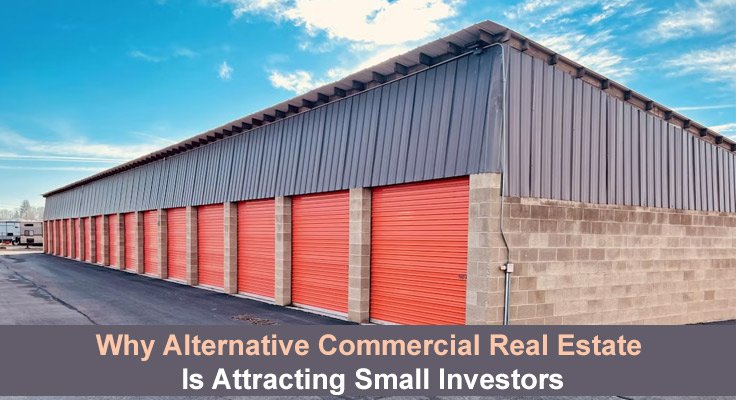
Self-storage has evolved from a niche convenience into one of the strongest-performing commercial real estate sectors. CNBC reports that over the past 15 years, self-storage has outperformed office, retail, industrial, and multifamily properties in net operating income.
Unlike many commercial assets, demand for storage is driven less by economic cycles and more by everyday life. People move, downsize, welcome children, relocate for work, or help aging parents transition into smaller homes. These life events continue regardless of broader market conditions.
Annie Trucco, Senior Associate of Investment Research at Heitman, says these “life event” drivers are expected to increase over the next decade. Millennials are starting larger families, while more baby boomers are downsizing. Whether someone needs space for nursery furniture or belongings from an elderly parent’s home, storage demand often follows naturally.
For investors evaluating this sector, operational planning matters just as much as demand. One of the first questions they ask is how much does it cost to build storage units.
According to Self Storage 101, the answer depends on several factors. They include the location of the project, the building materials used, and the size and design of the facility. These costs should be evaluated alongside land prices, expected occupancy rates, and local competition before moving forward with an investment.
Warehouses Are Finding New Momentum Beyond E-Commerce
Industrial real estate experienced explosive growth during the pandemic before slowing as retailers adjusted inventory levels and reduced excess inventory. That slowdown is now giving way to renewed demand as businesses expand their operations and invest in stronger supply chains.
The Wall Street Journal reports that U.S. real estate firms tracked 146 warehouse leases larger than 500,000 square feet in 2025. That marked a 31% year-over-year increase and the strongest leasing activity since 2022. The rebound signals that industrial properties remain a key part of commercial real estate despite post-pandemic market adjustments.
Several factors are fueling this recovery. Third-party logistics (3PL) providers continue to lease more space as businesses outsource warehousing and fulfillment operations. Manufacturers are also bringing production closer to domestic markets, creating fresh demand for industrial facilities.
At the same time, suppliers supporting the expansion of AI data centers require warehouses to store and distribute servers, networking equipment, and construction materials.
Demand is especially strong in regions experiencing population growth and business expansion. Meanwhile, the limited availability of smaller industrial properties has pushed some occupiers toward larger distribution centers to meet their operational needs.
For investors, this trend shows that warehouse demand is no longer driven solely by e-commerce. Manufacturing, logistics, and digital infrastructure are creating multiple, long-term demand drivers, making industrial real estate an increasingly resilient investment option.
AI Is Creating a New Commercial Real Estate Asset Class
Artificial intelligence is reshaping commercial real estate by turning data centers into one of the industry’s fastest-growing asset classes. Investors are directing unprecedented amounts of capital toward digital infrastructure as demand for cloud computing, AI model training, and data processing continues to accelerate.
According to CoStar, the United States currently has 110.9 million square feet of data center space under construction. By comparison, 67.4 million square feet of office space is under construction.
Federal investment data tells a similar story. Investment in power and communication infrastructure, which includes data centers, has risen sharply since 2020 and now rivals spending on traditional commercial real estate.
The rapid buildout reflects the growing digital economy. AI applications require enormous computing power, while businesses increasingly rely on cloud platforms and high-performance data storage. As a result, developers are racing to build facilities that can support these expanding technological needs.
Despite the strong growth outlook, investors are approaching the sector with caution. Unlike conventional office or industrial buildings, data centers depend on rapidly evolving technology. They also require reliable power supplies and increasingly complex cooling systems to remain competitive.
Advances in AI hardware could also change infrastructure requirements over time. While the sector offers strong long-term potential, investors must balance those opportunities against technology risks and rapidly evolving infrastructure.
FAQs
What is alternative real estate?
Alternative real estate refers to property types beyond traditional office, retail, apartment, and industrial buildings. Examples include self-storage facilities, data centers, life sciences campuses, and senior housing. These assets often benefit from changing demographics, technology, and evolving consumer needs over time.
What is the future of the self-storage industry?
The self-storage industry is expected to grow steadily as population mobility and life events continue to drive demand. Downsizing, relocation, and growing families create consistent storage needs. Investors also benefit from the sector’s resilient income potential and long-term demand.
What type of property is a data center?
A data center is an alternative commercial real estate asset designed to house servers, networking equipment, and digital infrastructure. It supports cloud computing, artificial intelligence, and online services. Demand is rising as businesses rely more heavily on digital technologies.
Key Data Behind the Market Shift
| Alternative real estate is growing rapidly | 70% of CRE portfolios by 2034 (up from 40%+ today) |
| Self-storage has delivered strong returns | Outperformed major property sectors over the past 15 years |
| Warehouse demand is rising again | 146 large leases signed in 2025, 31% higher than 2024 |
| Data centers are outpacing offices | 110.9M sq. ft. under construction vs. 67.4M sq. ft. for offices |
Alternative Assets Still Require Careful Market Evaluation
Alternative commercial real estate is attracting growing investor interest, but long-term success depends on careful market evaluation rather than chasing trends. Each property type has its own demand drivers.
Before investing, buyers should also assess financing costs, construction expenses, future development plans, and demographic trends. The strongest opportunities typically emerge where long-term population growth, infrastructure investment, and economic expansion align.