
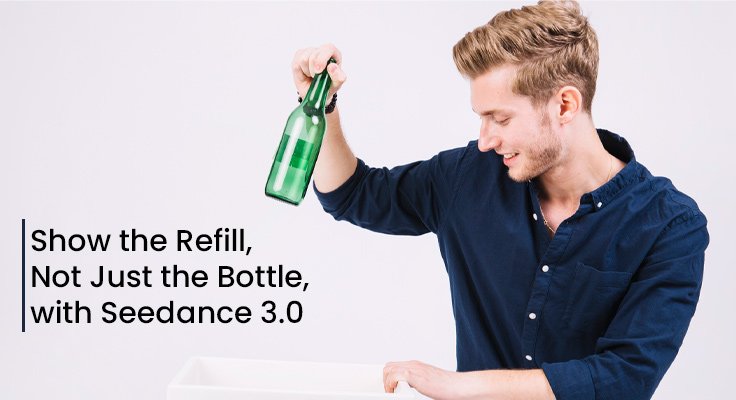
A reusable bottle is easy to photograph and surprisingly easy to explain badly. For an imagined founder’s product film, I would make the refill itself the central event: an empty bottle arrives at a counter, receives a refill, and leaves ready for another day. The proposed business sells a refill service, so a beautiful object turning against a blank background would miss the point. I want viewers to understand the action that makes the service useful.
The first creative decision would be to separate a concept film from a technical demonstration. I could develop an inviting scene around the counter, but any claim about capacity, sanitation, or environmental savings would need evidence beyond generated imagery. The video would introduce a possible customer experience. Real footage and verified information would remain necessary wherever the business needs to show exactly how its equipment or service operates.
Build the story around a single customer action
My visual starting point would be an uncluttered counter with a bottle resting beside a refill station. Within that scene, seedance 3.0 offers a way to explore the movement between a product image and a short business story. The AI video model supports text-to-video, image-to-video, and reference-based video generation that can combine text, images, video, and audio. I would choose inputs that clarify this particular action instead of treating every available asset as essential.
A clean photograph of the bottle would establish its outline and colour. A second image could describe the counter’s materials and lighting, provided the two references agree rather than compete. I would avoid a highly reflective bottle at the concept stage because shifting reflections could distract from the basic sequence. If the real product is reflective, that detail would eventually need careful treatment, but the initial visual question is simpler: can the viewer follow the bottle’s journey?
I would sketch three shots before generating any clips. The opening would show the bottle arriving in a calm, readable frame. The middle would suggest the refill moment without inventing mechanical precision. The ending would show the bottle leaving the counter, with enough empty space for a short line of text added later. Those shots form a complete idea even before music, branding, or a founder’s introduction enters the edit.
Keep the camera close enough to explain
For the first Seedance 3.0 scene, I would request a stable three-quarter view of the counter, soft daylight, and a single deliberate placement of the bottle. The brief would give the hand one action and then a pause. I would not combine placement, opening the cap, operating the station, and leaving the scene in one generation. A compact sequence is easier to understand when each shot has a clear purpose and a visible resting point.
My written direction might read: “A plain reusable bottle is placed gently on a tidy refill counter, soft daylight from the side, steady medium close framing, quiet everyday atmosphere, a brief pause after the bottle touches the surface.” I would treat that as an intention to inspect, not a guarantee of physical accuracy. The pause matters because it gives the audience time to recognize the object and gives the editor room to make the next cut.
The refill shot would need a different approach. Liquid movement and equipment details can carry factual meaning, so I would prefer actual footage of the service for the central demonstration. Seedance 3.0 could still help me explore the surrounding atmosphere or an illustrative transition. That division would keep the film focused on video creation while avoiding the mistake of presenting an imagined mechanism as a working product demonstration.
Let the founder’s voice guide the pace
If the founder supplied a short recording about the service, I would identify one useful sentence rather than building a long speech. Something like “Bring the bottle back when you need a refill” could guide the timing without making a sweeping claim. I would use the recording only with permission and preserve the speaker’s intended meaning. A video reference of an ordinary counter interaction could also establish the relaxed pace I want from the illustrative scenes.
The multi-reference possibilities in Seedance 3.0 would let me distinguish those contributions. The bottle image supplies appearance, the counter image supplies setting, the motion reference suggests tempo, and the written brief defines the shot. Audio can contribute creative direction, but I would complete the voice and music mix in a separate editor. I would not assume that a generated clip has already solved the timing, pronunciation, or sound levels required for the final presentation.
Revise the gesture, then the atmosphere
Suppose the first result made the bottle slide across the counter after the hand released it. I would shorten the action and emphasize a settled ending in the next brief. My Seedance 3.0 revision would keep the camera and lighting similar so I could judge whether the gesture improved. If the hand still drew too much attention, I could begin with the bottle already on the counter and let a small change in framing introduce it instead.
A different problem might be a scene that feels too luxurious for an everyday service. Dark marble, dramatic reflections, and an elaborate camera move could suggest an expensive boutique experience that the business does not offer. I would replace those cues with a simple surface, open daylight, and modest movement. The visual tone should help viewers imagine the service fitting into a normal day, not create expectations that the real counter cannot meet.
Give the finished film one clear ending
For the closing shot, I would return to the bottle in a position that echoes the opening, now ready to leave. Seedance 3.0 could help develop a restrained movement toward the edge of the frame, but the edit would determine whether that movement feels complete. I would add the service name and a concise explanation afterward, using ordinary typography tools. Generated lettering would not be the foundation of a business message that must remain accurate and readable.
The final deliverable would be a short founder presentation film with a clear action, a believable setting, and room for verified details. I would review it once without sound to see whether the refill story still makes sense, then once with the voice recording to check the rhythm. If the audience remembers only a glossy bottle, I have emphasized the wrong thing. The useful outcome is a video that makes a small service easy to picture: bring it in, refill it, and carry on.