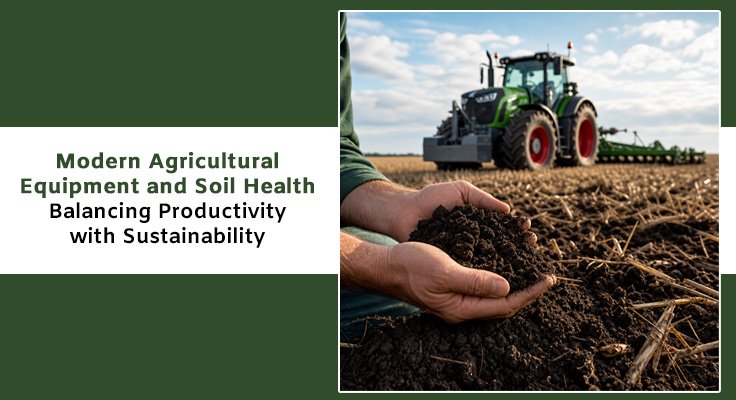
The relationship between agricultural machinery and soil conservation has become one of the most critical conversations in modern farming. As operations scale and equipment becomes more sophisticated, farmers face mounting pressure to balance operational efficiency with long-term land stewardship. The machinery choices made today will echo through decades of soil structure, compaction patterns, and ultimately, the productive capacity of American farmland.
Equipment selection represents far more than a capital investment decision. It shapes cultivation practices, determines field access windows, influences fuel consumption, and fundamentally affects how soil responds to repeated passes throughout growing seasons. Farmers increasingly recognize that the relationship between machine weight, tire configuration, and soil structure demands careful attention, particularly as equipment manufacturers push the boundaries of size and capability.
The Evolution of Farm Machinery Scale
Agricultural equipment has undergone remarkable transformation over the past five decades. Tractors that once weighed 8,000 pounds now tip the scales at 30,000 pounds or more. Combines have grown from modest grain harvesters to massive machines exceeding 50,000 pounds when fully loaded. This escalation reflects legitimate demands: larger operations require greater throughput, tighter harvest windows necessitate increased capacity, and precision agriculture systems add weight through technology integration.
The drivers behind this growth are understandable from an operational perspective. Labor costs have risen while availability has declined, pushing farms toward fewer operators managing more capable equipment. Weather patterns have become less predictable, compressing ideal working windows and demanding machines that can cover more ground quickly. Economic pressures favor operations that can achieve economies of scale, which typically means larger implements pulled by more powerful tractors.
Understanding Soil Compaction Dynamics
Soil compaction occurs when pressure from machinery exceeds the soil’s bearing capacity, crushing the pore spaces that facilitate water infiltration, root penetration, and microbial activity. The damage extends deeper than many realize. Surface compaction in the top six inches can often be remediated through tillage, but subsoil compaction at depths of 12 to 24 inches persists for years or even decades. Research from National Geographic has documented how heavy equipment fundamentally alters soil structure in ways that resist natural recovery processes.
The consequences manifest gradually but substantially. Compacted soils exhibit reduced water infiltration rates, leading to increased runoff and erosion during heavy rainfall. Root systems struggle to penetrate dense soil layers, limiting access to deeper moisture and nutrients during drought periods. Anaerobic conditions develop more readily in compacted zones, altering microbial communities and nutrient cycling processes. Yield penalties from severe compaction can reach 15 to 25 percent in affected areas, though the damage often appears as subtle yield drag rather than obvious crop failure.
Critical Factors in Compaction Risk
Soil moisture content at the time of field operations represents the single most influential variable in compaction outcomes. Soils near field capacity—when pore spaces are saturated but free water has drained—are most vulnerable to structural damage. Clay-rich soils face greater risk than sandy soils due to their cohesive properties and tendency to form dense, platy structures when compressed. The number of passes matters significantly; repeated traffic over the same path compounds damage exponentially rather than additively.
Tire selection and inflation pressure offer meaningful mitigation opportunities. Radial tires with larger footprints distribute weight more effectively than older bias-ply designs. Inflation pressure directly correlates with ground pressure in the top soil layers. Central tire inflation systems allow operators to reduce pressure for field work and increase it for transport, though adoption remains limited due to cost considerations. Track systems spread weight across greater surface area but introduce their own complexities around maneuverability and road transport.
Regional Considerations Across American Agriculture
Soil types and climatic conditions across the United States create diverse challenges for equipment management. The heavy clay soils prevalent throughout the Midwest require careful timing of field operations to avoid creating compaction layers that persist through multiple growing seasons. The window between “too wet to work” and “ideal moisture conditions” can close rapidly, particularly during spring planting when calendar pressure intensifies. Farmers in these regions report increasing difficulty finding adequate working days as equipment weight has grown and weather patterns have shifted toward more intense precipitation events separated by longer dry periods.
The comprehensive analysis available through agricultural industry research reveals how different regions approach these challenges with varying strategies adapted to local conditions and cropping systems. Western operations working lighter-textured soils face different trade-offs, though compaction concerns remain relevant, particularly in irrigated systems where moisture levels stay elevated during critical operational periods.
Equipment Solutions and Management Strategies
Controlled traffic farming represents one of the most effective approaches to limiting compaction damage. By confining equipment to permanent lanes and keeping the production zones free from wheel traffic, operations can maintain soil structure across the majority of field area. Implementation requires careful planning around implement widths, GPS guidance accuracy, and field layout, but results consistently demonstrate yield improvements of 5 to 12 percent along with reduced fuel consumption and improved water infiltration.
Selecting equipment appropriately sized for the operation prevents unnecessary soil stress. Oversized machinery carries costs beyond the purchase price, including compaction risk that erodes the productive capacity being pursued through scale increases. Modern precision agriculture tools enable variable rate applications that were once justification for larger capacity equipment; by reducing tank sizes and application volumes through precision targeting, farmers can often accomplish the same productivity with lighter machines.
The Role of Specialized Dealers and Service Networks
Navigating equipment decisions requires more than catalog specifications. Experienced dealers who understand local soil conditions, cropping systems, and operational realities provide essential guidance that shapes long-term farm productivity. These partnerships extend beyond the sale through maintenance programs, technology support, and ongoing consultation as operations evolve. The relationship between farmer and equipment supplier increasingly centers on optimizing whole-system performance rather than simply maximizing horsepower or capacity metrics.
When farmers partner with knowledgeable equipment providers like H&R Agri-Power, they gain access to expertise that helps match machinery capabilities with actual field requirements while considering soil conservation objectives alongside productivity targets. This consultation process examines tire options, ballasting strategies, implement configurations, and operational timing to develop equipment packages that serve both immediate harvest demands and long-term soil health.
Supporting Soil Health in Equipment Operations
The equipment decisions farmers make today will influence soil structure and productivity for decades to come. Thoughtful approaches consider not only immediate operational efficiency but also the cumulative impact of machinery choices on the resource foundation that underpins agricultural sustainability. This perspective requires evaluating total cost of ownership through a lens that includes yield impacts from soil degradation, not merely purchase price and operating expenses.
Cover cropping and reduced tillage systems can help mitigate compaction risks by maintaining soil structure through biological processes. Root channels from cover crops create pathways that persist into the cash crop season, while reduced tillage preserves aggregation and organic matter that give soil greater resistance to compaction forces. These agronomic practices work synergistically with equipment management strategies to protect soil resources while maintaining productive efficiency.
Looking Forward: Technology and Soil Stewardship
Emerging technologies offer promising avenues for reducing equipment impact on soil health. Autonomous systems may enable smaller, lighter machines to operate continuously, achieving productivity through extended operating hours rather than increased size. Electrification could reduce weight by eliminating heavy drivetrains, though battery mass currently offsets many potential gains. Sensor systems that monitor soil conditions in real-time could prevent operations during vulnerable periods, though implementation challenges remain around integrating these tools into time-sensitive farming operations.
The trajectory of agricultural equipment will be shaped by farmers who demand solutions that serve both productivity and stewardship objectives. Manufacturers respond to market signals; as operators increasingly recognize the long-term costs of soil degradation and seek alternatives, innovation will follow. The farms that thrive over coming decades will likely be those that managed to scale operations without sacrificing the soil structure that underpins sustainable productivity.
Equipment choices carry consequences that extend far beyond a single growing season. By approaching machinery decisions with careful attention to soil impacts, timing operations to minimize compaction risk, and working with knowledgeable partners who understand both agronomic and mechanical dimensions of farming, operators can preserve the productive foundation their operations depend upon while meeting the efficiency demands of modern agriculture.