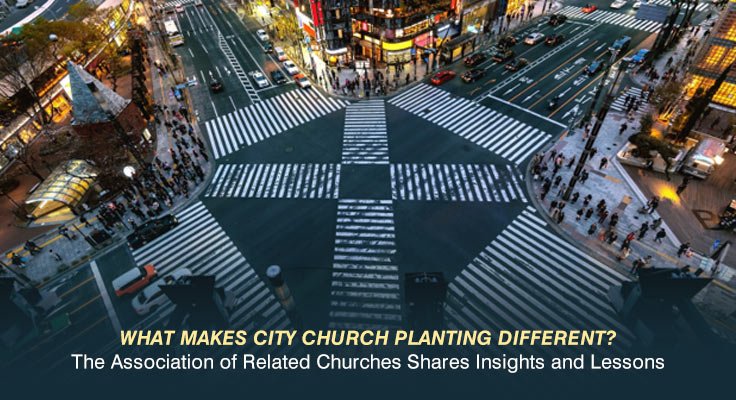
Starting a church is never simple, but planting one in a city presents opportunities and challenges that require a distinct approach.
For more than two decades, leaders and church planters within the Association of Related Churches (ARC) have helped launch churches in rural communities, small towns, suburban neighborhoods, and some of the world’s largest cities. That experience has shown that while there are certain principles of healthy church planting, building a lasting church in an urban environment requires a different mindset.
How Are Cities Different?
Cities are more than larger versions of small towns. They bring together diverse cultures, generations, socioeconomic backgrounds, and life experiences within a relatively small geographic area. Individual neighborhoods often have their own history, identity, strengths, and challenges, even when they are only a few blocks apart.
Because of that complexity, city church planting requires more than scaling up traditional ministry models. Building a healthy church depends on understanding the community, earning trust, developing local leaders, and remaining committed through seasons where progress may be slower but are still deeply meaningful.
How Should Church Planters Approach City Ministry?
One of ARC’s consistent messages is that cities should be understood before they are served.
Rather than viewing an urban community simply as a place to launch a church, successful planters invest time in learning the character of a neighborhood, understanding the people who already call it home, and recognizing those who are already serving the community.
“Church planters should see cities as communities to understand rather than markets to reach,” ARC explains.
Listening, observing, and building relationships before establishing ministry priorities creates a stronger foundation for long-term impact. Approaching a community with assumptions instead of curiosity can quickly undermine trust.
ARC, Churches, and Leaders Emphasize the Importance of Earning Trust
Trust is earned in every community, but it is particularly important in cities, where residents may have experienced broken promises, frequent leadership changes, or organizations that failed to understand the neighborhoods they hoped to serve.
For that reason, credibility is built through consistency rather than visibility. Church planters who become part of the community, demonstrate genuine care for its residents, and remain present over time are far more likely to build lasting relationships. People are more willing to follow leaders who have first demonstrated a commitment to serving them.
In Cities, Ministry Moves at the Speed of Relationships
City church planting is ultimately about connecting with people at the level they’re comfortable with.
Healthy churches are built through conversations, shared experiences, discipleship, and a consistent presence within the community. Launch events may introduce a church to a neighborhood, but meaningful ministry grows through relationships that develop over time.
ARC encourages church planters to adopt a long-term perspective, recognizing that lasting influence rarely happens overnight. Faithful investment in people often produces the strongest and most sustainable ministry.
More Emotional Resilience, Less Comparison
The comparison game never crowns any winners, and in city church planting it can quickly distract leaders from the people and place they have been called to serve. It’s why ARC encourages church planters to replace comparison with emotional resilience.
Urban ministry can involve slower progress, seasons of uncertainty, and communities carrying layers of pain and instability. Every neighborhood has its own history, culture, challenges, and pace of growth, making comparisons with other churches both unfair and unhelpful. Those realities require leaders who are grounded in their calling rather than external measures of success.
Emotional resilience is what enables church planters to remain patient, lead with maturity, and continue serving faithfully when growth is not immediately visible. In the city, long-term ministry is sustained by remaining committed to the community and trusting that meaningful impact is built over time.
Diverse Communities Require Humility
Urban ministry places church leaders alongside people from a wide range of cultural, economic, and personal backgrounds.
That diversity calls for humility. Effective church planters ask questions before offering answers, seek local perspectives, and remain willing to learn from the communities they hope to serve.
According to ARC, listening well not only strengthens relationships but also enables churches to respond in ways that reflect the genuine needs, strengths, and opportunities within each neighborhood.
Local Partnerships Strengthen Ministry
Healthy city churches are rarely built in isolation.
Partnerships with schools, local organizations, nonprofits, businesses, and other churches expand a congregation’s ability to serve while strengthening connections throughout the community.
Rather than focusing only on what may be missing, successful church planters identify the strengths that already exist and look for opportunities to work alongside others who are making a positive difference. These partnerships allow churches to become trusted contributors to the life of the community.
City Churches Have to Develop Local Leaders
Healthy city churches do more than gather people. They intentionally develop leaders from within the communities they serve.
Investing in volunteers, mentoring future leaders, and creating opportunities for local people to lead strengthens relationships and builds churches that reflect the neighborhoods around them.
Developing leaders requires patience, but it creates healthier ministries that continue growing long after launch day. Churches that raise leaders from within the community are better positioned to build lasting ministry for generations to come.
About the Association of Related Churches (ARC)
The Association of Related Churches (ARC) is a church planting organization dedicated to helping leaders launch and grow healthy, life-giving churches. Through church planter training, leadership development, coaching, and practical ministry resources, ARC equips pastors with the relationships and support they need to build sustainable churches that make a lasting impact in their communities and around the world.