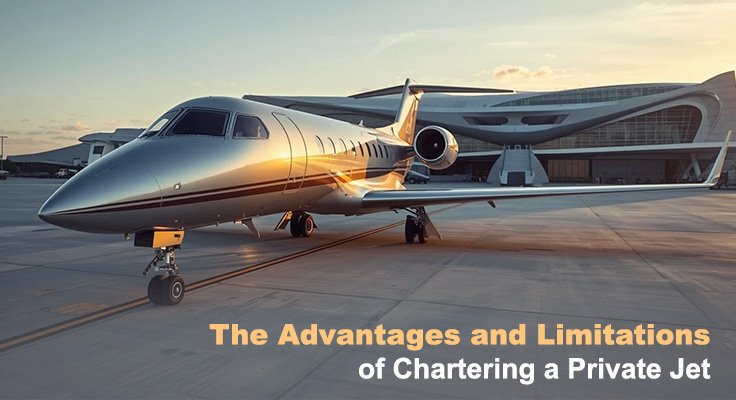
Air travel planning is frequently associated with uncertainty, operational inefficiencies, and elevated stress levels. Commercial aviation systems, while optimized for scale, are often characterized by delays, cancellations, congestion, and standardized service delivery. These factors can negatively influence both the efficiency and the experiential quality of travel. In this context, private jet chartering emerges as an alternative model, offering a distinct set of operational advantages alongside notable limitations.
Enhanced Time Efficiency and Productivity
One of the principal advantages of private jet chartering is the substantial enhancement of temporal efficiency. Travelers benefit from complete control over scheduling, thereby eliminating dependency on fixed airline timetables. The ability to bypass conventional airport procedures – such as extended security lines and boarding delays – significantly reduces total travel time. Furthermore, the onboard environment facilitates productivity, enabling passengers to engage in uninterrupted work, communication, or strategic planning during transit.
Superior Personalized Service and Onboard Experience
A second critical advantage lies in the superior quality of service. Private aviation is characterized by highly personalized and responsive service delivery, wherein passenger preferences are anticipated and accommodated with precision. Customized catering, dedicated flight attendants, and access to premium onboard amenities – including spacious seating, connectivity, and entertainment systems – collectively contribute to an elevated travel experience that exceeds the standardized offerings of commercial airlines.
Pet-Friendly Travel Convenience
Private jet chartering also provides enhanced flexibility in accommodating passengers with specific needs, including those traveling with pets. Unlike commercial aviation, where animals are frequently transported in cargo compartments due to spatial and regulatory constraints, private aviation allows pets to remain within the cabin environment. This not only improves animal welfare but also enhances passenger comfort and emotional well-being.
Improved Accessibility and Airport Flexibility
Accessibility constitutes another significant benefit. Private jet passengers typically utilize Fixed Base Operators (FBOs), which offer streamlined check-in procedures and minimal congestion. In addition, the operational capabilities of smaller aircraft enable access to a broader range of airports, including those in closer proximity to final destinations. This reduces ground travel requirements and enhances overall journey efficiency. Such features are particularly advantageous for individuals with mobility constraints or specialized accessibility requirements.
Rapid Response in Emergency Situations
Private aviation further demonstrates value in emergency scenarios. Whether responding to medical situations, urgent personal matters, or large-scale disruptions such as natural disasters, private jet chartering enables rapid mobilization and flexible routing. In circumstances where commercial aviation networks may be constrained or suspended, private aviation can provide critical continuity of movement.
Limitations
Despite these advantages, several limitations must be carefully considered.
Cost Considerations in Private Aviation
Chartering a private jet represents a significant financial commitment, with pricing structures varying across models such as full ownership, fractional ownership, prepaid flight hours, and on-demand charter services. While innovations such as jet card programs – offering prepaid flight hours with increased scheduling flexibility – have improved accessibility, private aviation remains a premium service with substantial cost implications.
The Need for Proactive Travel Planning
Another consideration is the requirement for proactive planning. The highly personalized nature of private jet travel necessitates active engagement from the traveler in specifying preferences related to scheduling, catering, and onboard services. Unlike commercial aviation, where operational processes are standardized and predetermined, private aviation requires detailed coordination to fully realize its benefits.
Weather-Related Operational Limitations
Operational limitations related to weather conditions also persist. Although private aviation mitigates many of the delays associated with commercial travel, it remains subject to environmental constraints. Due to their smaller size, certain private aircraft may be more sensitive to adverse weather conditions than larger commercial planes, potentially resulting in delays or rescheduling in the interest of safety.
Conclusion
Private jet chartering offers a compelling alternative to commercial aviation, particularly for individuals and organizations prioritizing flexibility, efficiency, and personalized service. However, its adoption requires careful evaluation of associated costs, planning demands, and operational constraints. When aligned with traveler needs and strategic objectives, private aviation can significantly enhance both the functional and experiential dimensions of air travel.
FAQ: Private Jet Chartering
1. What are the primary advantages of chartering a private jet?
Private jet chartering offers enhanced scheduling flexibility, reduced travel time, superior service quality, increased privacy, and access to a wider range of airports.
2. How does private jet travel improve time efficiency?
By eliminating fixed schedules, long security procedures, and boarding delays, private aviation allows travelers to optimize departure times and minimize total journey duration.
3. Is private jet chartering significantly more expensive than commercial travel?
Yes, private aviation entails higher direct costs; however, when evaluated in terms of time savings, productivity gains, and operational efficiency, it may provide proportional value for certain users.
4. What service features distinguish private aviation from commercial airlines?
Private aviation offers personalized service, tailored catering, dedicated crew attention, and enhanced onboard amenities, creating a highly customized travel experience.
5. Can private jets accommodate special travel requirements, such as pets or disabilities?
Yes, private jet services are highly adaptable and can accommodate pets in the cabin as well as provide tailored support for passengers with specific accessibility needs.
6. Are private jets affected by weather conditions?
Yes, while private aviation reduces many operational delays, it remains subject to weather constraints. Smaller aircraft may be more sensitive to adverse conditions, which can impact scheduling.
7. What are the main limitations of private jet chartering?
Key limitations include high cost, the need for proactive planning, and susceptibility to environmental factors such as weather.
8. Is aircraft ownership necessary to utilize private aviation?
No, travelers can access private aviation through various models, including on-demand charters, jet cards, and fractional ownership, without requiring full aircraft ownership.
9. In what situations is private jet chartering most beneficial?
Private aviation is particularly advantageous for time-sensitive travel, high-level business engagements, emergency situations, and travel to remote or less accessible destinations.