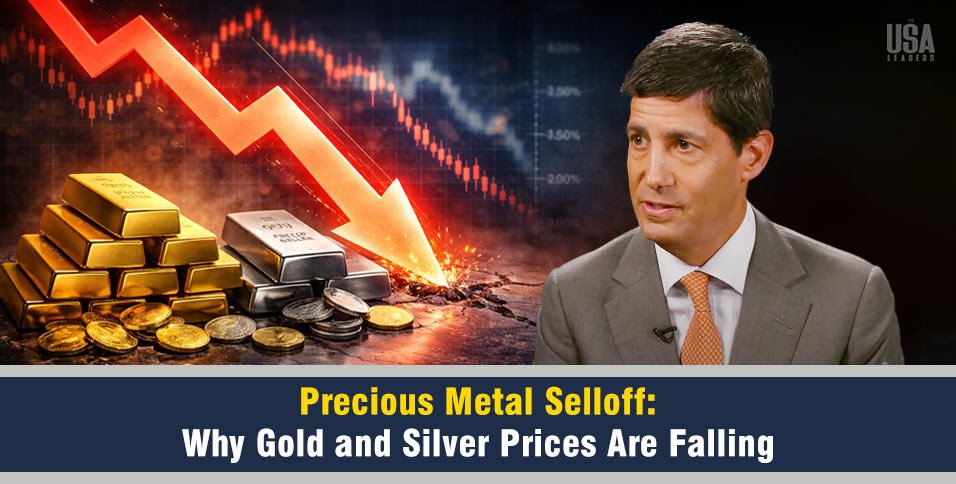
The recent precious metals selloff has erased more than $1,000 from gold prices in just weeks and triggered heavy volatility across global markets.
Just two months ago, gold traded near $5,500 per ounce. The metal now trades at approximately $4,408, a decline of roughly 20% from its peak.
Silver has suffered an even sharper correction. The metal surged to nearly $120 in January 2026 during a speculative rally but now trades at $66.71, representing a decline of approximately 44%.
The correction looks severe because the rally before it was historic. During 2025, gold surged roughly 66% while silver jumped about 135%, according to CNBC market data.
However, the momentum reversed quickly. In early March 2026, gold lost about 6% across two trading sessions, crashing through the key $5,000 psychological level.
The sudden reversal has triggered a critical debate across Wall Street. Some investors question whether broader market AI bubbles and other sectors are contributing to this shift in sentiment.
Is this the end of the precious metals bull run or simply a pause after a parabolic rally?
What Triggered the Precious Metals Selloff?
The recent decline in gold and silver prices did not happen in isolation. Several macroeconomic and geopolitical forces shifted investor sentiment and triggered a rapid reversal in the metals market.
Several macroeconomic forces are driving the precious metals selloff, including a stronger U.S. dollar, changing Federal Reserve expectations, and heavy profit-taking after the massive 2025 rally.
- Dollar Strength, Fed Expectations, and the Crypto Rotation
The primary driver of the selloff is the strengthening U.S. dollar.
Gold typically moves opposite the dollar. When the dollar rises, precious metals become more expensive for buyers using other currencies.
The dollar surge followed a major shift in expectations for U.S. monetary policy. U.S. President Donald Trump nominated Kevin Warsh as the next Federal Reserve chair. Warsh has a reputation for favoring tighter monetary policy.
Markets had previously priced in aggressive interest rate cuts for 2026. After the nomination, investors began expecting fewer rate reductions, which pushed the dollar higher and pressured gold prices.
Strategists at JPMorgan Chase highlighted this shift in a March 2026 research report, stating that changing interest rate expectations had become the dominant driver of metals volatility.
Despite the recent decline, the bank still projects gold could reach $6,300 per ounce by late 2026, implying roughly 30% upside from current levels.
At the same time, some investors are rotating capital into digital assets as alternative hedges.
While gold declined, Bitcoin rose during the same period. Bitcoin reacts differently to macroeconomic forces because it does not respond directly to interest rate changes or dollar movements.
Some investors now treat Bitcoin as a faster-moving hedge against financial instability. This shift has pulled some capital away from traditional safe-haven assets such as gold.
Profit Taking and Margin Calls Accelerated the Crash
The speed of the decline also reflects how crowded the metals trade had become. Gold and silver prices had climbed so quickly that many traders viewed the rally as unsustainable.
Once investors began locking in profits, selling pressure intensified.
The Chicago Mercantile Exchange (the trading platform where metals futures are bought and sold) raised the amount of cash traders had to keep on deposit. Traders using borrowed money couldn’t add funds fast enough, so their positions were automatically closed, which forced more selling.
Higher margin requirements forced leveraged traders to close positions quickly. Jeff Currie, Chief Strategy Officer of Energy Pathways at The Carlyle Group, explained the market reaction in a research note.
“Once selling started, leverage amplified the move and triggered rapid liquidation across the metals market,” Currie noted. Forced liquidations often turn moderate corrections into sharp market declines.
The Inflation Trap Pressuring Metals
The next move for gold and silver will depend heavily on U.S. monetary policy.
The most recent U.S. Consumer Price Index shows inflation running near 3.2% year over year, according to government data. That figure remains above the Federal Reserve’s 2% target.
Persistent inflation limits how aggressively the central bank can cut interest rates.
Higher interest rates make bonds and savings accounts more attractive because they actually pay you interest. Since gold pays nothing, it becomes less appealing when rates rise.
Energy markets add another layer of pressure.
The ongoing tensions involving Iran and the Strait of Hormuz have pushed global oil prices higher. Rising energy costs increase transportation and manufacturing expenses across the global economy.
Higher oil prices feed directly into inflation.
This dynamic creates a difficult environment for precious metals. Inflation supports gold over the long term, but higher interest rates in the short term can push prices lower.
Conclusion
The current precious metals selloff may represent either a temporary correction or the beginning of a deeper market shift, depending on how interest rates, inflation, and the U.S. dollar evolve in the coming months.
For more in-depth analysis on precious metals markets, see our complete guide to the gold and silver price drop in 2026.