The speed at which the COVID-19 vaccine was rolled out is often attributed to the fact that scientific research on the disease had been taking place before the outbreak in Wuhan. Depending on which expert you ask, creating a vaccine takes between 5 and 15 years. Yet, the first COVID vaccine was approved for emergency use within 12 months.
Other factors are just as important, such as a steady source of funding and collaboration between parties. However, one thing that rarely gets mentioned, let alone discussed, is the role of artificial intelligence (AI). In a statement, Pfizer said its AI platform had been vital in the creation of its mRNA COVID-19 vaccine by managing large volumes of patient data. (1)
With the Food and Drug Administration (FDA) recently announcing its intent to phase out animal testing, AI-enabled drug discovery is poised to be at the forefront of patient care. The better question is: “Will it be enough to tackle future health challenges?” (2)
Revolutionizing the First Step
Drug discovery and development is the first step in creating any drug or vaccine. In this stage, the goal is to find out how a disease makes a person sick by looking for the responsible molecule. Once that’s identified, the next step is to create a chemical compound that can alter molecular interactions.
The drug discovery and development process can yield a lengthy list of potential drug targets, which scientists must shorten before they can synthesize drug candidates. Even after that, the drugs must still undergo wet lab experiments, of which there are two kinds.
- In vitro (Latin for “within the glass”) is a study conducted on an inorganic medium, typically a petri dish or test tube. Sometimes, in vitro studies can be done without laboratory equipment as long as they aren’t done on a living organism.
- In vivo (Latin for “within the living”) is a study that tests a compound on a living organism, typically animals (except humans). If the study results in harm to the animal, any follow-up study should take the necessary precautions.
When large language models and other computer-based technologies are used, it becomes an in-silico study. Latin for “within silicon,” which is a key element for creating computer chips, it involves computer modeling and computer-aided drug design. The value of such studies hasn’t been explored in-depth due to a long reliance on the other two.
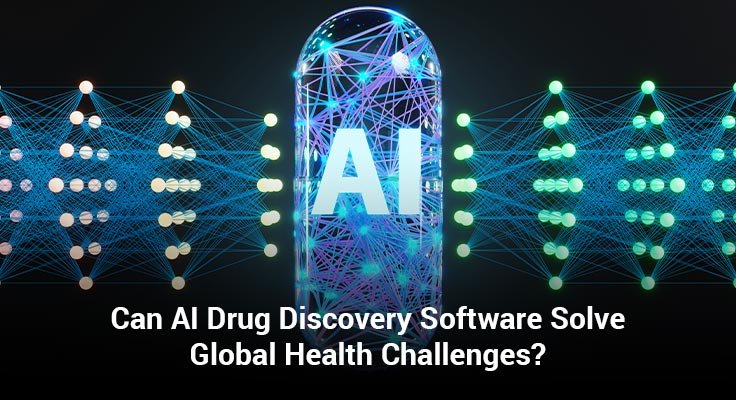
However, the introduction of tools like advanced AI drug discovery software has helped in silico studies grow in popularity. These programs free up crucial personnel by assuming manual tasks like document creation. The result is a faster drug discovery and development cycle that improves over time through machine learning and accurate scientific insights.
The Next Pandemic
COVID’s rampage in the first few years showed the world how unprepared it was for a crisis of such a scale. Despite claiming fewer lives than the Spanish flu or bubonic plague, it was enough to cause worldwide economic and social disruption.
As scientists say, the next pandemic isn’t a matter of if but when. Bacteria and viruses are known to adapt and evolve quickly amid changing environmental conditions. Just ask HIV and Ebola, pathogens that have been biding their time infecting animal hosts before going after humans. It also doesn’t help that more people are into unhealthy lifestyles.
One illness that recent research suggests can cause the next pandemic is avian influenza, commonly known as bird flu. Similar to HIV and Ebola, the H5N1 virus responsible for this disease has also crossed into human territory. The World Health Organization has logged fewer than 1,000 cases worldwide since it was first reported in 1997. (3)
That said, the disease itself is the least of one’s worries.
In an article published in Science, medical experts from various healthcare institutions in the U.S. cited gaps in the country’s bird flu response. One of these is that pharmaceutical companies are limited to manufacturing protein-based vaccines instead of pursuing new discoveries in pharmaceutical R&D like mRNA. (4)
A recent study by researchers at the University of North Carolina at Charlotte (UNCC) backs it up, suggesting that the virus has gotten better at evading antibodies. The study was done in silico using machine learning models for protein folding and physics-based modeling. Simply put, today’s H5N1 is an entirely different beast from 10 years ago. (5)
Dr. Colby Ford, the study’s lead author and UNCC computational biologist, told reporters that current AI pipeline assets can be used to create a new drug or vaccine for this new strain. It all boils down to steady support from both the private and public sectors.
Conclusion
Drug development is entering a new world with the adoption of AI-driven drug discovery. Modern medicine should keep up with, if not stay ahead of, the rapid evolution of illnesses and a rise in demand for more effective drugs and vaccines.
References:
1. ‘mRNA and Artificial Intelligence for Advanced Vaccine Innovation,” Source: https://www.pfizer.com/news/articles/how_a_novel_incubation_sandbox_helped_speed_up_data_analysis_in_pfizer_s_covid_19_vaccine_trial
2. ‘FDA Announces Plan to Phase Out Animal Testing Requirement for Monoclonal Antibodies and Other Drugs,” Source: https://www.fda.gov/news-events/press-announcements/fda-announces-plan-phase-out-animal-testing-requirement-monoclonal-antibodies-and-other-drugs
3. ‘H5N1 influenza: monthly reported cases,’ Source: https://ourworldindata.org/grapher/h5n1-flu-reported-cases
4. ‘Prepare now for a potential H5N1 pandemic,’ Source: https://www.science.org/doi/10.1126/science.adw32785. ‘With AI, Researchers Find Increasing Immune Evasion in H5N1,’ Source: https://asm.org/press-releases/2025/june/with-ai,-researchers-find-increasing-immune-evasio